
How Modular Solar Systems Support Europe’s Energy Flexibility Policies
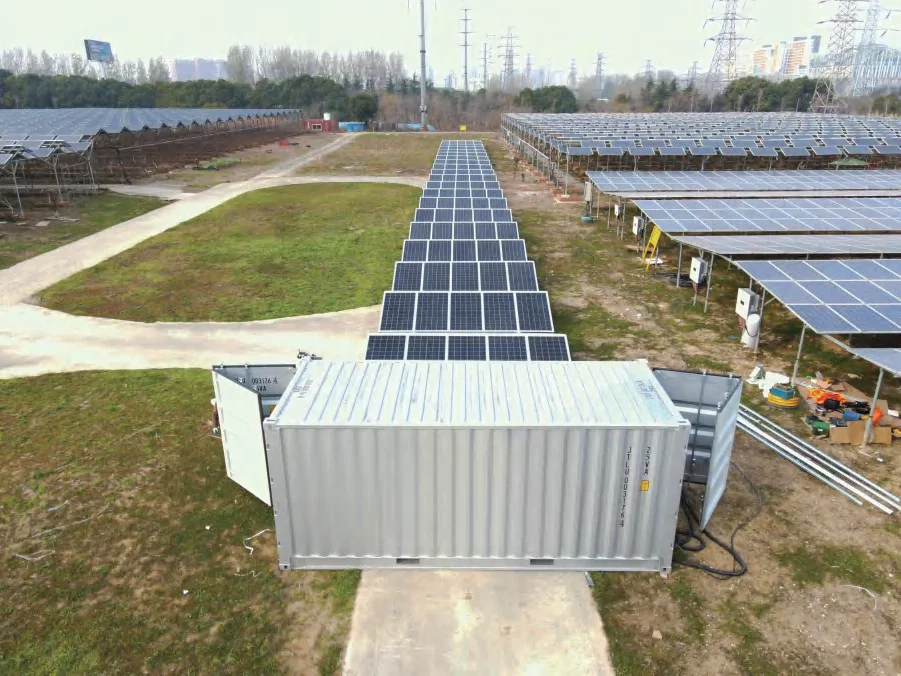
The energy transition in Europe has gone past the point of merely building up renewables. Rather, the focus has shifted to the utilization of energy, which is the key aspect of the energy transition that is driving the need for the Modular Solar Systems.
During the first phase of the implementation of solar power, there was a predominance of centralized solar farms. However, today, flexibility, resilience, and the speed of deployment are as important as generation itself.
Why Energy Flexibility Has Become a Core Policy Priority
Flexibility in terms of energy can be described as the capacity of a power system to adapt to variability, which could either happen at the production level (for instance, fluctuations in solar radiation) or at the level of consumer demand.
Three challenges are confronting the European grid:
- Fast growth in renewable energy sources
- Rapid electrification of transportation and heating
- Geopolitical uncertainties in terms of energy supplies
Traditional approaches are not able to react promptly. For example, construction of large facilities takes several years. In the meantime, grid capacities grow slower than requirements of customers. Thus, flexibility becomes a necessity driven by political decisions.
Centralized energy transition to decentralized energy
Instead of focusing on huge generation stations, the trend is that of decentralization of energy in Europe. Small-scale facilities are better adapted to deal with increased demand and more flexible.
This is precisely what makes modular solar energy a good choice.
What Makes Modular Solar Systems Different
At first glance, modular solar installations could be seen as mere simplifications of conventional solar installations. However, modular solar systems actually stand for an entirely new paradigm in energy production and distribution.
Plug-and-play energy infrastructure
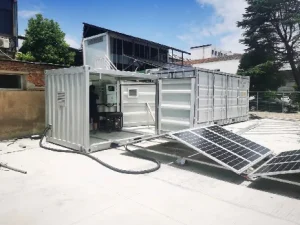
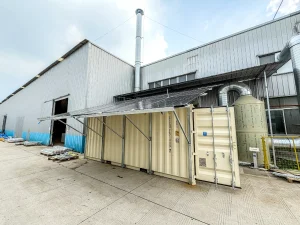
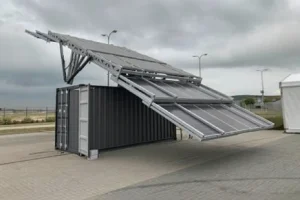
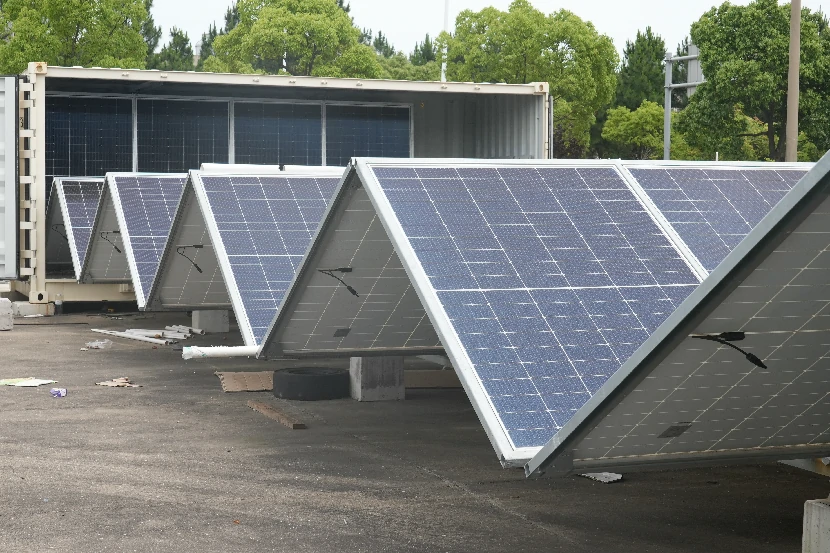
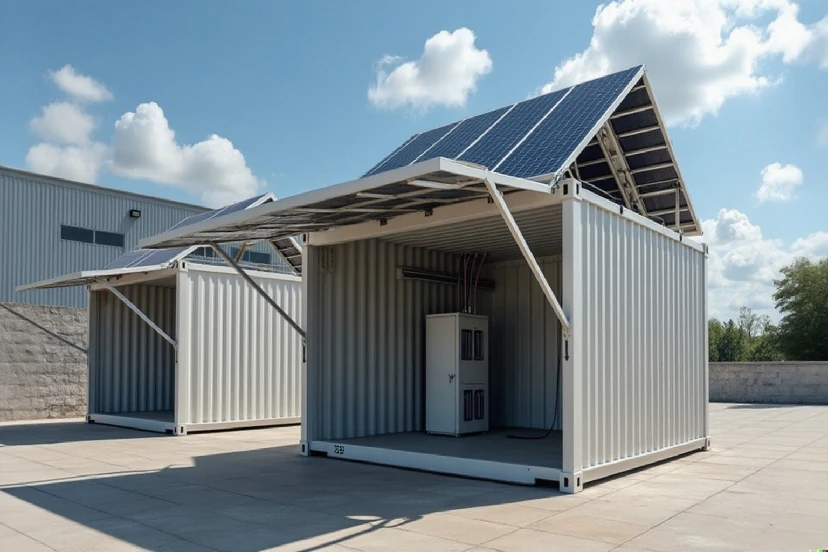
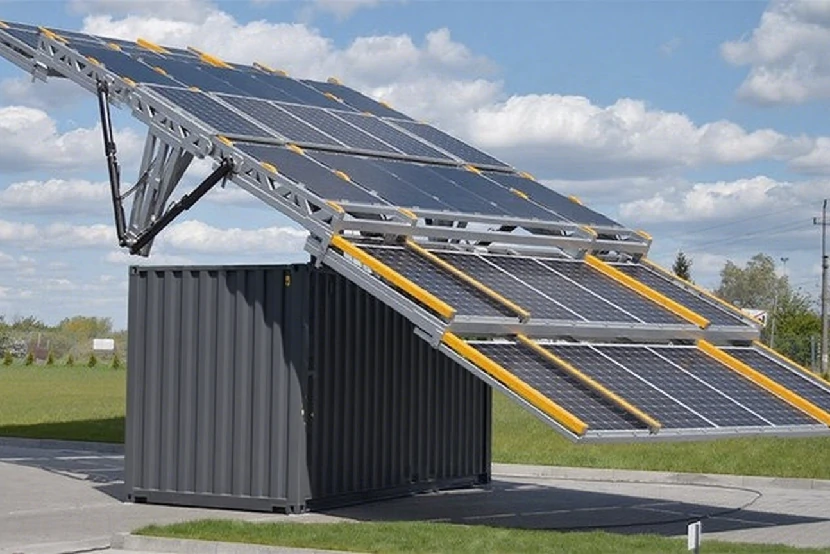
Solar installations in shipping containers and energy containers are modular solutions. They generally consist of:
- Solar panels (rollable or fixed)
- Inverters
- Batteries
- Control units
All components are assembled in a mobile unit. Installation becomes much easier and less complicated.
Mobility and quick deployment
Unlike immobile solar power stations, solar shipping containers are mobile. The ability to move makes a difference, particularly in situations like:
- Industrial operations with limited duration
- Areas hit by disasters
- Areas lacking grid infrastructure
Scalability without redesign
Need more capacity? Add more units. Modular systems scale linearly, avoiding the redesign cycles required in traditional infrastructure projects.
Why Modular Solar Systems Fit into Flexible Energy Policies
The new trend in European energy policy involves flexibility. How do modular solar plants help achieve this goal?
Supporting demand response policies
Demand-response policies involve shifting consumption patterns on the fly. Modular systems can, for example:
- Store any excess production from solar plants
- Use the stored energy at times of peak demand
- Decrease the use of grid electricity
Such balance on the local level improves grid stability.
Creating an environment for microgrids and islanded operations
Energy containers can either operate on their own or as a microgrid component. This becomes a big advantage in areas where the grid infrastructure is insufficient.
Instead of spending too much on transmission infrastructure, politicians will be able to focus on decentralized energy solutions.
Reducing grid congestion
Grid congestion is a problem increasingly being faced by Europe, especially within regions that have high generation from renewables but low transmission infrastructure.
Through local generation and consumption of electricity, such issues can be addressed, as the systems do not rely on long-distance transmission.
Rapid deployment of renewables through modular systems
While large solar plants may experience delays due to various factors, such as permits, land issues, and grid connection approval,
These problems can be easily avoided with modular systems:
- Small land requirement
- Simplified permitting processes in certain regions
- Low dependence on the grid in cases where battery storage is installed
Such rapid deployment is what Europe needs.
The Role of Energy Containers in Hybrid Systems
These energy storage units rarely exist as standalone systems. Instead, they are more commonly used within hybrid energy systems.
Combination with solar systems
It is common practice to integrate battery systems with solar panels. This practice helps to resolve one of the main drawbacks of using solar energy: intermittency.
Battery-stored energy can be released when solar power generation is insufficient.
Combining with other types of renewable energy systems
Some of the combinations of modular systems with other sources include:
- Wind energy systems
- Diesel engines (as backups)
- Hydrogen systems
Examples of Hybrid Energy Systems
The overall trend towards flexibility and reliance on renewable energy sources is evident.
The study titled Renewables 2023, published by International Energy Agency, shows that distributed solar and hybrid systems are playing an increasingly important role in balancing energy supply and demand as renewable penetration grows.
This tendency emphasizes the importance of using modular solar power systems. It is essential to understand that such technologies represent a new stage of development within energy infrastructure.
Practical Use Cases Across Europe
The practical application of these technologies is evident. There are multiple examples of using mobile solar energy modules in Europe.
Constructions and industries
Portable solar units are necessary for construction projects and other temporary facilities. These devices deliver immediate electricity without requiring any installation work.
Rural electrification
Modular solar technologies can be used to supply power to remote areas where there are no grid connections. Such devices can work autonomously or as temporary solutions.
Emergency response
Environmental disasters have become an integral part of modern life. Mobile solar units are required for restoring essential utilities after natural catastrophes.
Challenges That Still Need Addressing
Though the technology has its strengths, modular solar solutions are far from a cure-all.
Cost-effectiveness
The cost of construction may be lower, but per unit energy production costs may exceed those of conventional solar farms because of economy of scale advantages.
Regulatory frameworks
Policy is often struggling to keep up. Sometimes regulatory frameworks are developed specifically for conventional infrastructure and not for modular or mobile solar plants.
Standardization
Because each manufacturer utilizes slightly varying configurations of solar cells, standardization remains an issue.
Where This Is Heading
Clearly, the direction of development is set out. Europe is developing an energy system which prioritizes:
- Decentralization
- Flexibility
- Deployment speed
All of these characteristics are inherent in modular solar systems. While they won’t replace solar farms, modular solar systems will supplement farms to fill areas where centralization is not as effective.
While modular solar systems represent an engineering advancement, there is another level at which their value should be considered. As technologies that allow for quick deployment and flexible energy production, modular solar systems match the general direction of policy in Europe.
Contact US