
How Shipping Container Solar Panels Are Powering the Future of Mobile Energy
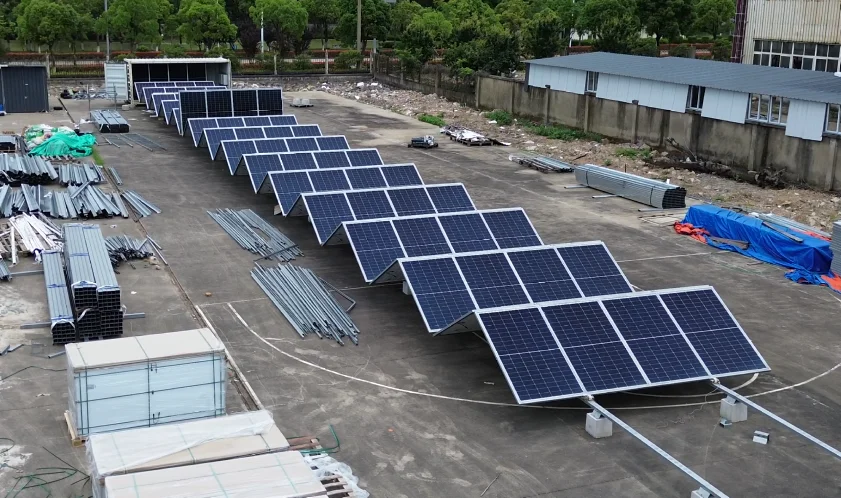
As traditional energy sources gradually give way to renewable alternatives, wind and solar—clean, abundant, and universally accessible—are becoming increasingly significant. While countries compete over limited oil resources, these freely available natural energy sources are quietly reshaping global energy structures. However, since solar and wind energy are intermittent, energy storage systems have become a critical supporting technology. This is especially true for temporary worksites, remote mountainous regions, and disaster relief zones, where rapid and large-scale deployment of solar panels is essential. In such scenarios, shipping container solar panels have emerged as a highly efficient solution.
By integrating photovoltaic modules into a standard container, these systems combine mobility, modular design, and rapid deployment. A solar-powered shipping container is not just an energy device—it operates as a complete, ready-to-use mobile power station.
Core Features and Application Directions
1、Product Structure
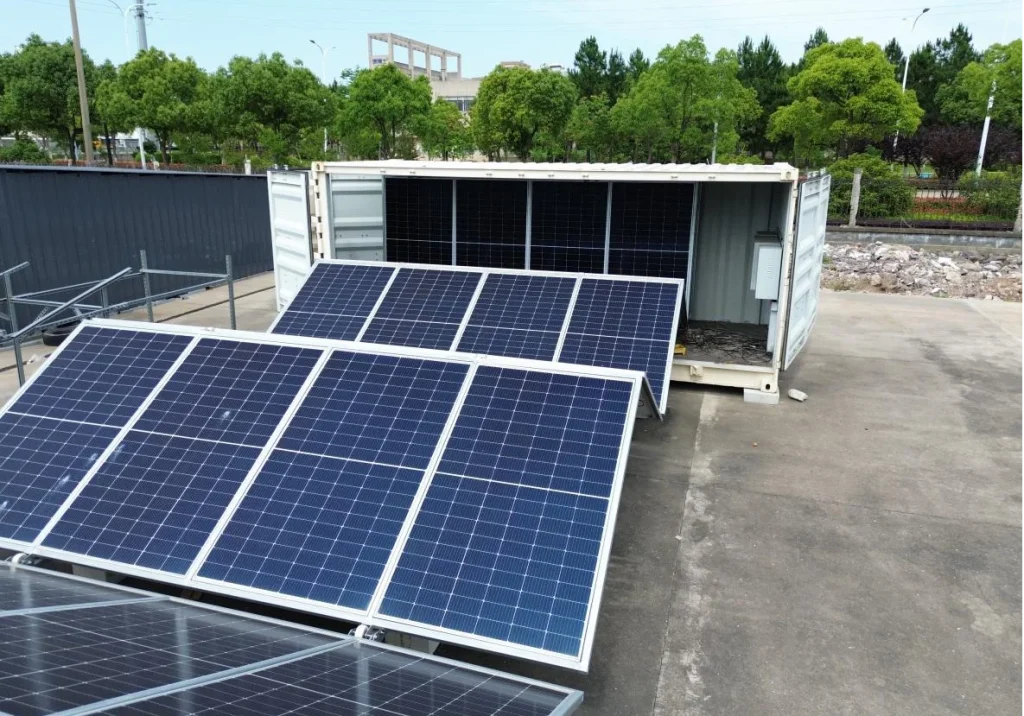
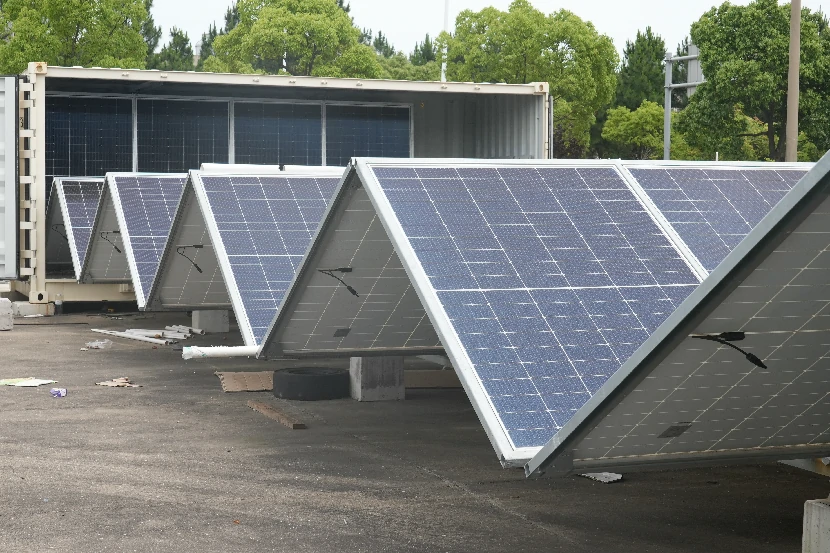
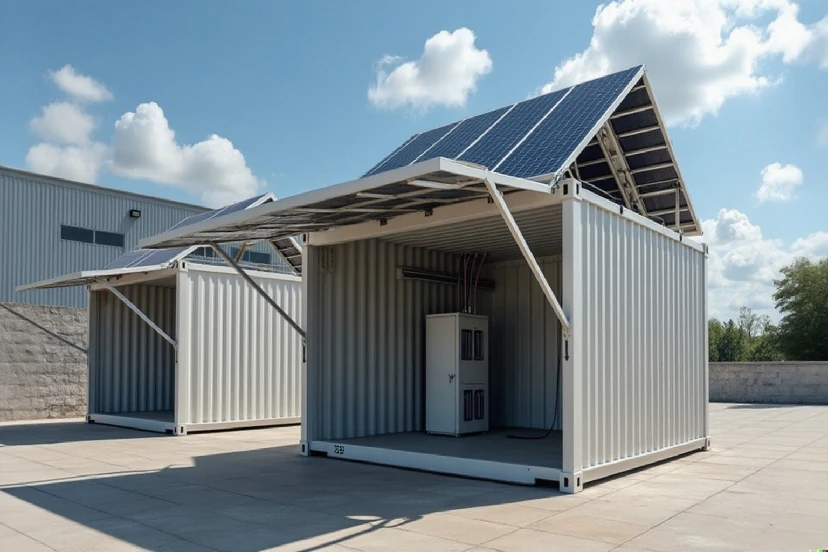
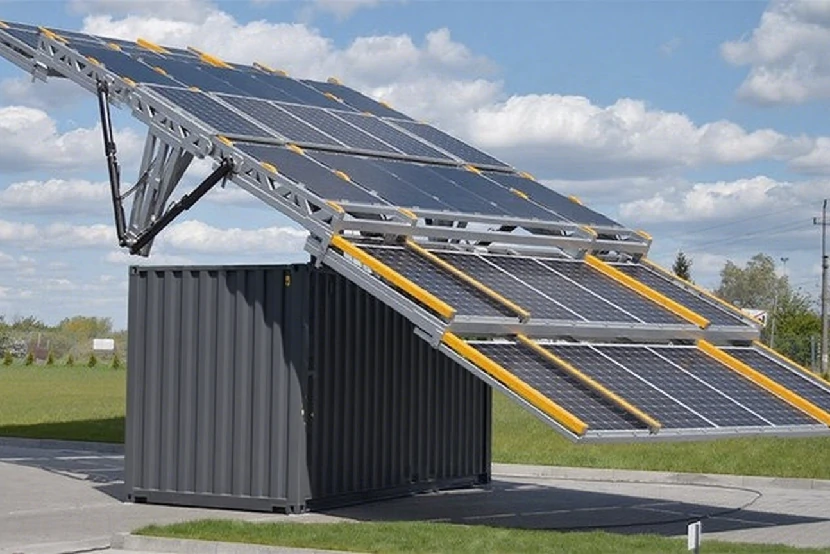
With solar panels for shipping containers, the photovoltaic modules are neatly stored inside the unit during transport. Upon arrival, they can be deployed through a rail-based sliding mechanism, enabling smooth and stable operation even on uneven or rugged terrain. The retractable panel design allows the array to be pulled back quickly during severe weather conditions for protection.
2、Advantages
Rapid Deployment
The system offers true plug-and-play functionality, enabling installation and power generation within hours. Compared with traditional installations, a container solar power system can boost efficiency by up to 90%.
High Cost Efficiency
Electricity generation costs can be as low as 0.10–0.12 RMB/kWh—approximately 63% lower than that of diesel generators.
Environmentally Friendly
Zero noise, zero emissions, and reduced carbon footprint.
High Flexibility
Multiple units can be connected in parallel to create larger solar fields, and the solution can be integrated with energy storage systems as needed. This makes portable solar container panels suitable for a wide range of deployment scenarios.
3、Application Scenarios
Oil & Mining Operations
Provides reliable power to off-grid extraction and drilling sites.
Emergency and Disaster Relief
Helps rapidly re-establish electricity supply in post-disaster areas.
Remote Area Electrification
Ideal for islands, remote villages, and temporary camps, where traditional energy infrastructure is lacking.
Disadvantages
Despite the advantages, even a highly optimized containerized solar energy solution has limitations:
Energy Density & Weather Dependence
Solar energy density is lower than fossil fuels and is affected by sunlight and weather. A stable power supply typically requires pairing with energy storage systems.
Initial Investment Costs
Although long-term operational costs are low, upfront equipment purchase still represents a significant investment.
Technology Iteration Pressure
To remain competitive, continual upgrades in efficiency and cost performance are required due to competition from fossil fuel–based mobile power stations.
Industry Development Trends
Deep Integration with Energy Storage
Solar-plus-storage solutions are becoming the dominant trend. Technologies such as AI-driven BMS and semi-solid batteries greatly enhance system efficiency and lifespan, making containerized solar energy solutions more powerful and intelligent.
Smarter Operation and Maintenance
Digital platforms enable remote monitoring, predictive maintenance, and intelligent energy scheduling.
Diversified Application Scenarios
Beyond traditional emergency and off-grid applications, these systems are expanding into fields like data center backup power, mobile EV charging, and temporary industrial operations.
Conclusion
Shipping container solar panels, with their flexibility, mobility, and superior cost performance, are bringing clean energy to areas where it is needed most. As technologies mature and costs continue to drop, these containerized solar systems will play an increasingly important role in building a dynamic, resilient global energy network.
Contact US