
How Much Capacity Does a 40ft Solar Container Have?
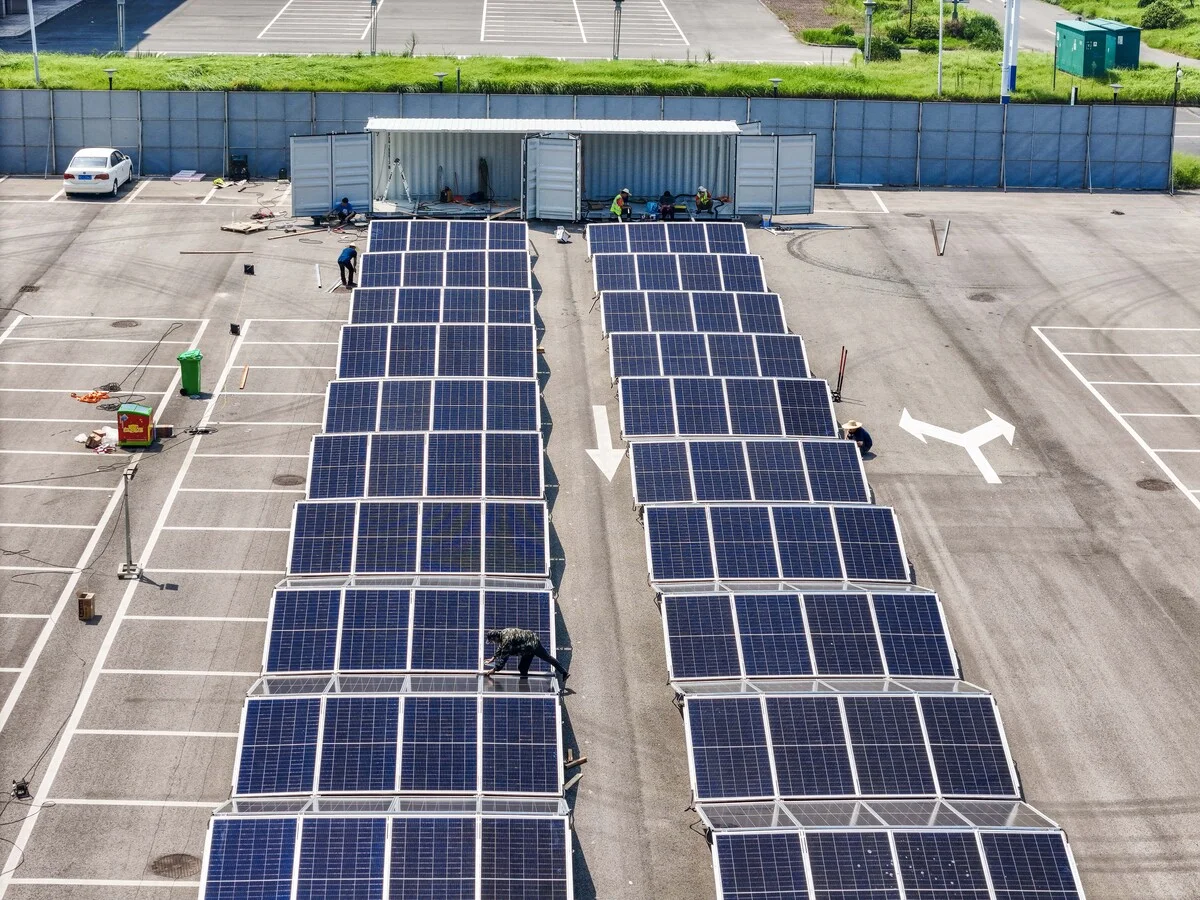
A 40ft solar container typically has a solar capacity of 15kW to 50kW, depending on the panel type, installation design, and whether the system uses fixed or deployable solar structures. With modern high-efficiency modules, a well-designed 40ft solar container can provide reliable off-grid power for remote areas, construction sites, emergency response, and industrial applications.
As renewable energy adoption continues to grow, containerized solar power systems are becoming a practical solution for fast deployment. The International Energy Agency (IEA) expects solar PV to remain the largest contributor to renewable capacity growth, accounting for nearly 80% of renewable expansion between 2025 and 2030. This growth is also driving demand for flexible solar solutions that can be transported and installed almost anywhere.
What Determines the Capacity of a 40ft Solar Container?
The capacity of a 40ft solar container is not fixed. Several factors influence the final output, including:
- Solar panel wattage
- Number of panels installed
- Available roof and side mounting area
- Solar irradiation conditions
- Panel orientation and tilt angle
- Energy storage configuration
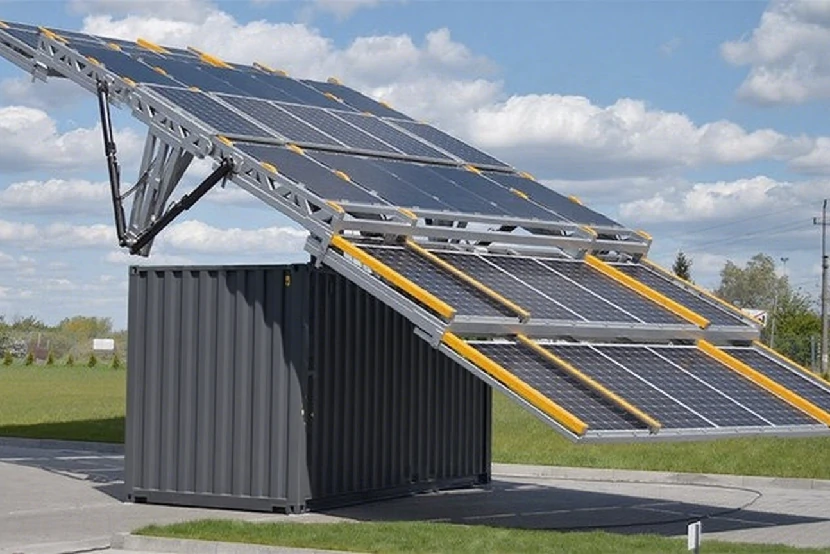
A standard 40ft shipping container has an external length of approximately 12 meters and a roof area of around 28 square meters. However, the container itself is only part of the system. Many commercial solar containers use fold-out solar arrays or external mounting frames to significantly increase the installed PV area.
For example:
| System Design | Approximate Solar Capacity |
| Roof-mounted panels only | 5kW–10kW |
| Roof + side expandable panels | 15kW–30kW |
| Foldable solar container system | 30kW–50kW+ |
The actual output depends on the selected modules and project requirements.
How Many Solar Panels Fit on a 40ft Solar Container?
A common 40ft solar container can accommodate different numbers of solar panels depending on the design.
Using modern 450W–600W solar modules:
- 10 panels × 500W = about 5kW
- 30 panels × 500W = about 15kW
- 60 panels × 500W = about 30kW
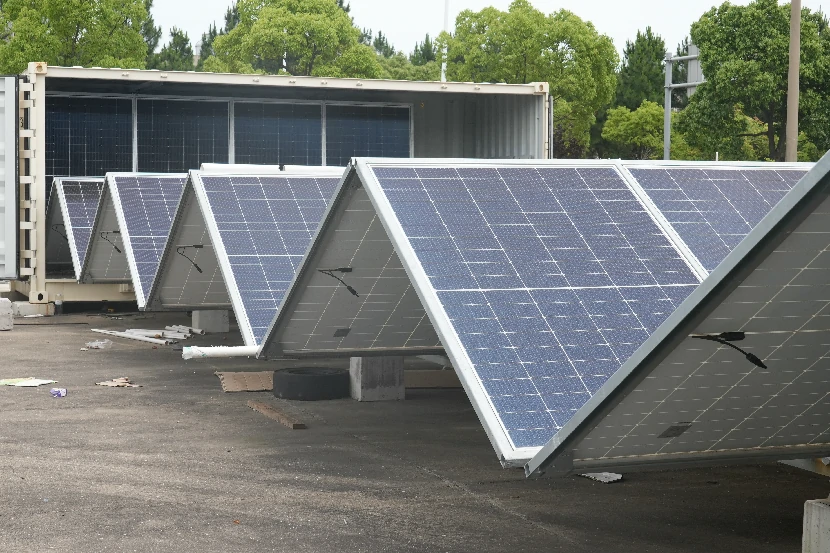
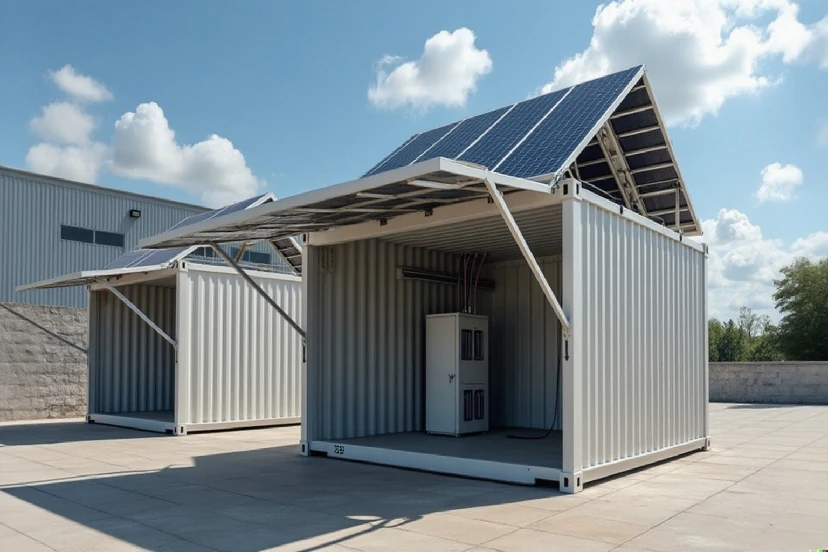
A simple rooftop installation has limited space, so many manufacturers use expandable structures. These designs allow solar panels to unfold from the container during operation while keeping the system compact during transportation.
From my experience working with containerized energy solutions, the biggest misunderstanding is treating a solar container like a normal rooftop solar project. The container is not just a place to mount panels. It is a complete energy platform that combines generation, storage, control systems, and transportation capability.
Does a 40ft Solar Container Include Battery Storage?
A solar container can be designed with or without batteries.
A complete off-grid solar container usually includes:
- Solar photovoltaic modules
- Battery energy storage system (BESS)
- Solar inverter
- Energy management system (EMS)
- Battery management system (BMS)
- Distribution cabinet
- Monitoring and communication equipment
The battery capacity is usually measured in kWh rather than kW. For example, a 30kW solar container may be paired with:
- 50kWh battery storage for short-term backup
- 100kWh–200kWh storage for daily energy shifting
- Larger battery systems for microgrids or industrial applications
The right battery size depends on the user’s electricity demand and required backup duration.
What Can a 40ft Solar Container Power?
A properly designed 40ft solar container can support various applications:
Remote Construction Sites
Construction projects often require temporary electricity before grid connection is available. A solar container can provide power for:
- Lighting systems
- Tools and equipment
- Site offices
- Security systems
Off-Grid Communities
In remote regions without reliable electricity infrastructure, containerized solar systems provide a faster alternative to traditional power plants.
Emergency Power Supply
After natural disasters, transportation and installation speed are critical. Solar containers can be delivered and deployed quickly without requiring complex infrastructure.
Mining and Industrial Applications
Mining operations located far from the grid often rely on diesel generators. Solar containers can reduce fuel consumption by combining renewable generation with battery storage.
How Much Energy Can a 40ft Solar Container Generate Per Day?
Daily energy production depends mainly on sunlight conditions.
For example:
- A 20kW solar system receiving 5 peak sun hours can generate around 100kWh per day.
- A 40kW solar system under similar conditions can generate around 200kWh per day.
Actual production will vary because of:
- Weather conditions
- Temperature
- Panel efficiency
- System losses
- Installation angle
In high-solar regions such as deserts or tropical areas, the same solar container can produce significantly more energy than in areas with lower sunlight availability.
Why Are 40ft Solar Containers Becoming More Popular?
Traditional solar farms require land preparation, construction work, and long installation periods. Solar containers provide several advantages:
Fast Deployment
A factory-built system can be transported directly to the project location and commissioned quickly.
Flexible Applications
Unlike fixed solar plants, containers can be relocated when project needs change.
Integrated Design
A solar container combines multiple systems into one package, reducing installation complexity.
Suitable for Remote Locations
Areas without grid access can use solar containers without waiting for expensive transmission infrastructure.
According to the IEA, global renewable power capacity expansion is accelerating, with solar PV continuing to lead new installations because of lower costs and easier deployment. Containerized solutions fit well into this trend because they make solar energy more adaptable and accessible.
Choosing the Right 40ft Solar Container Capacity
Before selecting a system, users should consider:
- Daily electricity consumptionCalculate how much energy the project needs every day.
- Peak power demandSome equipment requires high starting power even if total energy consumption is low.
- Battery backup requirementsOff-grid projects usually need enough storage for nighttime operation or cloudy days.
- Future expansionA modular design allows additional batteries or solar capacity to be added later.
For commercial and industrial projects, a 40ft solar container with 30kW–50kW PV capacity is often a practical choice because it balances transportation, installation, and energy output.
Final Thoughts
The capacity of a 40ft solar container can range from a small 5kW system to a powerful 50kW+ renewable energy solution. The best configuration depends on the application, location, and energy requirements.
At HighJoule, we believe the future of solar power is not only about generating more electricity but also about making clean energy easier to deploy. Containerized solar systems combine mobility, reliability, and scalability, making them a valuable option for off-grid power, commercial projects, and emergency energy applications.
Contact US