
How Solar Containers Power Remote Army Bases Efficiently
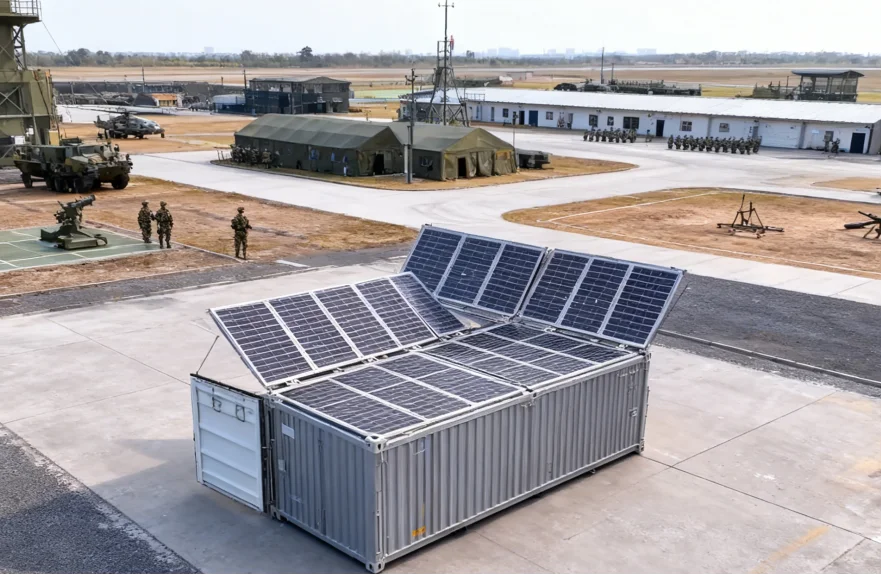
Today, with rising tensions in East Asia and increasingly active military base operations, the solar container for army bases has become one of the most common and strategic energy solutions. For remote military locations, this highly integrated power unit delivers reliable electricity with unmatched efficiency. Its advantages—including reliability, rapid deployment, energy independence, low operating costs, and silent operation—make it a core asset for modern defense forces. Below is a detailed analysis of how a military solar container system provides efficient, stable power for remote bases.
I. Core Components: A Highly Integrated “Energy Fortress”
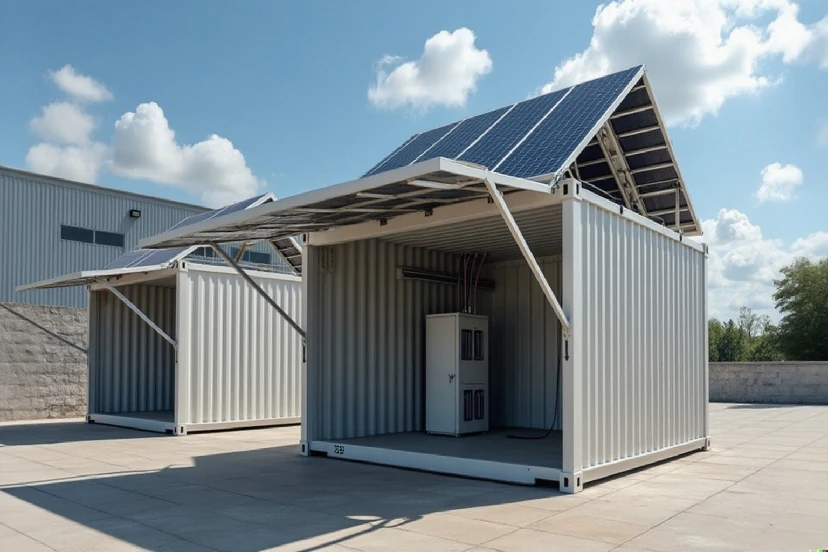
A standard mobile solar container for military base typically includes several key modules fully integrated inside one or more ISO containers, enabling true plug-and-play operation.
1. Solar Power Unit
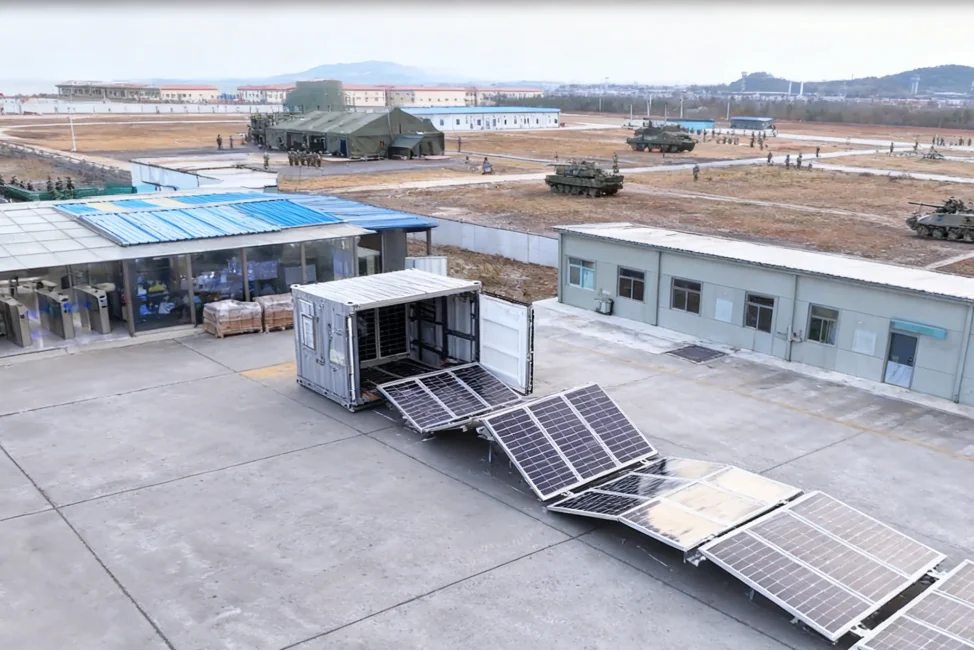
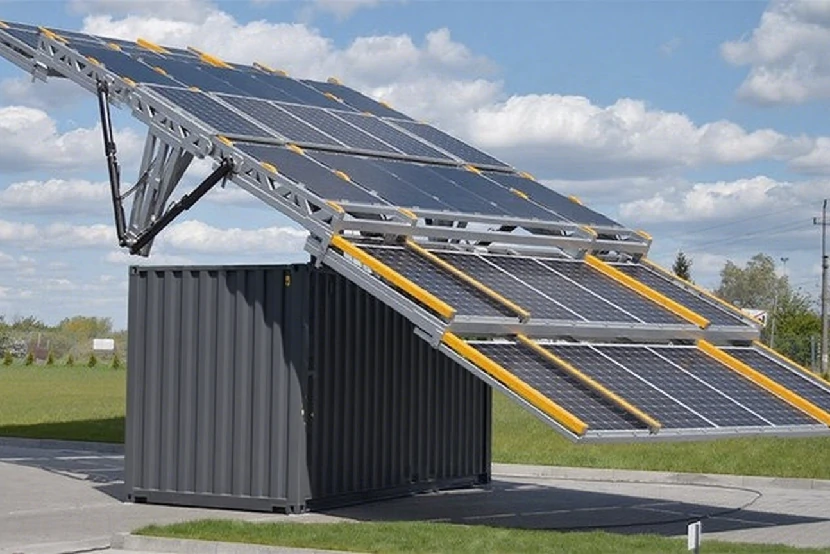
High-efficiency monocrystalline or military-grade lightweight solar panels are mounted on the container roof, ground surfaces, or deployable arrays to maximize sunlight capture.
2. Optional Wind Turbines
In high-wind regions, vertical or horizontal axis wind turbines can be added to create a hybrid system, filling energy gaps during nighttime or cloudy periods.
3. Energy Storage Unit (The Core of the System)
Lithium-ion (usually LiFePO₄) battery packs store solar energy for nighttime and high-load operation. Storage capacity is precisely calculated so the off-grid solar container for defense camps can sustain operations for several days.
4. Energy Management & Conversion Unit
An intelligent microgrid controller monitors generation, battery levels, and power consumption, prioritizing solar energy and switching seamlessly between power sources.
5. Inverter & Charge Controller
The inverter converts DC power to AC for base equipment, while the controller prevents battery overcharge/over-discharge.
6. Backup Power (Optional but Important)
Diesel or biodiesel generators serve as the final layer of backup. Smart scheduling ensures they run only when necessary, drastically saving fuel and reducing noise.
7. Structural & Environmental Control
The container provides durable, water-resistant, dust-proof, and transport-ready protection. Integrated temperature control keeps batteries and electronics in optimal working condition, even in extreme weather.
II. What Makes It “Efficient”
1. High Reliability in Power Supply
Multi-energy hybrid design: Solar power + battery storage + optional wind + backup generator = uninterrupted supply.
Independence from vulnerable fuel convoys: A renewable energy container for army sites greatly reduces dependence on fuel transportation.
2. Efficient Deployment & Maintenance
Fast deployment: Can be delivered by helicopter, truck, or air-drop. Operational within hours.
Plug-and-play: Pre-assembled and factory-tested to minimize field installation errors.
Remote monitoring: Satellite link enables off-site monitoring and fault alerts. Low routine maintenance.
3. High Tactical & Strategic Value
Silent operation: Solar energy produces almost zero noise or heat signature, enhancing base concealment—essential for forward posts or special operations.
Energy independence: Reduces risk to soldiers who would otherwise escort fuel convoys.
Scalable design: Need more power? Simply add another portable solar container for army operations—modular like building blocks.
Long-term cost efficiency: Solar power is free; lifecycle cost is far lower than diesel generators.
Durability: Solar modules and batteries last 15–25 years with container-level protection.
III. Optimization Strategies for Maximum Efficiency
Accurate energy assessment: Evaluate base load and local climate (sunlight hours, rainy season, wind speed) to size the system properly.
Load management: Smart controllers can prioritize mission-critical loads.
Hybrid configuration: Combine solar, wind, and possibly micro-hydro depending on location.
Preventive maintenance: Regular inspections and cleaning ensure peak efficiency.
IV. Typical Military Application Scenarios
Forward operating bases: Power command posts, communication stations, and living facilities.
Remote surveillance outposts: Silent power for sensors, cameras, and data relays.
Field hospitals: Stable energy for medical equipment, cold-chain storage, and lighting.
Electronic warfare or jamming stations: High-demand loads supported by solar + large battery + backup generator.
Conclusion
A solar container for army bases—integrating photovoltaic generation, smart storage, micro-grid control, and optional backup power—offers a reliable, rapid, silent, economical, and highly autonomous energy solution for remote military environments. With its outstanding efficiency, it enhances operational capability, survivability, and logistical resilience, making it a benchmark for modern military energy transformation.
Contact US