
What is a Solar Container?
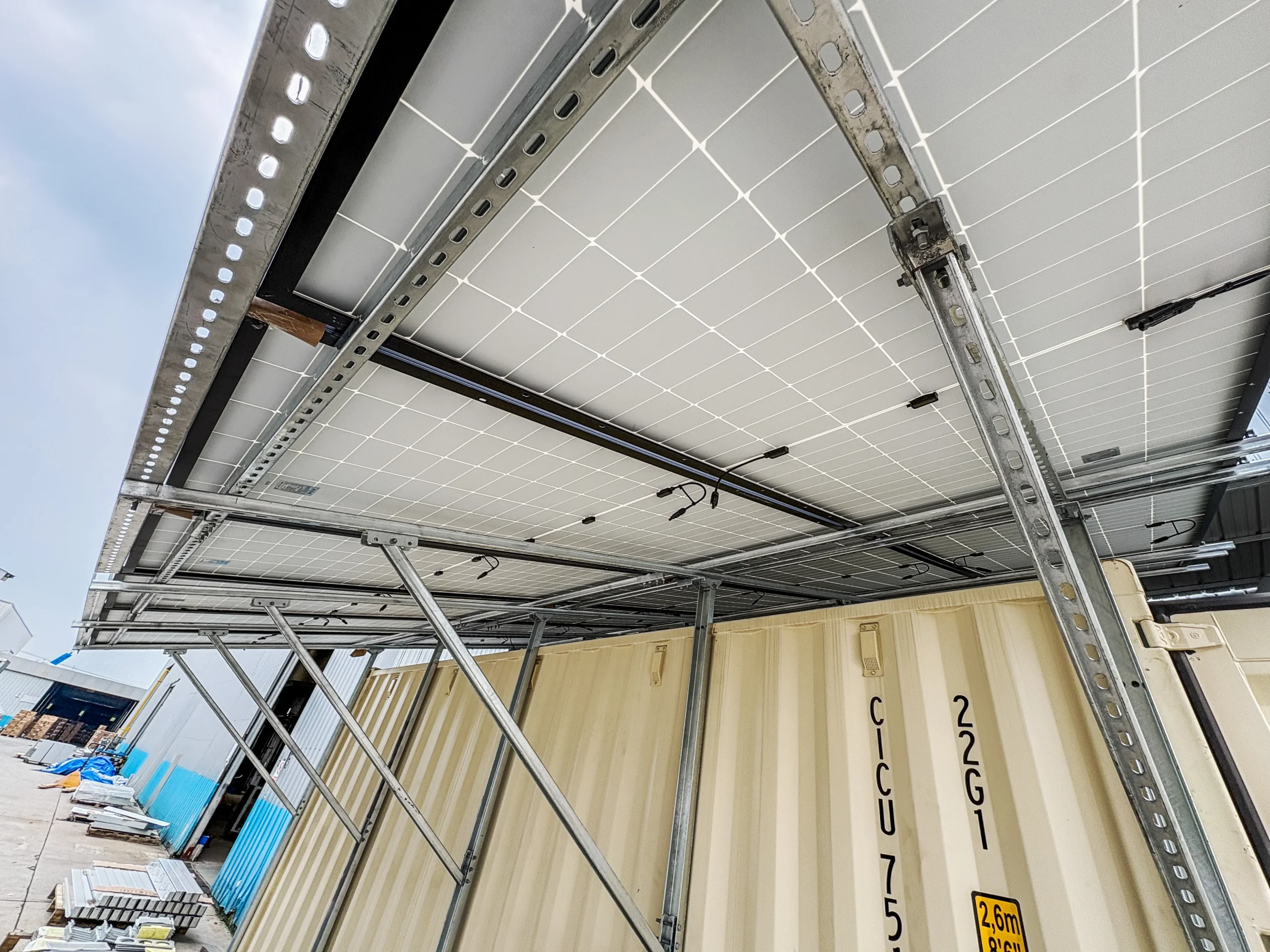
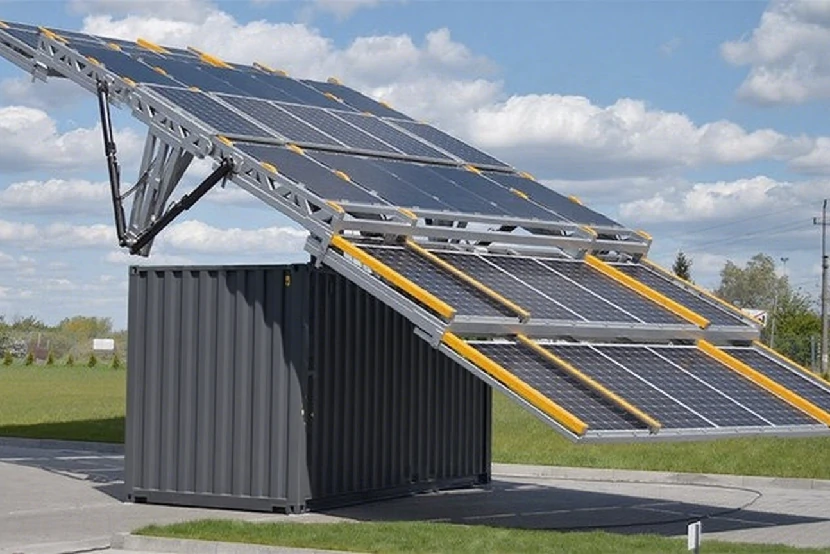
A solar container is typically a shipping-container-sized unit that contains solar panels, batteries, power electronics, and control equipment to provide a self-contained portable solar power system. It integrates photovoltaic panels with battery storage and inverter/control systems so that solar energy can be generated, stored, and used or fed to a grid from a single modular unit. In placing everything inside a container structure, a solar container provides a flexible and deployable energy solution, applicable for remote locations, temporary installations, disaster relief, or areas lacking reliable grid infrastructure.
Since the “solar container” bundles generation (solar PV), storage (battery), and distribution (inverter / control) together, it is often referred to as a “shipping container with solar panels and storage” that makes renewable energy portable and scalable in ways traditional rooftop or fixed-ground PV installations cannot always match.
Why Solar Containers are Gaining Popularity
As renewable energy grows worldwide, so does the demand for flexible, rapidly deployable solar solutions. Solar containers meet that demand by offering portability plus storage. Integration of battery storage with solar PV allows shifting energy from sunny periods to times when the sun isn’t shining, giving more stable, around-the-clock power. According to research by NREL: Solar-Plus-Storage Analysis, combining solar PV with energy storage significantly improves grid flexibility and supports renewable integration especially in distributed settings.
Solar containers also cater to markets with unreliable grid access or no access to the grid whatsoever, like remote communities, construction sites, disaster areas, and isolated telecom stations. Their modular container format makes transport and installation easier as it enables fast deployment compared to the construction of fixed solar farms or battery-storage facilities.
How a Solar Container Works
A solar container would essentially integrate three main subsystems inside a container shell:
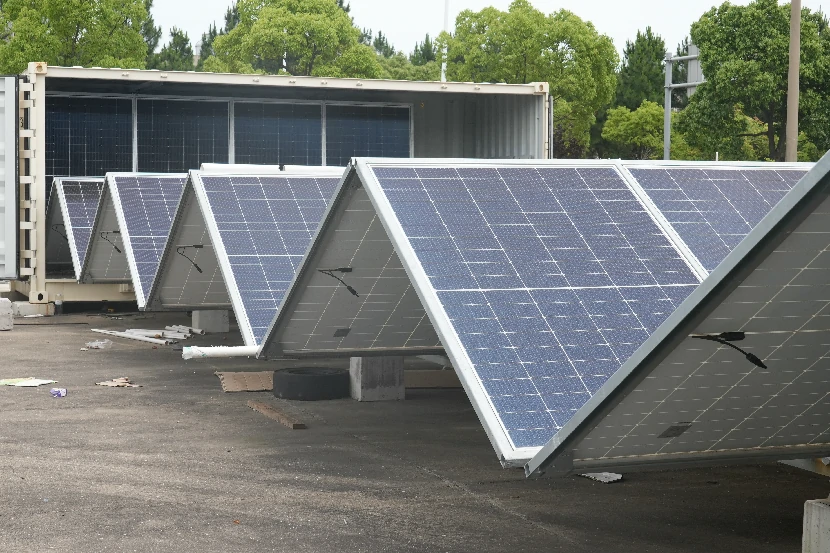
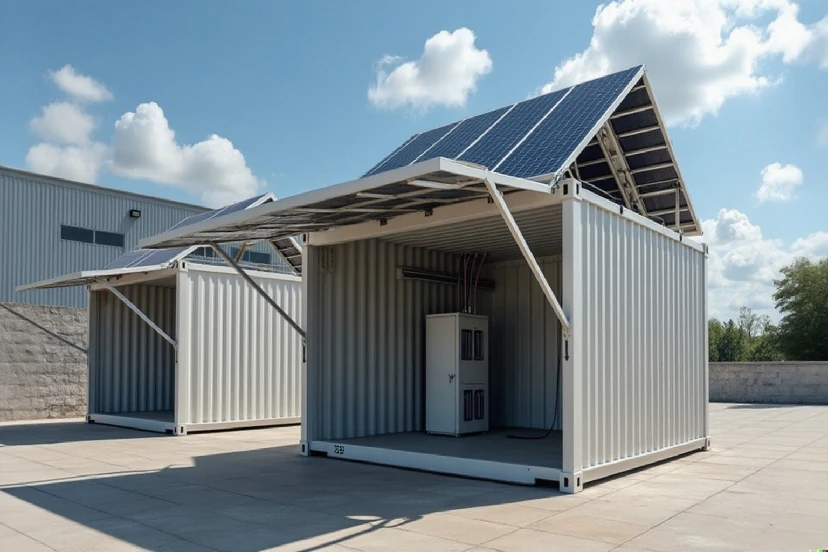
- Solar PV panelsinstalled on the container roof or as deployable racks will capture sunlight and turn it into electric power.
- The battery storage systemthat stores extra solar energy throughout the peak sun hours to be utilized later on.
- Power electronics and control systemcomprising an inverter (to convert the DC from panels/batteries to AC usable power), a battery management system-BMS, thermal management-cooling/ventilation-if required, along with safety and control hardware.
A typical flow of operation would be: sunlight → PV panels → DC power → charge battery or feed inverter → AC power to loads or grid. With such an integrated setup, the solar container effectively functions as a stand-alone solar energy supply and storage solution-a sort of “solar power plant in a box.”
Typical Configuration and Components
Here is a simplified breakdown of common components and their roles inside a solar container:
| Component | Function | Typical Features |
| Solar PV panels | Generate electricity from sunlight | Fixed panels on container roof or deployable racks |
| Battery storage modules | Store excess electricity | Lithium-ion battery packs (often LFP or NMC) |
| Inverter / Power electronics | Convert DC ↔ AC, manage power flow | Grid-compatible output, load control |
| Battery Management System (BMS) | Monitor battery health and safety | Voltage, current, temperature, state-of-charge monitoring |
| Thermal/Ventilation system | Maintain safe temperature inside container | Fans or passive ventilation (depending on climate) |
| Control & monitoring unit | Manage energy flow, display status, remote monitoring | Data logging, remote access optional |
| Protective equipment | Safety devices, wiring, grounding, potentially surge/fuse protection | Basic electrical safety compliance |
Such a configuration enables the solar container to function like a compact, mobile solar-plus-storage plant ready to serve different power needs.
Common Types of Solar Containers and Typical Uses
Solar containers have a number of use cases depending on the needs and context. Some typical use cases include:
- Off-grid or remote communities:In areas with no reliable grid infrastructure, the containers provide clean and sustainable electricity without the need for grid extension.
- Disaster relief/emergency response:in cases of natural disasters or crisis zones, solar containers can be quickly set up to provide power for shelters, medical stations, communications, lighting, etc.
- Construction sites, mining camps, remote telecom or monitoring stations:all those locations where temporary or seasonal power is required – solar containers avoid fuel delivery logistics and also reduce operating costs when compared to diesel generators.
- Temporary events, mobile clinics, field operations and research stations:any situation needing portable power can benefit from a solar container’s modular design.
- The solar farms and hybrid renewable installations:as part of a broader renewable energy strategy, solar containers can serve as modular building blocks for micro-grids or distributed energy systems.
Because the solar container bundles generation and storage together, it is particularly well-suited to applications where electricity supply needs to be resilient, flexible, and independent of traditional grid infrastructure.
Benefits of Solar Containers
Using solar containers offers a number of advantages over traditional solar installations or diesel-powered generators:
- Fast deployment and mobility:Because the systems are pre-integrated, a solar container can be shipped, installed, and commissioned far quicker than it would take to build a conventional solar farm and/or a dedicated energy storage facility.
- Self-contained, modular:One container contains all that is needed for the generation and storage of solar power; a user can start with one container and later add more as demand increases.
- Reduced reliance on fuel and lower operating costs:Unlike diesel generators, which require periodic fuel delivery and maintenance, solar containers employ free solar energy, with very low maintenance post-installation.
- Increased renewable integration and reduced emissions:solar containers can thus help zero-emission generation and storage of the resulting power, meeting sustainability goals by reducing carbon footprint. Research studies by NREL: Solar-Plus-Storage Analysis prove that with storage, PV helps grid stability and increases the use of renewables.
- Flexibility for off-grid and remote applications:Solar containers bring modern energy access to remote or underserved regions without grid connection infrastructure.
- Resilience and Energy Security:Solar containers provide reliable power supply, independent of fuel logistics or grid vulnerability, in areas plagued with instability or disasters.
Real-World Example: Remote Island Solar Container Deployment
In 2022, a remote island community without a stable grid supply implemented a solar container solution. The solar panels on the roofs of containers were combined with their batteries inside the containers to ensure the supply of electricity to homes and common facilities to provide for lighting, refrigeration, and basic appliances at night. This setup replaced diesel generators, reducing fuel transportation costs along with carbon emissions, and provided a clean, reliable power source for the residents.
This example will reveal how solar containers make renewable energy accessible even to the most remote areas, improving the quality of life and energy independence.
Considerations and Limitations
While there are many positive aspects of the solar containers, there are a few factors that need to be taken into consideration:
- Initial investment cost:The initial investment cost in fitting a container with solar panels, battery modules, an inverter, and other control systems is relatively high. Therefore, proper cost-benefit analysis should consider expected usage, sunlight conditions, and maintenance requirements.
- Limitations of sunlight dependence and storage capacity:solar generation is at the mercy of weather and daylight; storage capacity with batteries may be limited to a few hours, which makes it unsuitable for high or continuous power demand events without sufficiently large battery capacity.
- Maintenance and battery life cycle:Battery modules degrade over time and require monitoring, BMS maintenance, and possibly replacement after many cycles.
- Logistics and site requirements:although containers are modular, installation still requires transporting, preparing a site (flat ground, ventilation, safety compliance), and sometimes permits.
- Scalability constraints:For very large or long-duration energy needs, many containers may be required, which complicates management, space, and cost.
The Future Role of Solar Containers in Clean Energy Transition
In the face of rapidly growing solar PV and battery storage technologies, solar containers will likely continue to play an increasingly important role in the delivery of clean, flexible, and decentralized energy. Their modularity, mobility, and relatively fast deployment make them suitable for micro-grids, remote electrification, disaster relief, and hybrid renewable energy systems. For developing regions, island communities, or remote sites, solar containers offer a practical path toward energy access and resilience.
If you want to learn more about flexible solar-plus-storage infrastructure, check our solar container products.
Contact US