
Guide to Choosing a Stacked Household Energy Storage System
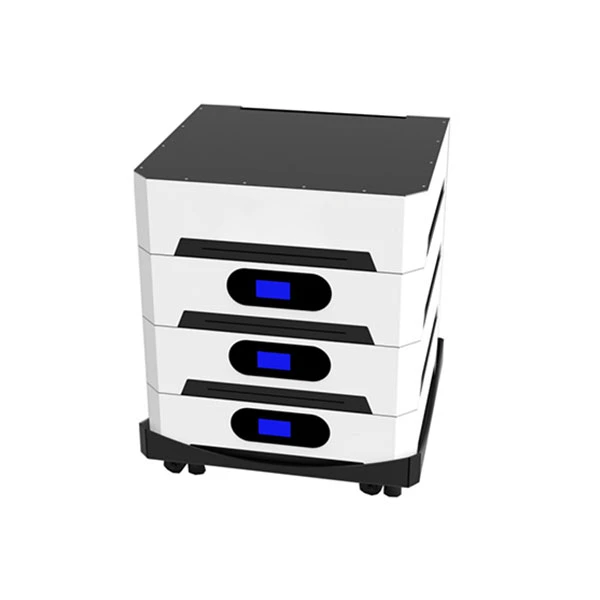
A stacked energy storage system has become an increasingly popular option for residential users who want more flexibility than traditional all-in-one batteries. Instead of buying a fixed-capacity unit, homeowners can start small and expand over time. But this flexibility also introduces more decisions, and not all stacked systems are created equal.
What a Stacked Energy Storage System Really Is
A stacked energy storage system is a modular battery setup where multiple battery modules are physically and electrically stacked to form a single energy storage unit. Each module typically contains battery cells, basic protection, and standardized connectors, while higher-level components manage power conversion and system control.
Compared with monolithic batteries, stacked systems emphasize scalability. You are not locking yourself into a fixed kWh number on day one. Instead, capacity grows as your household energy needs evolve, whether due to electric vehicles, heat pumps, or higher solar generation.
From a system-design standpoint, stacked systems are still full energy storage systems. They include batteries, power electronics, controls, and safety mechanisms. The difference lies in how these elements are packaged and expanded.
Capacity Planning Comes Before Product Selection
Many buyers start by comparing products. That is usually backwards. Capacity planning should come first.
The U.S. Department of Energy’s publication DOE/EPRI Electricity Storage Handbook explains that energy storage systems must be sized based on the intended application, load profile, and required duration, not just peak power. For households, this means understanding daily consumption patterns rather than focusing only on total monthly usage.
Start with Energy, Not Power
Residential users often confuse kW and kWh. Power determines how many appliances can run at once. Energy determines how long they can run. A stacked system makes it easy to add energy later, but power capability is usually constrained by the inverter and system controller.
If your goal is backup during outages, calculate the critical loads and how many hours you want to support them. If your goal is solar self-consumption, focus on how much excess solar energy you need to store daily.
Plan for Expansion, But Define the Upper Limit
Stackability does not mean unlimited expansion. Every system has a maximum supported number of modules. Exceeding it may require replacing controllers or inverters, which changes the economics.
Before choosing a system, confirm:
- Maximum supported stack height or module count
- Whether expansion affects warranty or certification
- Whether additional modules require firmware or hardware upgrades
Safety Is a System-Level Question
Battery safety is not just about cell chemistry. It is about how the entire energy storage system behaves under normal and abnormal conditions.
The study titled Energy Storage Decision Guide for Policymakers, published by USAID and the National Renewable Energy Laboratory, shows that system integration, controls, and protection strategies are as important as battery type when evaluating energy storage risks.
Thermal Management in Stacked Designs
Stacked systems concentrate multiple battery modules in a vertical arrangement. This makes thermal management critical. Poor airflow or uneven heat dissipation can accelerate degradation or trigger protection events.
When evaluating a system, look for:
Defined operating temperature ranges per module
Passive vs active cooling strategy
Whether airflow paths change as modules are added
Fault Isolation and Module-Level Protection
One advantage of stacked architectures is modular fault isolation. A well-designed system can isolate a single faulty module without shutting down the entire stack.
Ask whether:
- Each module has independent protection
- A failed module can be replaced without system replacement
- The system provides clear fault diagnostics
Compatibility with the Rest of the Energy Storage System
A stacked battery is only one part of a complete energy storage system. Compatibility with inverters, energy management systems, and solar PV is critical.
AC-Coupled vs DC-Coupled Considerations
Some stacked systems are designed for DC coupling, others for AC coupling. This affects efficiency, installation complexity, and expansion flexibility.
DC-coupled systems often deliver higher round-trip efficiency for solar charging but may limit inverter choices. AC-coupled systems are more flexible for retrofits but introduce additional conversion losses.
Control Logic and Energy Management
Advanced systems do more than store energy. They decide when to charge, discharge, or hold capacity. The quality of this control logic determines real-world performance.
Look for:
- Support for time-of-use optimization
- Backup prioritization for critical loads
- User visibility into system status and energy flows
Installation Constraints Often Decide the Final Choice
In real projects, space and installation constraints often eliminate otherwise good options.
Stacked systems are vertical by nature. Ceiling height, floor load capacity, and wall clearance all matter. A system that looks compact on paper may not fit comfortably in a utility room or garage.
Also consider local codes. Some jurisdictions impose limits on indoor battery capacity or require specific clearances. A modular system does not automatically bypass these rules.
Cost Evaluation Beyond the Initial Purchase
Stacked systems often appear more expensive per kWh upfront. That is partly because you are paying for modularity.
The real comparison should include:
- Cost of future expansion modules
- Installation cost for additional modules
- Potential need for inverter or controller upgrades
A cheaper fixed-capacity system may become more expensive if replacement is required when capacity needs grow.
Making the Final Decision
Choosing a stacked household energy storage system is less about finding the “best” product and more about matching system characteristics to your actual use case.
Start with a clear understanding of your energy goals. Size the system based on real load data. Evaluate safety at the system level, not just battery chemistry. Confirm expansion limits before assuming future flexibility. Finally, assess how well the system integrates with the rest of your energy infrastructure.
If you approach selection this way, a stacked energy storage system can offer long-term adaptability without locking you into decisions you may outgrow in a few years.
Contact US