
Unlock Energy Independence with an Independent Solar Power Container
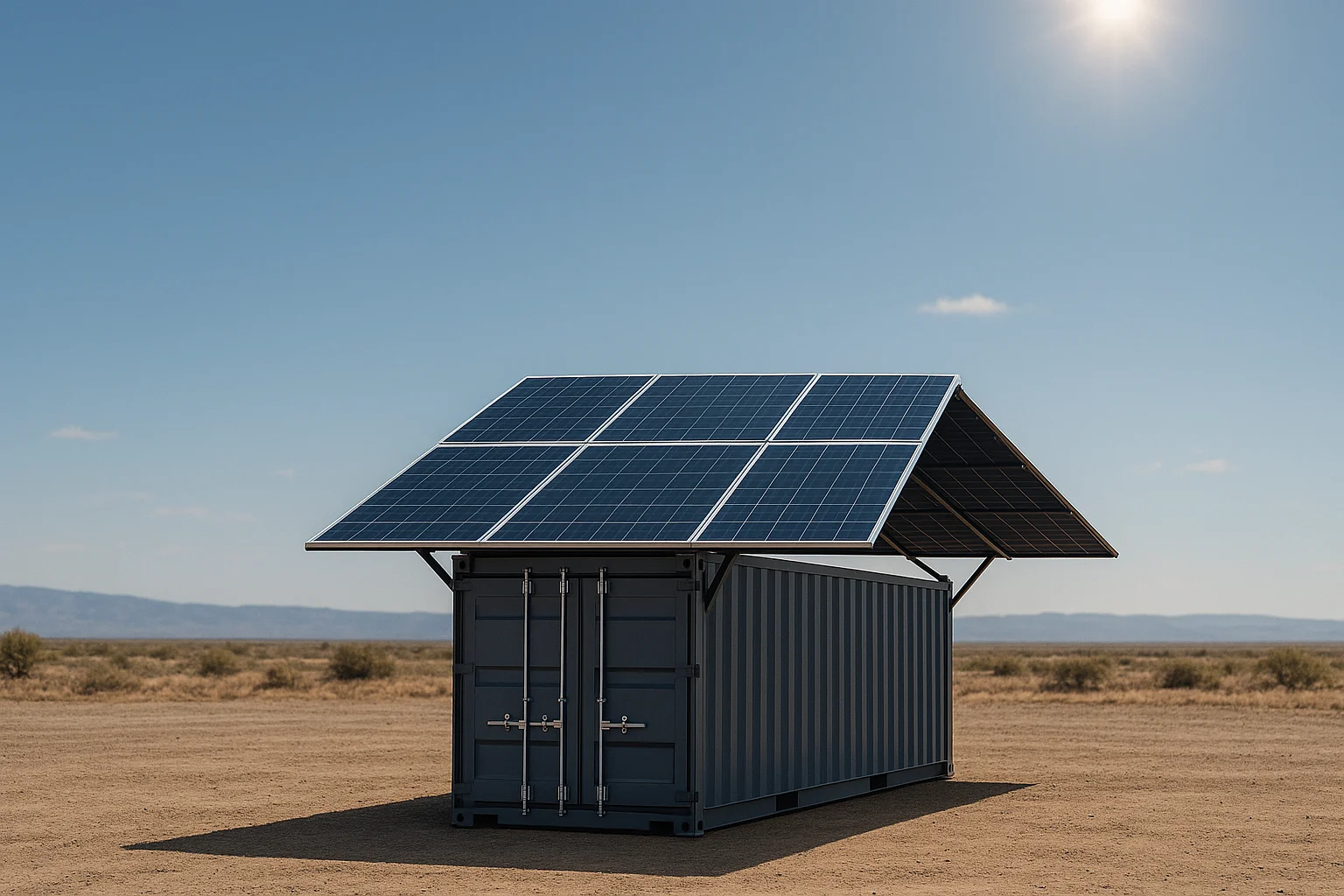
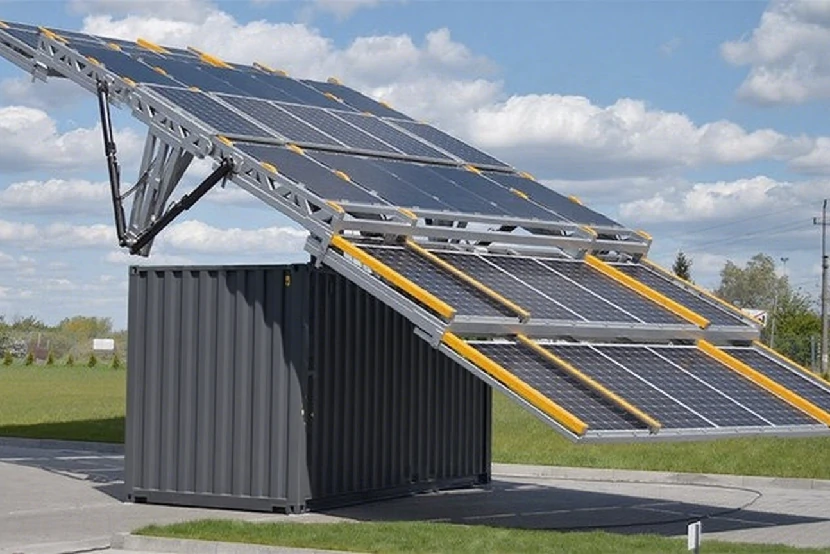
An autonomous solar energy container is not just a conceptual implementation that has been applied in some distant research facilities or humanitarian initiatives. An autonomous solar energy container has become a viable energy alternative for companies and other entities that desire reliable energy that works independently of fragile energy grids and energy fuels. An autonomous solar energy container will be able to produce energy, store it, and then deploy it precisely where it is required in less than five minutes after its implementation. This makes autonomous solar energy containers a vital part of energy independence.
What makes this approach attractive, though, is not only the technology itself, but the way in which it completely reconsiders energy infrastructure. Rather than expanding a grid or balancing a supply chain of fuels, energy becomes something that’s deployed, scaled, and shifted depending on context.
Why energy independence has become a strategic priority
Energy independence is no longer driven solely by sustainability goals. It is now closely tied to operational resilience, cost predictability, and risk management.
The World Bank’s publication Off-Grid Solar Market Trends Report 2022: State of the Sector shows that off-grid solar systems are increasingly adopted because centralized grids struggle to keep pace with demand growth, climate disruption, and infrastructure constraints. This shift highlights a broader reality: energy systems that function independently are often more reliable than those that depend on long-distance transmission and multiple intermediaries.
For industrial consumers, construction sites, telecommunication systems, or disaster recovery initiatives, downtime is costly. In a standalone solar container, the problem associated with downtime is specifically overcome where power is generated at the desired location.
What defines an independent solar power container
Essentially, anautonomous solar energy container is an entirely self-reliant energy solution fully incorporated intoa standardized shipping container size. The solar energy container integrates solar cells, inverters, energy storage systems, and energy managers.
Modular by design, scalable by need
Containerized solar energy differs from fixed solar energy in that it is a modular system. Additional capacity in a solar energy system can be added in containers, unlike new capacity in a fixed system, where a new power plant needs to be designed and constructed.
Self-sufficient operation
An autonomous solar energy storage container functions on its own without the need for further inputs after it is placed in use. The solar energy powering the energy generation function of the pile provides battery charging throughout the daytime hours, while the energy supports nighttime and low-irradiance conditions.
Built for mobility and speed
The independent solar power supply system can be moved through the use of the available logistical support. This is because the system can come in standardized container sizes, which can be set up in different sites, such as in the rural areas, and can be accomplished in a short period of Months.
Off-grid solar power containers versus traditional solutions
Traditional off-grid power solutions typically rely on diesel generators. While familiar, they introduce fuel dependency, emissions, noise, and volatile operating costs.
The International Energy Agency’s publication Renewables 2025 explains that solar photovoltaics remain the most rapidly deployable renewable technology for decentralized energy systems, largely because of falling component costs and improved storage integration. In practical terms, this means solar-based container solutions now compete not only on sustainability, but on total cost of ownership.
A comparison highlights the difference clearly:
| Aspect | Diesel Generator | Solar Power Container |
| Fuel dependency | High | None |
| Operating cost volatility | High | Low |
| Maintenance intensity | Frequent | Moderate |
| Emissions and noise | Significant | Minimal |
| Scalability | Limited | Modular |
This is why many organizations treat solar containers not as a backup, but as a primary energy asset.
Where standalone solar containers deliver the most value
Others independent solar power containers include those that offer a range of benefits.
Remote and off-grid operations
Mines, rural stations, or islanded networks may currently be incurring large costs regarding energy transport. An autonomous solar container can lower the risks associated with transport and increase the level of energy security.
Temporary and mobile infrastructure
Project sites, event venues, logistics, and disaster response operations can benefit from energy solutions whose fluidity matches the nature of their missions. This makes containerized solar solutions for energy versatile because one does not have to rent power sources repeatedly.
Grid-constrained or unstable regions
For areas where the power grid is not very stable, a solar container can serve as a buffer. This can work in either a stand-alone setup or a hybrid setup.
Technology maturity and supply chain readiness
One concern decision-makers often raise is whether containerized solar systems are mature enough for long-term deployment. From a technology perspective, the answer is increasingly clear.
The U.S. Department of Energy’s publication Solar Photovoltaics Supply Chain Deep Dive Assessment explains that photovoltaic modules, inverters, and balance-of-system components are now produced at scale with standardized performance and reliability metrics. This maturity supports modular designs like solar containers, where predictability and replacement availability are critical.
This means that the profile of risk involved in the installation of the independent solar power container over the last ten years has greatly changed. There is standardization of components and maintenance knowledge that has become common knowledge, along with information on performance over time.
Key considerations before deployment
Despite the benefits, proper planning is required to successfully implement them.
Solar resource evaluation is still necessary. Even an autarkic solar energy container needs to be sized on the basis of estimated load and local solar irradiation. Battery capacity rather than number of solar panels may be the deciding factor in the reliability of the system.
Load priority is also important in this connection. In many systems, it is important for critical loads to be properly defined in order for energy management software packages to make knowledgeable decisions about power allocation during low-generation periods.
Finally, scalability for the future needs to be thought about from day one. Perhaps one of the most compelling reasons to take a container-based design solution has to do with scalability.
Choosing energy independence with confidence
An autonomous solar energy container is an innovation in the production, ownership, and management of energy. Energy is no longer dependent on infrastructure or the fluctuating market of fuels but is local and controlled.
In off-grid situations, under grid regimes, or dynamic settings where businesses conduct activities, the above model offers more than power supply solutions to these organizations. It offers them predictability, robustness, and dynamic adaptability. Technological maturity is attained with fully established supply chains and increasing adoption rates across the globe.
The next step, therefore, is to analyze where energy independence can be of most value to you. Look at areas of high energy risk and/or expense, and view the solar container less as a prototype project and more as a part of the infrastructure. A distinct change in perspective, in and of itself, often provides the needed stimulus to achieve energy independence.
Contact US