
What Size Solar System Is Needed for 30 kWh Daily Average?
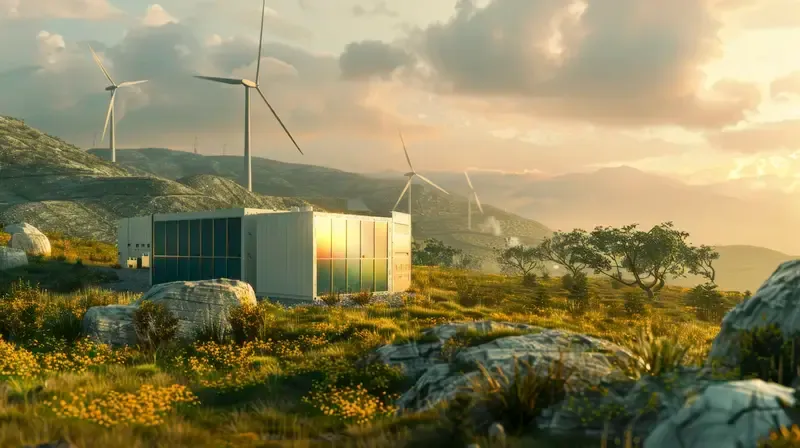
A household or small facility using 30 kWh of electricity daily is on the higher end of electricity usage. To calculate the correct solar system capacity, however, there is more to simply divide electricity usage by solar panel output. There are sun hours, efficiency, and format types such as rooftop or solar container to consider.
For a solar system to be correctly sized to support a 30 kWh daily usage, the result is between 7 to 10 kW of photovoltaic capacity. However, this is assuming certain conditions regarding solar irradiance and efficiency over time.
Learning about these factors is important to avoid over- or under-sizing a solar system that is either incapable of providing power or is overpriced for unused capacity.
Converting Daily Energy Demand Into Solar System Capacity
The first step would be to transform the electricity consumption pattern into a solar power production capacity.
Most solar power systems work based on the peak sun hours available. Peak sun hours refer to the equivalent hours of a day during which the solar intensity averages around 1,000 W/m^2.
On an average, in most parts of the world, the available peak sun hours range from 3.5 to 6 hours a day.
A simplified sizing formula looks like this:
Required Solar Capacity (kW) = Daily Energy Use (kWh) ÷ Peak Sun Hours
If a location receives 5 peak sun hours per day:
30 kWh ÷ 5 h ≈ 6 kW
However, real solar systems experience losses from inverter conversion, wiring resistance, temperature effects, and panel degradation. These typically reduce output by 15–25%.
Once losses are included, the practical capacity becomes:
6 kW ÷ 0.8 ≈ 7.5 kW system
That is why most installers recommend 7–10 kW solar systems to reliably produce around 30 kWh per day.
Typical Solar Panel Count for a 30 kWh System
The size of the solar system can be easily imagined in terms of the number of panels used.
The power generated per panel in modern residential solar panels ranges from 400-450 watts. The number of solar modules depends on the power rating of the modules.
| Panel Wattage | Panels for 7 kW | Panels for 8 kW | Panels for 10 kW |
| 400 W | 18 | 20 | 25 |
| 450 W | 16 | 18 | 22 |
On an average, a household consumes 30 kWh of power daily. Under normal conditions, a household would need 18-22 solar panels.
The roof space required would be in the range of 35-50 square meters.
How Location Affects the Required Solar System Size
Solar irradiance varies widely across regions, and this directly changes the size of the solar system needed.
For example:
| Location Type | Average Peak Sun Hours | System Size for 30 kWh |
| High-sun regions | 5.5–6 h | 6–7 kW |
| Moderate climates | 4.5–5 h | 7–8 kW |
| Low-sun regions | 3.5–4 h | 9–10 kW |
Even within the same country, the difference can be substantial. Cloud cover, seasonal changes, and panel orientation also influence actual output.
The International Energy Agency’s publication Approximately 100 million households rely on rooftop solar PV by 2030 shows that residential photovoltaic systems are expanding rapidly worldwide as households increasingly offset their daily electricity demand through distributed solar generation. This trend reflects the growing feasibility of systems sized to meet typical household consumption levels such as 20–35 kWh per day.
Battery Storage Considerations
Most users considering a solar system for a daily demand of 30 kWh are also considering a battery storage system.
A battery system does not increase the solar system’s total output; it simply allows for the storage of extra generated power during the day to be used at night. The amount of storage depends on how much of the daily demand is after sunset.
Typical storage system configurations:
| Usage Goal | Recommended Battery Capacity |
| Partial evening backup | 10–15 kWh |
| Overnight autonomy | 20–30 kWh |
| Full off-grid capability | 30–40 kWh |
Grid-connected solar systems often require 10-15 kWh storage batteries for homes, which can provide power during the evening hours from the solar power generated during the day.
Containerized Solar Systems for 30 kWh Loads
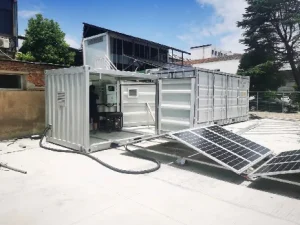
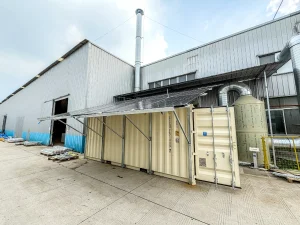
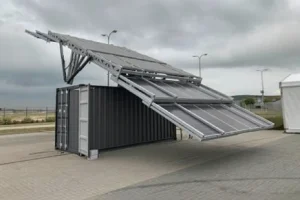
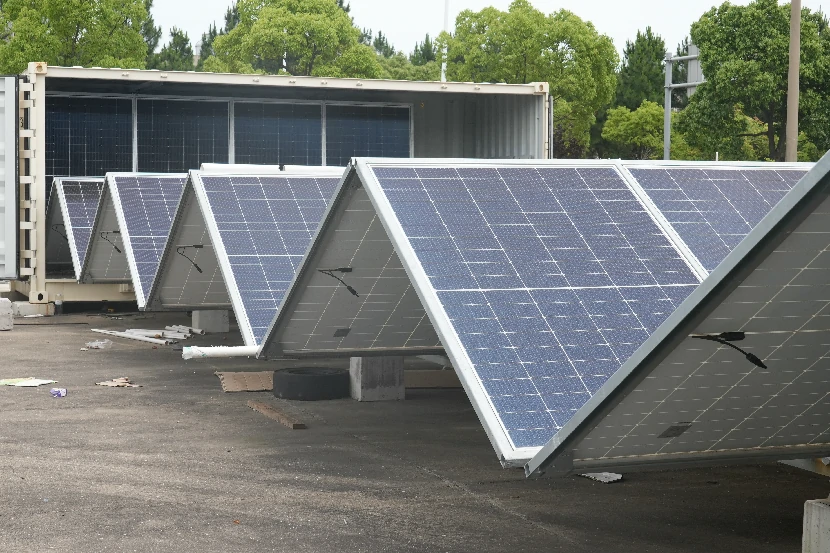
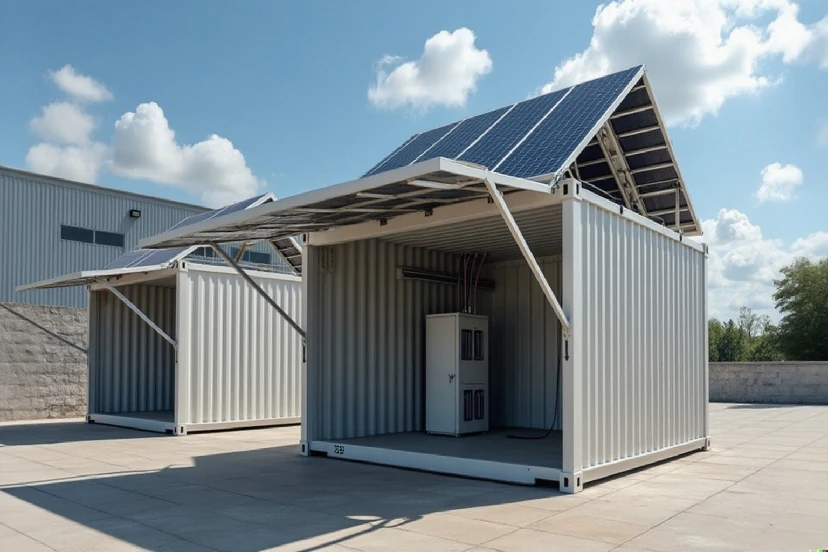
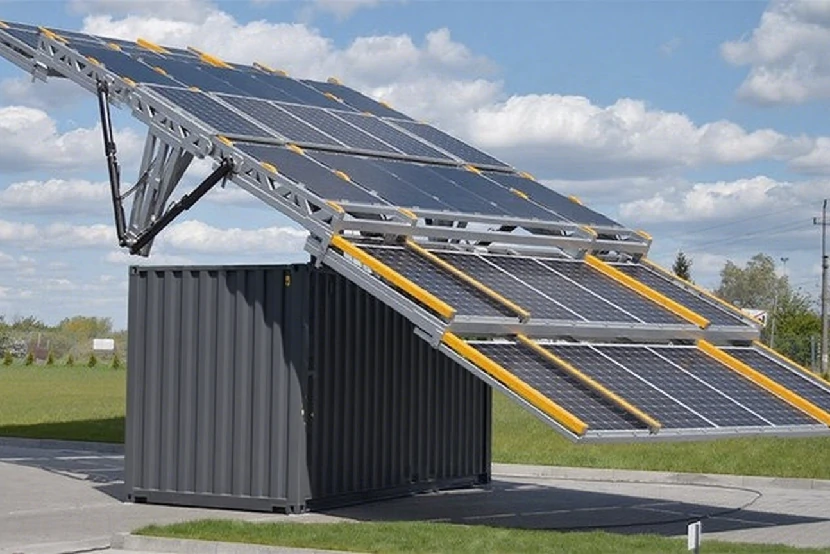
An increasingly popular alternative to traditional installations is the containered solar system, also referred to as a solar container.
The following are some of the integrated components in a containerized solar system:
- Photovoltaic Panels
- Inverter Systems
- Battery Storage
- Monitoring Electronics
- Pre-Wired Distributions
Unlike traditional installations, in which all these components have to be separately installed, the containerized solar system can be described as a self-contained power station.
For loads that average 30 kWh per day, containerized systems can include:
| Component | Typical Range |
| Solar array capacity | 8–12 kW |
| Battery storage | 20–40 kWh |
| Container size | 10–20 ft unit |
Such systems are useful in:
- Remote buildings
- Farms and agricultural facilities
- Telecom stations
- Temporary construction sites
- Disaster recovery power
The installation time of these systems can be greatly minimized since most of the components have already been assembled in the factory.
Real-World Factors That Influence System Size
Even a well-calculated system should take a few real-world factors into consideration.
Panel Orientation and Tilt
Panels facing the south are generally considered to produce the most power. Panels facing in a different direction may reduce power production by as much as 10-20%.
Seasonal Variation in Energy Production
Solar power does not have a consistent production rate throughout the year. Winter production may be significantly lower.
Electrical Load
Houses with high electrical loads during the day may use solar power more efficiently.
System Degradation
Solar panel systems lose power over time. Most lose power at a rate of 0.3-0.7 percent per year.
Practical Recommendation
A feasible design for most homes or small facilities that use 30 kWh of electricity per day would be as follows:
- 7-10 kW capacity photovoltaic array
- 18-22 modern solar panels
- 35-50 m² of installation space
- optional 10-30 kWh battery storage
A solar system that needs to be independent of the main power grid or be installed in a remote area could be provided as a containerized solar system that includes battery banks.
Before the design of the solar system is finalized, it is recommended that the solar irradiance and installation restrictions be checked. A solar system that is sized correctly will not only meet the energy requirements per day but also increase the return on investment.
Contact US