
Off Grid Solar System Solutions for Remote Indonesia
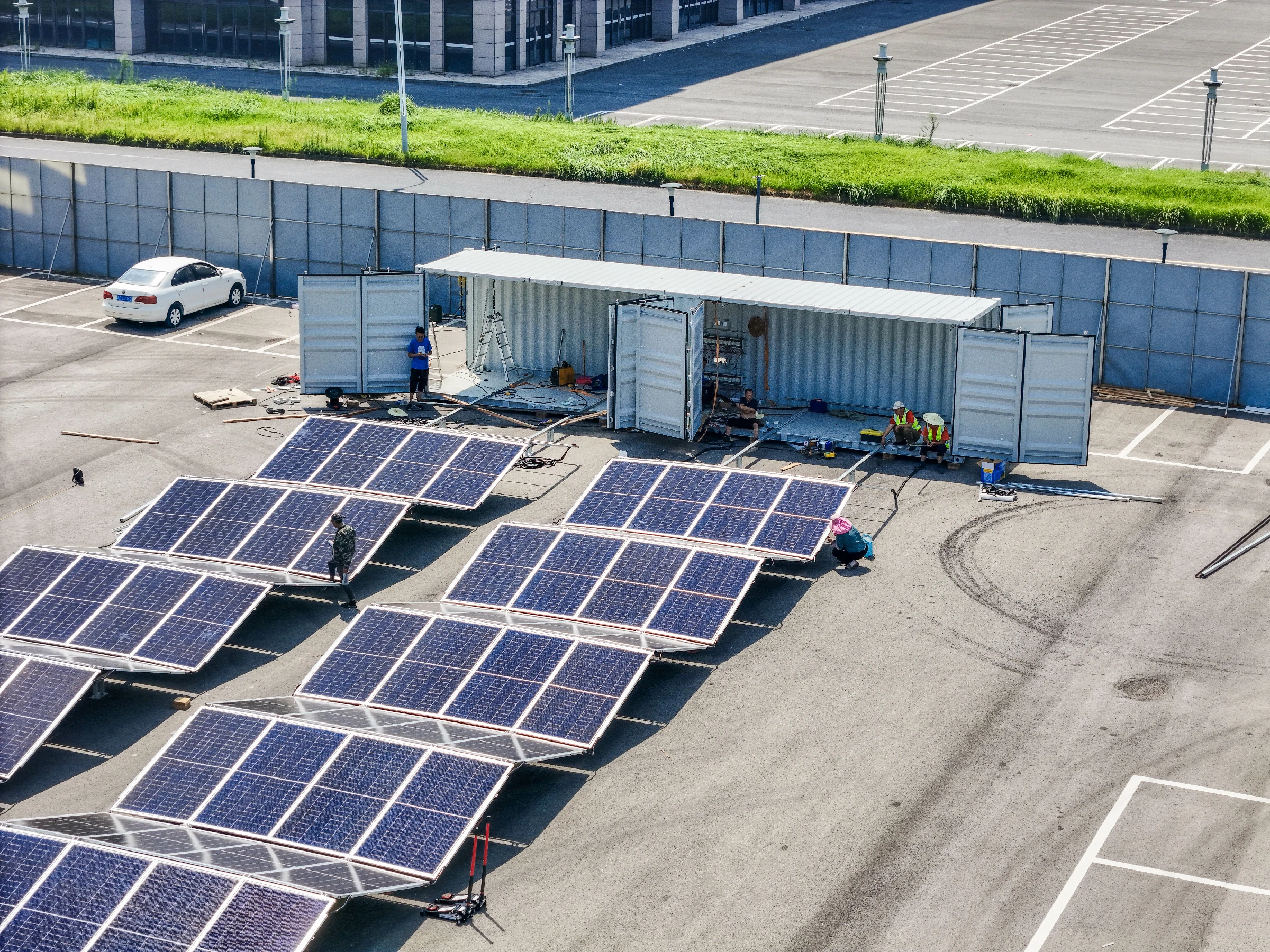
In Indonesia, electricity supply is still not evenly distributed. Thousands of islands, remote villages, mining sites, and construction sites are often far from electricity supply. In such areas, a mobile off-grid solar system is a good solution. It is a self-contained solution for generating electricity. It is movable and expandable in accordance with increasing electricity demand.
Containerized solar technology is one solution for remote areas. Solar panels, batteries, and power converters are placed in a container. It is movable by road or sea. Once placed in a remote area, it operates independently from the national grid but still produces electricity.
For project developers in remote areas in Indonesia, knowing how a containerized solar solution works and where it is best used is very helpful.
Why off-grid solar systems are essential in island and remote regions
This is particularly due to the geographical conditions in Indonesia. Some islands have small populations and are far apart. Thus, there is little incentive for grid extension. Generators using diesel have traditionally been used in such situations. However, this is accompanied by a number of drawbacks.
Firstly, fuel supply to remote islands is expensive. Secondly, maintenance is costly. Once the supply runs out, electricity is no longer available. Solar systems produce electricity locally using a readily available natural resource.
A modern off-grid solar system uses photovoltaic modules, battery systems, inverters, and energy management systems. Batteries are important in such systems. They allow electricity to be used during the night.
The U.S. Department of Energy’s publication Microgrid-Integrated Solar-Storage Technology (MISST) explains that integrating solar generation with battery storage enables microgrids to maintain stable power even when the main grid is unavailable. In practical terms, this architecture allows remote communities or facilities to operate reliably without constant external energy supply.
For areas where fuel supply is not readily available, this change from fuel-driven systems to locally generated solar power can greatly alleviate energy costs.
How a Mobile Solar Container Makes It Easier
As described, conventional solar systems can take considerable time to be built on site. Separate transportation of equipment, weeks of construction, and specialized engineering crews are often necessary.
A mobile solar container simplifies that process.
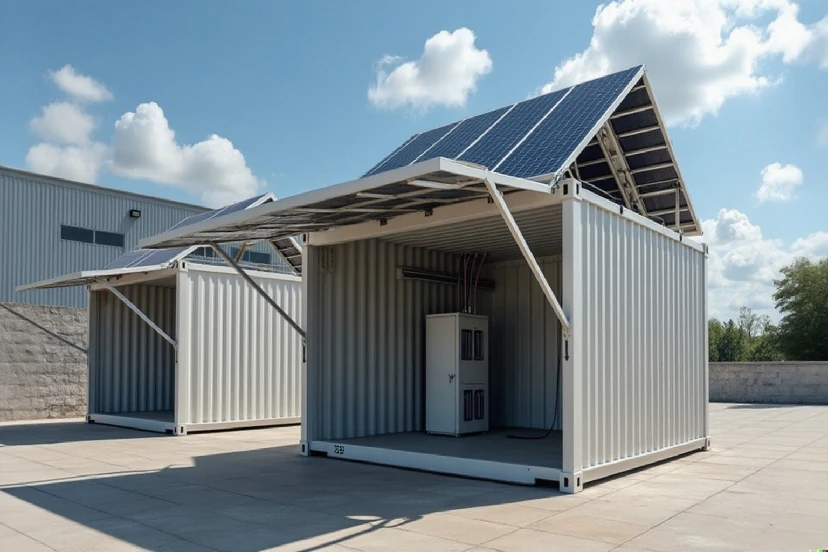
In this method, the essential elements of the solar system, like the batteries, inverters, monitoring systems, and protection devices, are pre-assembled within a shipping container.
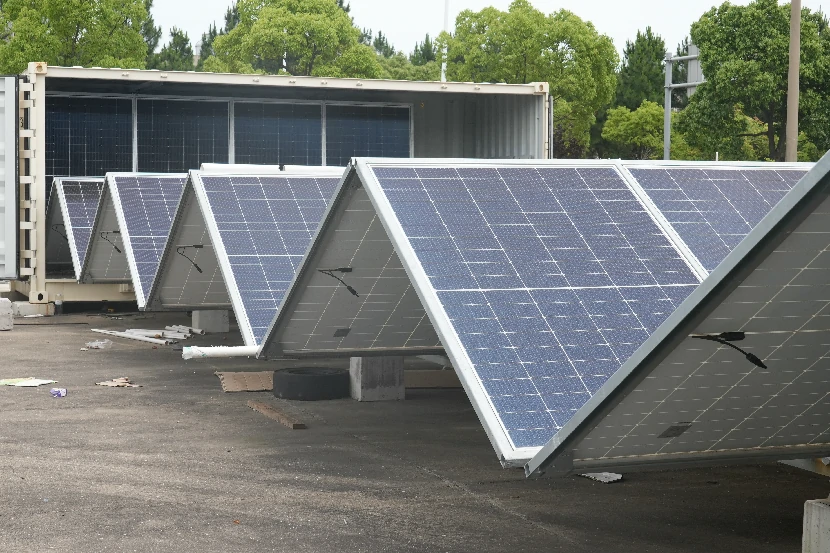
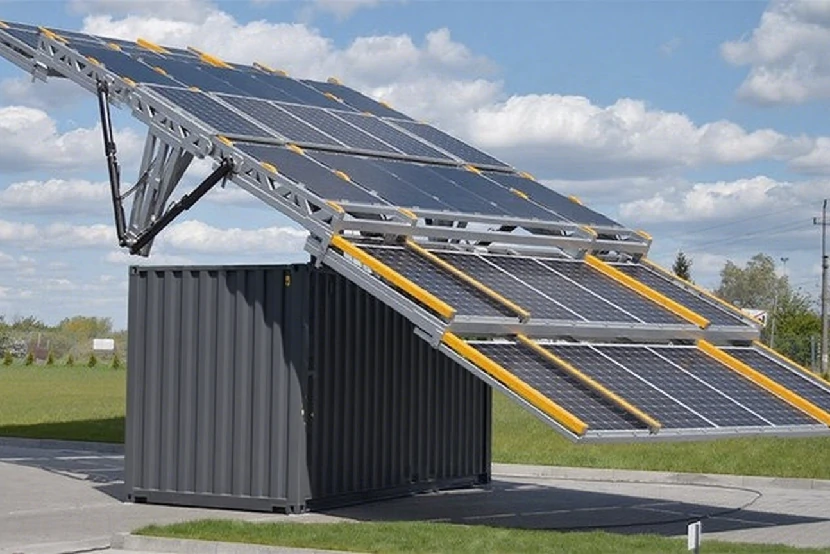
The solar panels are mounted on nearby structures or on foldable frames that are secured to the container.
The end result is a self-contained energy system that can be transported like regular cargo.
Key Advantages of Using Containerized Solar
The table below shows a simplified comparison of containerized solar systems with conventional off-grid systems built on site.
| Feature | Containerized Solar System | Conventional Off-Grid Solar |
| Installation time | Fast deployment, often within days | Weeks of on-site installation |
| Mobility | Fully transportable | Mostly fixed |
| System integration | Pre-engineered and factory tested | Assembly done on site |
| Scalability | Additional containers can be added | Expansion requires redesign |
| Logistics | Delivered using standard shipping infrastructure | Multiple shipments and components |
As the container serves as a protective enclosure, the sensitive electronics are thus protected from the elements.
This approach also makes project logistics easier. Developers can thus transport an entire energy solution to a distant site using existing shipping channels, which is very helpful in an archipelago state such as Indonesia.
Engineering principles underlying containerized solar microgrids
Despite the simplicity of the containerized solar solution, the design principles employed inside the container are the same as those employed in an advanced microgrid solution.
Inside the container, the following systems are integrated:
- Battery storage modules
- Power conversion equipment (inverters and charge controllers)
- Energy management systems
- Safety and protection devices
- Remote monitoring interfaces
These systems have to work in a coordinated manner to ensure a balance between electricity generation and consumption.
The study titled D3T Microgrid Deployable Solar PV System Report, published by Sandia National Laboratories, shows that deployable solar microgrid systems can be engineered for rapid field deployment while maintaining stable power management and integrated battery storage control.
In practical terms, this means that the solar units can be used as microgrids. This is because they can control the flow of power, distribute the power to the loads, and charge the batteries.
The users of the solar containers in remote locations, such as telecommunication towers, agriculture processing, or island communities, will benefit from the automation.
The applications of mobile off-grid solar containers
Mobile solar containers are not limited to use in one type of industry. This is due to their flexibility, which makes them valuable in different types of off-grid locations.
Common applications include:
Island electrification
In many small islands, permanent electrification plants are not available. Containerized solar systems offer electrification for communities.
Temporary industrial projects
Mining exploratory sites, construction sites, and infrastructure development projects often require electrification for a limited period. Solar systems offer mobile electrification for such sites.
Disaster response and humanitarian operations
In many natural calamities, permanent electrification plants are destroyed. Solar containers offer electrification for such emergency situations.
Telecom and digital infrastructure
Telecommunication towers are often far from electrification plants. Solar systems offer electrification for such towers.
In many situations, electrification is done in a hybrid manner, i.e., solar systems are used as the primary source, and generators are used as a backup during periods of low sunlight.
Planning an off-grid solar container project
Before using a containerized solar system, some practical issues need to be considered.
First, the energy demand must be considered. The daily energy demand, or the daily electricity required, dictates the size of the solar array and the capacity of the batteries. If the solar array and batteries are too small, power failures might frequently occur. On the other hand, if they are too large, costs might be unnecessarily high.
Climate and solar irradiance information are also essential. If the climate is favorable, receiving much solar irradiance throughout the year, photovoltaic systems can be used. However, if the climate changes according to the season, more batteries might be required.
Logistics for transportation must be taken into account, although it might not be a major issue since shipping containers are made for transportation. However, if the area is too isolated, special transportation equipment might be required.
In addition, since solar systems have batteries, regular inspections are required to ensure the efficiency and longevity of the system.
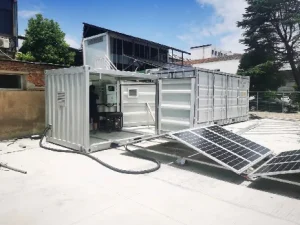
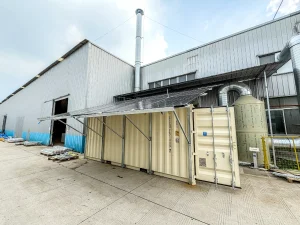
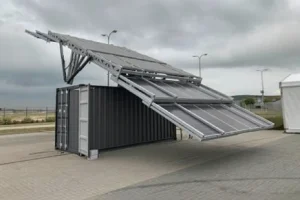
For areas where conventional grid extension is slow or impractical, a mobile off grid solar system is a viable solution for providing electricity. Containerized solar technology is a technology that uses a shipping container to house a solar power system, providing a mobile solution for electricity. This is particularly important for areas in Indonesia, such as island environments and remote industrial areas, where conventional grid extension is impractical. It is important for organizations considering off grid energy solutions to first understand their power needs. With proper planning, a containerized solar solution is a viable solution for providing electricity in areas where conventional infrastructure is not possible.
Contact US