
How Solar Container Reduce On-Site Installation Costs by 40%
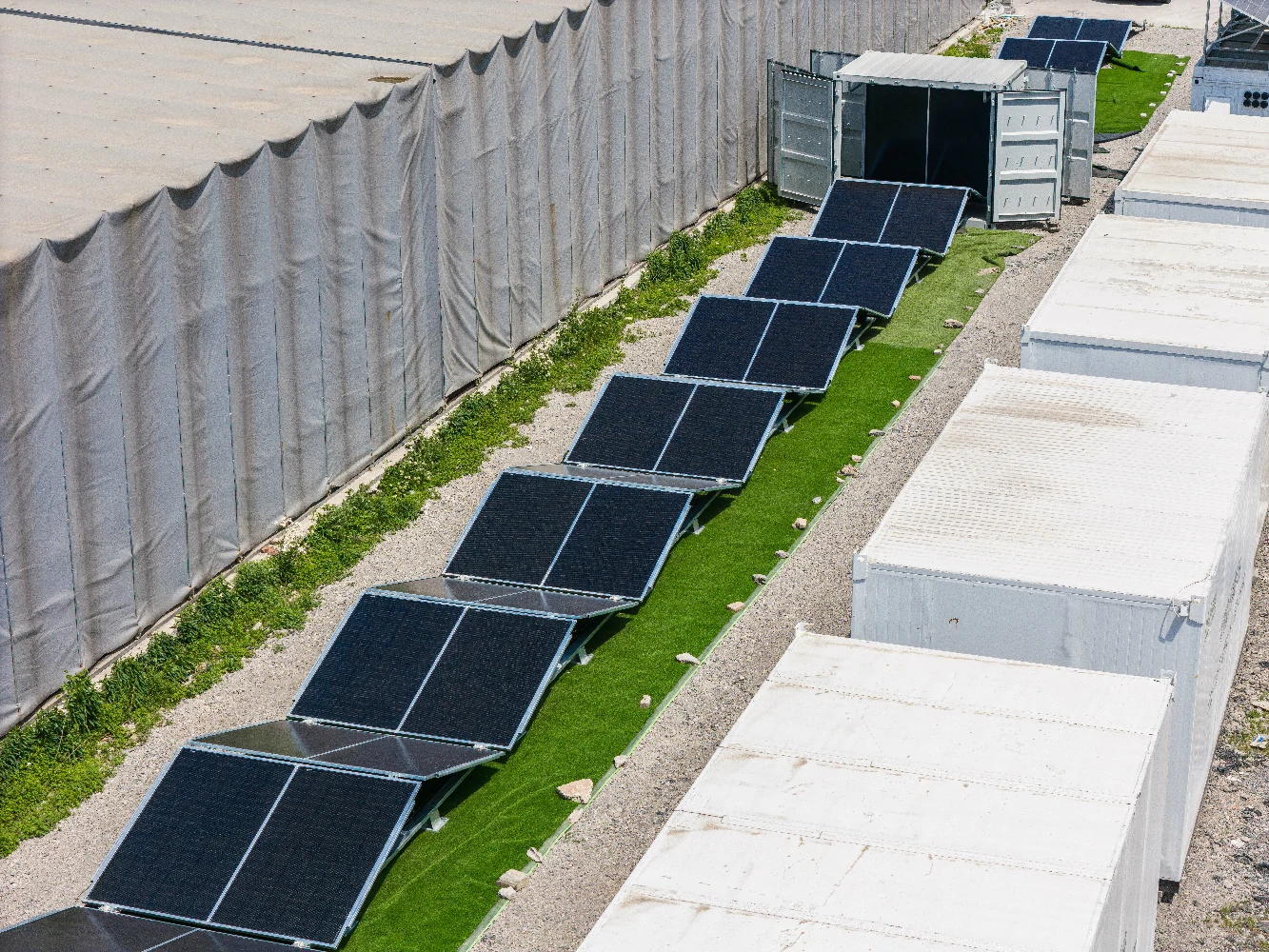
A solar container can be defined as a pre-engineered solar system, which is packed in a container for easy movement. This contrasts with the conventional solar system, where the solar system components are assembled on-site for the solar project. In a solar container, most of the components are assembled in a factory environment, as opposed to on-site assembly for a conventional solar system. This difference in solar system assembly, in turn, affects the cost of solar project installation, which is considered a costly process in solar projects.
When comparing solar project developers, the difference between a conventional solar system and a solar container system can be attributed to the time, labor, and coordination involved in solar project installation, which are considered responsible for the 40% cost reduction in solar container installations.
What Makes a Solar Container Different From Traditional PV Systems
Conventional solar systems have a linear process flow. The design is done by engineers, components are procured separately, and finally, everything is put together in the field.
Solar containers change this process flow. The electrical design is already wired, mounting structures are standard, and testing is complete before shipment. The site team’s main job after receiving the container is to put it in place, deploy the panels, and connect the output cables. This reduces the site work that needs to be done, thereby reducing the amount of manpower needed.
This is especially useful for remote or temporary sites where mobilization costs may account for a large part of the overall cost.
Where Traditional Solar Installation Costs Come From
To make this savings clearer, consider the costs involved in on-site work:
- Civil works and foundation preparation
- Mounting structure assembly
- Electrical wiring and conduit installation
- Inverter placement and configuration
- Engineering work on site
- Testing and commissioning
- Equipment rental costs
Each of these activities has its own costs, including labor hours, equipment, and logistics. Delays, however, can add up very quickly, particularly in hostile environments such as mining sites, construction sites, or disaster relief areas.
Solar containers, on the other hand, allow for all this work to be done in a factory, where costs are lower.
Reduced Labor Requirements Drive Immediate Savings
Labor costs are often the largest variable in a solar installation budget. With a containerized solar system, fewer skilled technicians are needed on site. Instead of needing separate teams for electrical work, mechanical work, and commissioning, a smaller team may be used for the installation.
Pre-wired components also minimize conduit requirements and termination work. Pre-assembled inverters minimize the need for alignment and mounting. Testing also saves time during the installation process. These factors may reduce installation labor costs by as much as 30-50%, depending on the size of the installation.
The benefits become more dramatic when considering areas where skilled solar technicians are hard to find. Traveling to a remote area for installation may also require additional costs for allowances and accommodations. With a solar container, fewer technicians may be needed for a shorter period.
Faster Deployment Minimizes Equipment and Logistics Costs
Time on site has a direct relationship to cost. Cranes, lifts, storage space, and safety supervision are just a few factors that can impact the cost. The fact that the solar containers are mostly assembled before delivery means the deployment time is only a matter of days rather than weeks.
Shorter installation periods mean:
- Equipment rental is for a shorter time
- Supervision costs are lower
- Temporary infrastructure costs are lower
- Weather-related installation delay is minimized
- Project management costs are lower
The publication Mini Grids for Half a Billion People, released by the World Bank, shows that modular and pre-assembled solar systems significantly accelerate deployment timelines, which in turn lowers infrastructure and installation costs in distributed energy projects.
This is perhaps one of the main reasons why containerized solar systems help in saving costs.
Pre-Integrated Engineering Helps Reduce Changes
It is common knowledge that conventional solar systems face problems due to engineering changes. This is usually caused by uneven terrain, cable issues, or inverter placement.
However, solar containers have a fixed design. This means that electrical distribution panels, protection devices, and control systems are integrated prior to delivery. This reduces the need for engineering changes.
This also increases the overall repeatability of the installation process. This is particularly beneficial for solar developers who need to deploy several systems in different locations. This reduces costs over a period of time.
Factory Testing Lowers Commissioning Expenses
Commissioning of traditional PV systems includes checking the integrity of the wires, checking the protection devices, configuring the inverters, and checking the faults, among others. This requires specialized personnel.
Solar containers are tested before they are shipped out. Most of the tests are carried out in controlled environments, except for the site, where the process is reduced to simply checking the output.
The study titled Techno-economic scenario analysis of containerized solar energy, published by Development Engineering, finds that containerized solar systems reduce both installation complexity and lifecycle costs compared to conventional energy deployments, largely due to integrated design and simplified commissioning.
This reduces the costs of the installation.
Typical Cost Reduction Breakdown
A simplified comparison:
| Cost Component | Traditional Installation | Solar Container | Typical Reduction |
| Labor | High multi-team deployment | Small crew | 30–50% |
| Installation time | 2–4 weeks | 2–5 days | 60–80% |
| Equipment rental | Extended | Minimal | 25–40% |
| Engineering changes | Frequent | Rare | 15–30% |
| Commissioning | Full on-site testing | Pre-tested | 20–35% |
| Logistics coordination | Complex | Simplified | 15–25% |
Collectively, these reductions can add up to savings of as much as 40% in the overall on-site installation costs.
Less Site Preparation Work
Solar containers can be placed on the ground, eliminating the need to install the traditional solar systems on the racking systems that are required to be aligned and anchored on the site.
Temporary usage of the solar container means that the container can be relocated, thereby eliminating the need to rebuild the site infrastructure for the solar systems.
When Solar Containers Provide the Greatest Savings
There are certain conditions where the savings that are provided by solar containers are the greatest:
- At remote locations
- Temporary usage
- Construction locations
- Mining locations
- Disaster relief locations
- Military locations
In these environments, mobilization costs and installation complexity are typically high. Containerized solar solutions minimize both.
Additional Operational Benefits
Even though the emphasis is on the installation cost, the solar containers provide other benefits which affect the projects:
- Less risk for the projects due to the design standardization
- Earlier return on investment through the early generation of power
- Fewer complexities for the projects through the jurisdictions
- Scalability through the modular additions
- Maintenance accessibility
These benefits complement the cost factor.
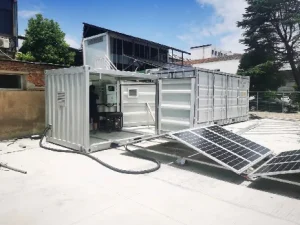
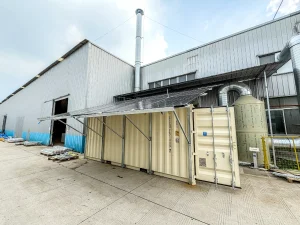
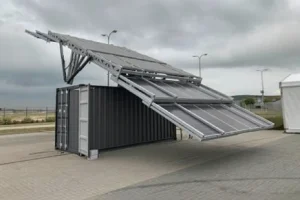
The cost savings from solar containers can be as much as 40% by reducing the need for installation work done on-site and instead increasing the work done in the factory. The cost savings are primarily driven by the installation timeline and the need for specialized installation crews.
As a conclusion for businesses looking to implement a distributed solar solution, the key takeaway is to consider the cost of installation as well as the cost of the equipment. In situations where speed, mobility, and/or remote access are requirements for a solar installation, a solar container can provide the lowest cost installation and the fastest deployment.
Contact US