
Containerized Off-Grid Agricultural Solar for Rapid Deployment
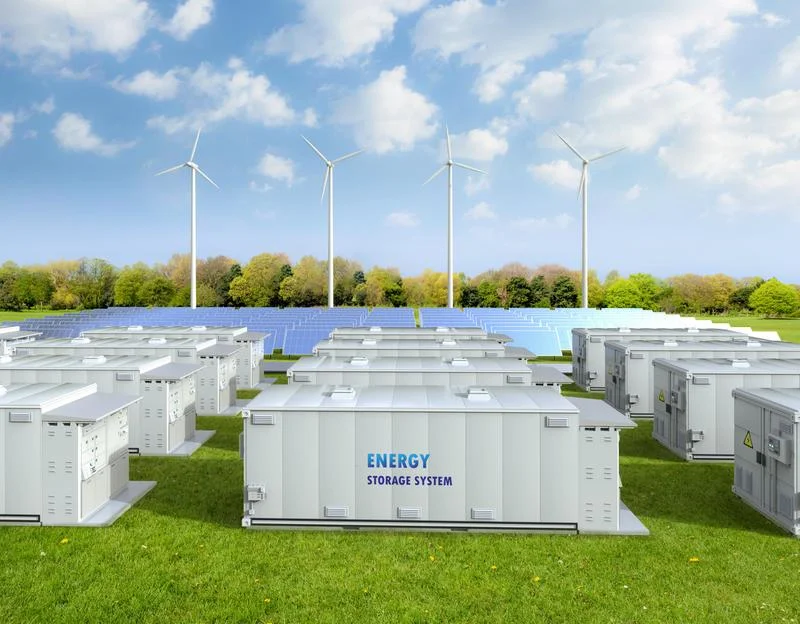
Off-grid agricultural solar in containers will soon become one of the most pragmatic options for powering agricultural enterprises located far away from urban centers, as well as temporary agricultural installations and swiftly set-up food production facilities.
In contrast to the traditional method that requires months to engineer and install a solar energy system, containerized solar is delivered in prefabricated form, ready to use right after delivery.
Moreover, containerized agricultural solar perfectly fits into the paradigm of modern agriculture modular farming, climate-controlled container-based farming operations, and decentralized food production facilities.
Why Containerized Solar Is Transforming Off-Grid Agriculture
Standard off-grid agriculture solar systems tend to feature scattered parts. Panels come individually. Batteries have to be assembled on-site. Manually wiring inverters can be time-consuming.
Containerized solar technology solves all these problems.
Batteries, inverters, controllers, and safety equipment all come pre-packaged inside a container. Installation is transformed into a logistical endeavor as opposed to a building one.
Here are some benefits of that change:
- Quick deployment in remote locations
- Reduced installation costs
- Consistent system operation
- Increased safety
- Ease of repositioning
Speed is essential for agricultural operations. Planting seasons are short. There might be sudden irrigation needs. Refrigeration demands could shoot up unexpectedly.
Rapid Deployment
Speed is the hallmark of off-grid agricultural solar containerization. The containerization allows for transportation by regular freight means, such as trucks, trains, and cargo ships.
Upon arrival, deployment might involve:
- Placing the container
- Setting up the solar panels
- Connecting the loads
- Turning on the system
Deployment may take days, not months.
The mobile farming approach works best for:
- Irrigation systems that move around
- Farms in distant locations
- Greenhouse farming that moves with the seasons
- Agricultural response to disasters
- Remote farm research
As the energy system is modular, scalability is possible through incremental capacity increase. Extra containers could be deployed without changing the whole structure.
Modularity is becoming increasingly common in agriculture as well.
Containerized Solar and Container Farming
Container gardening has become popular in recent times. Container farming in controlled environmental agriculture can ensure production throughout the year, irrespective of extreme climatic conditions.
But container farms need a consistent source of power. Power requirements arise from lighting systems, HVAC, water pumps, and sensors.
This is where off-grid solar power for container agriculture becomes particularly relevant.
The Stanford University and University of Alaska Fairbanks publication Development of a Tool for Optimizing Solar and Battery Storage for Container Farming in a Remote Arctic Microgrid demonstrates that optimized solar-battery microgrids can reliably support container-based agricultural production in remote and extreme environments.
The implication is important. Containerized agriculture and containerized solar technologies are not only compatible but also complementary systems that operate in a similar environment.
These include:
- Modularity
- Remote control
- Climate tolerance
- Performance consistency
Combined, these elements create a mobile agricultural system.
Off-grid Irrigation and Mobile Agricultural System
In addition to container farms, there is another application where containerized solar can provide value-added benefits. Off-grid irrigation relies on generators that run on diesel fuel.
By incorporating solar power, containerized solar energy solves these challenges.
Mobile solar-powered irrigation containers can be transported to remote farms, quickly set up, and moved to different locations. This feature makes solar irrigation useful for:
- Short-term crop cultivation sites
- Crop rotation practices
- Soil reclamation efforts
- Water extraction in distant locations
The study titled Portable Solar-Powered Irrigation Control Station into a Container for Sustainable Agriculture, published by the University of Almería, shows that containerized solar irrigation systems improve operational flexibility and support sustainable agricultural deployment in remote areas.
It further emphasizes another phenomenon, which is the mobility of energy infrastructure that parallels the mobility of agriculture.
Components of Containerized Off-Grid Solar Agriculture
Containerized solar solutions usually have built-in elements that can be quickly deployed and set up:
Energy Storage Solutions
The use of energy storage solutions makes it possible for farms to function at night or in cloudy weather. Lithium batteries are popular since they are efficient and long-lasting.
Energy storage provides the necessary stability for irrigation, refrigeration, and climatic controls in greenhouses.
Inverter and Power Management
A properly integrated inverter system converts the energy collected by solar panels into usable electric current. The system includes several key features such as:
- Load balancing
- Surge protection
- Monitoring
- Diagnostic capabilities
Expandable Solar Arrays
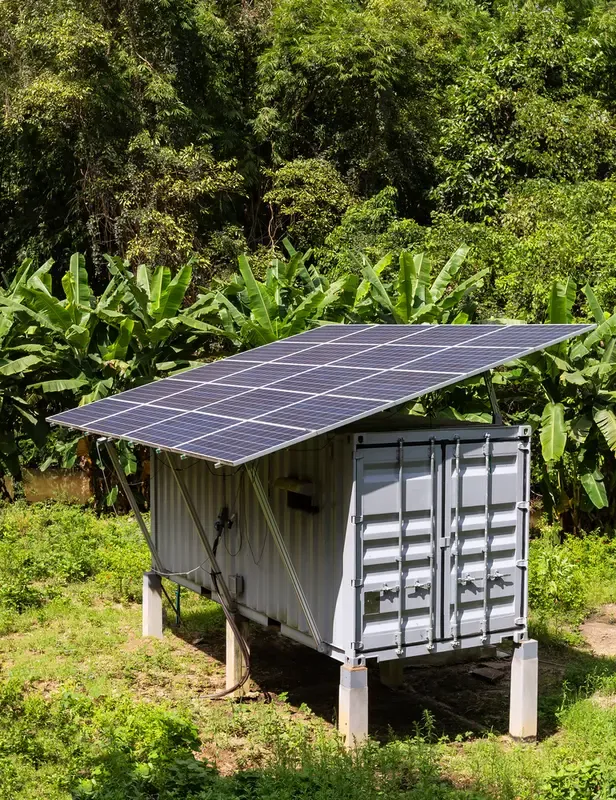
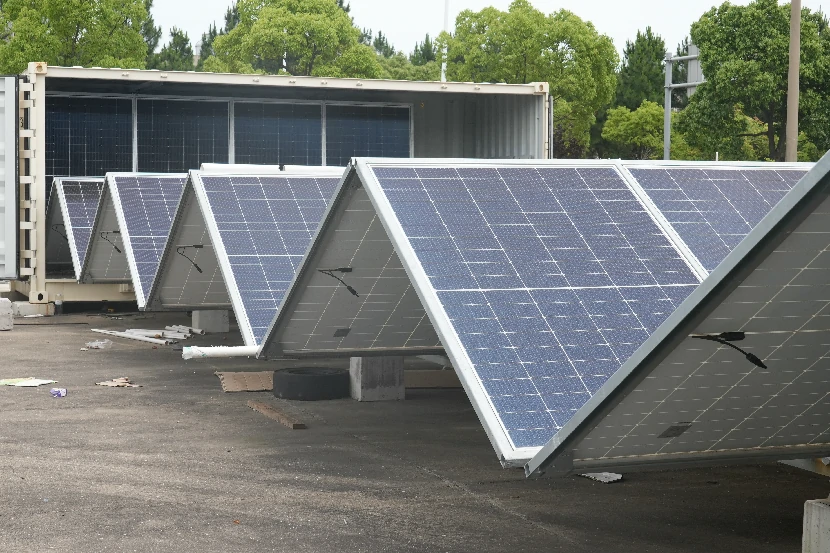
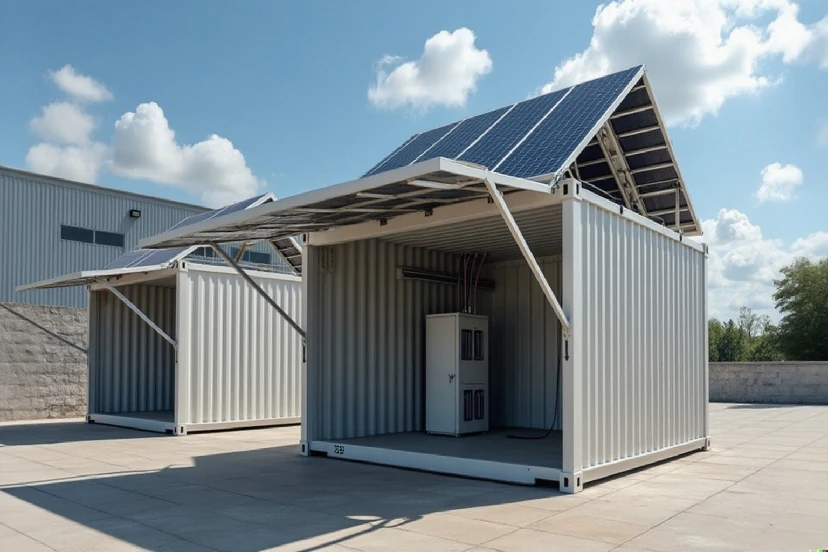
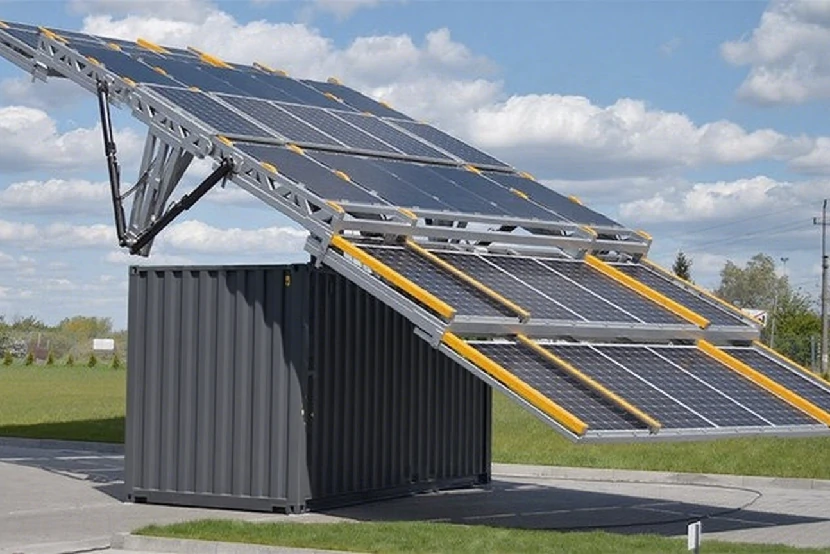
Panels can be placed either externally, on foldable racks, or ground mounts nearby. Some designs incorporate deployable solar wing assemblies that provide fast set up times.
Expandable panels permit scalability in power without replacing the container base.
Examples of Implementation
Off-grid containerized agricultural solar power is currently being considered for the following real-world uses:
Farms in Remote Areas
In regions where the energy grid does not reach, quick installation is beneficial, as it allows farms to become operational prior to the grid reaching there.
Disaster Relief Agriculture
In the aftermath of natural disasters, agriculture becomes an important priority. Containerized solar power can provide rapid deployment of portable agricultural equipment.
Research and Pilot Projects
Much of the research in agriculture is conducted in remote areas. Containerized solar provides support for experimental and climate-based farms.
Seasonal Agricultural Farms
Certain farms operate during the season only, meaning they can be moved when the season ends.
Economic Considerations
Although containers might prove more expensive initially than traditional set-ups, they can lower the overall cost of the project.
Cost-effectiveness is affected by:
- Labor-saving during installation
- Shorter timelines for projects
- Less frequent maintenance
- Simpler permit processes
- Ability to move
If the system will be installed temporarily or in remote areas, the advantages of such a system may justify its higher initial cost.
Moreover, saving on diesel fuel makes it even more profitable.
Challenges and Practical Limitations
Off-grid agricultural solar systems in containers do have some difficulties.
One must factor in transport, particularly in regions where the road network is poor. The installation of solar panels still needs land availability. Battery size should be correctly calculated based on the agricultural load.
However, these drawbacks can be controlled when planned well.
In general, containerized solar power systems offer quicker installation times compared to traditional means.
The Future of Containerized Agricultural Energy
Agriculture is growing increasingly decentralized, automated, and resilient to climatic changes. The energy sector will have to follow suit.
Containerized off-grid agricultural solar fits right into multiple emerging developments:
- Transportable farm units
- Climate-controlled farming in containers
- Remote food production
- Resilient agricultural infrastructure
- Microgrid fast deployments
With advancements in technology, we can expect these solutions to get increasingly smaller, cheaper, and faster to deploy.
The change is comparable to the revolution in computing — from centralized systems to modular and portable solutions.
Agricultural energy is taking the same direction.
Conclusion
Off-grid agricultural solar containerization provides a sensible approach towards quick installation of dependable power in areas that allow for easy deployment and flexible farming setups. With modular construction, integrated power storage, and solar power scalability, off-grid agricultural solar containerization minimizes installation periods while maximizing reliability.
In the case of farmers, it is evident that the benefits include shorter installation periods, less reliance on fuel distribution, and flexibility in moving infrastructure as per requirements.
Any entity considering remote agriculture, container farming, or mobile irrigation would be wise to consider solar containerization during its planning process. A good starting point would involve modular construction and a gradual buildup in a way that minimizes initial risks.
With the increasing trend towards flexible agricultural production methods, off-grid agricultural solar containerization is likely to emerge as a core technology.
Contact US