
Discover the Future of Energy with Mobile Solar Containers
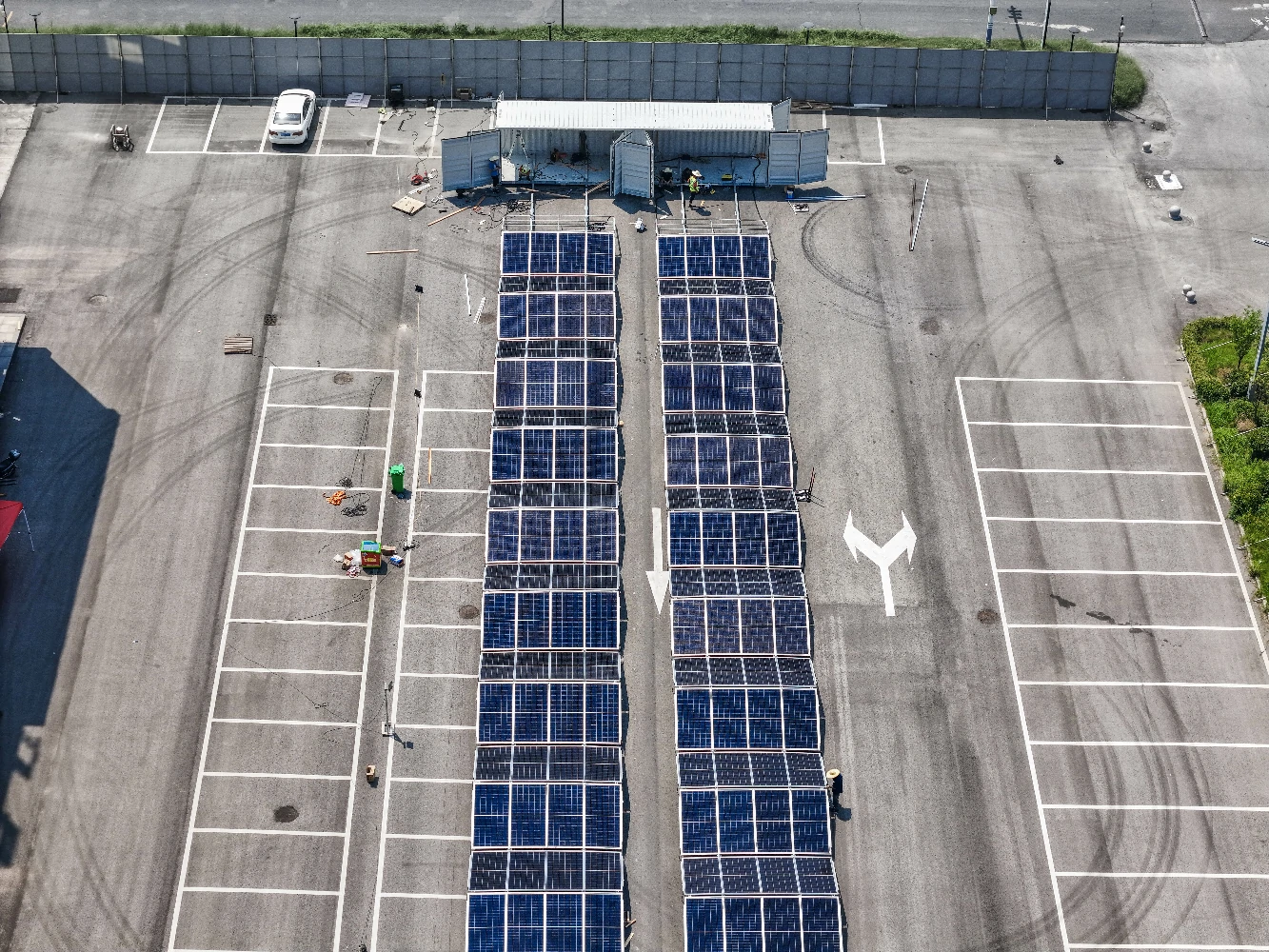
A mobile solar container is not merely an alternative form of solar panel packaging; it is an alternative in terms of how we think about energy system design and deployment. It is no longer necessary to build power infrastructure from the ground up; instead, energy generation, storage, and control can be delivered in a package that is ready to go in just hours.
As energy needs become more distributed and less predictable, from disaster response to remote operations and temporary infrastructure needs, the promise of containerized solar power continues to grow in appeal. The value in containerized solar power is not in its novelty but in its practicality.
Why Mobile Solar Containers Are Gaining Global Attention
The development of mobile solar containers is directly related to the changing nature of energy consumption. Today, there are more people who require temporary, mobile, or autonomous energy.
In many situations, traditional solar systems are either too slow or too specific. For example, the foundations required for a solar system, as well as the permitting time, can be limiting. The solar container avoids these challenges because it is essentially a self-contained system with photovoltaic panels, inverters, and battery systems.
From an engineering perspective, the solar container is attractive because it reduces uncertainty. The systems are factory-assembled, which means that they have already been tested.
Core Components Inside a Solar Container System
Despite differences in design, the technical principles of most solar container systems are the same.
Integrated Photovoltaic Generation
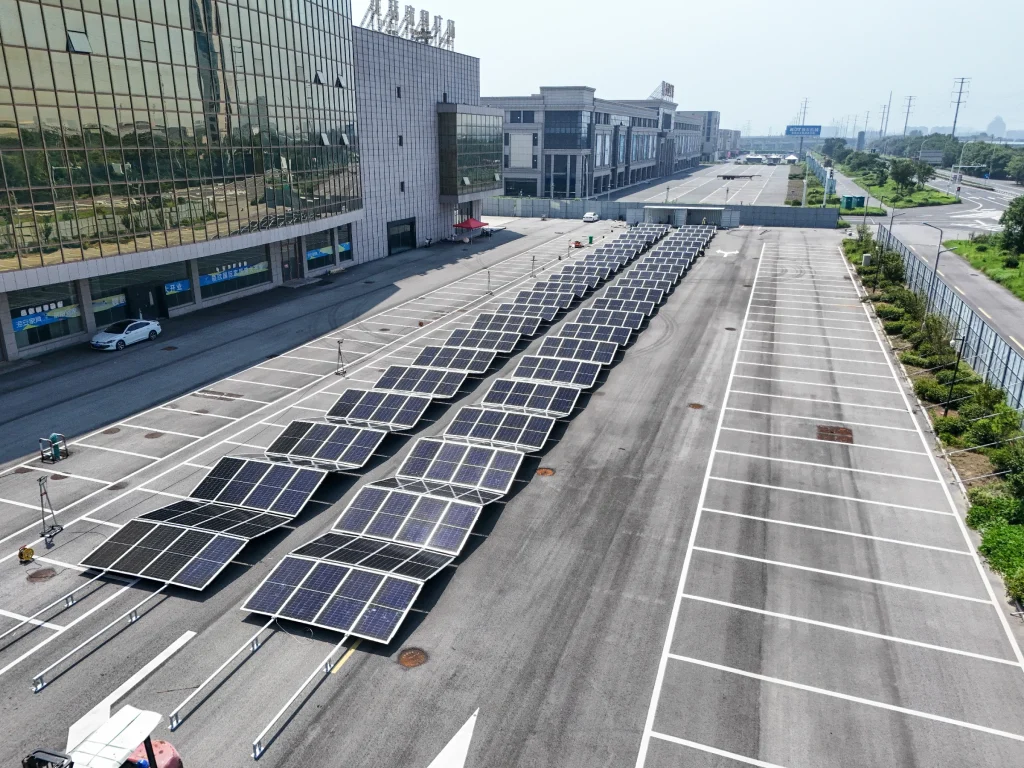
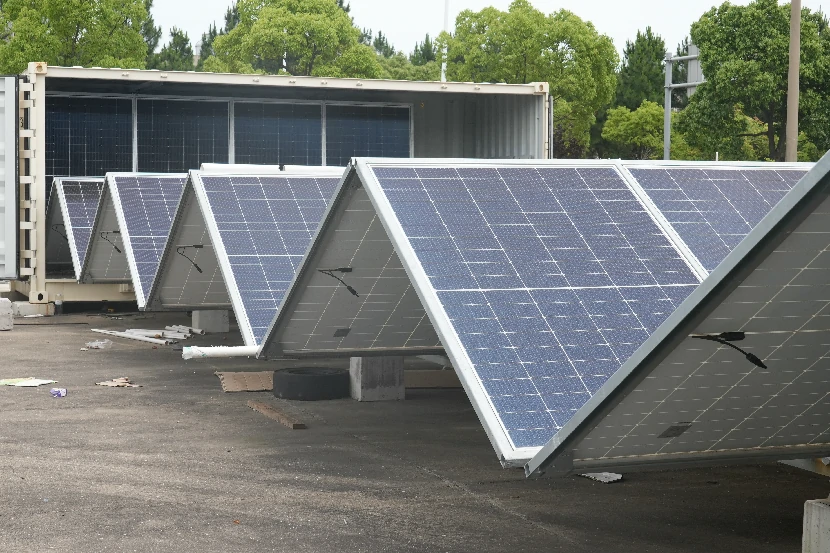
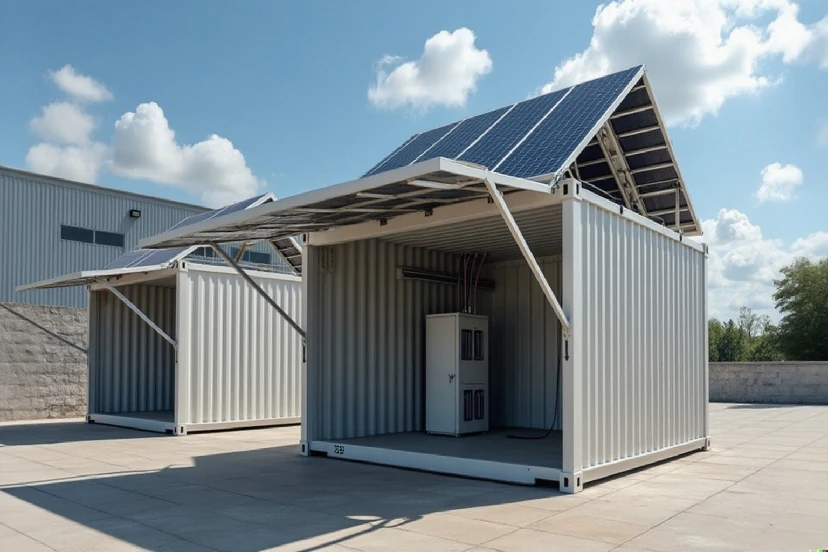
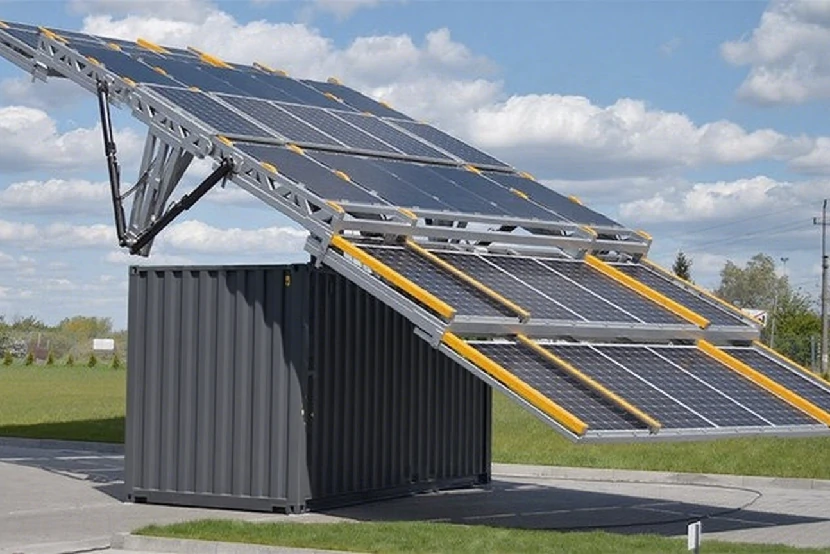
Solar modules are either mounted on portable frames that are attached to the container or stored inside and deployed at the site of use. This ensures a balance between transport security and optimal use.
Energy Storage and Power Electronics
Battery technology and inverters are usually accommodated inside the container itself. This makes it possible to provide stable power supply, load balancing, and autonomous operation without the need for external infrastructure.
Control, Monitoring, and Protection
Monitoring technology is responsible for controlling charging, discharging, and safe system operation. In mobile systems, this level of control is essential because the system of use can quickly change depending on the location.
Academic research has shown that integrating these elements into a single container can achieve reliable performance across multiple operating scenarios. The study titled Performance Analysis of a Solar-Powered Multi-Purpose Supply Container, published by MDPI Sustainability, demonstrates that container-based solar systems can deliver stable power while maintaining flexibility for different applications, including logistics support and temporary facilities. The research highlights how system integration improves efficiency and simplifies deployment under real-world constraints.
Deployment Scenarios Where Mobility Matters Most
Mobile solar containers aren’t meant to replace solar farms that connect to a grid. Their utility comes from particular situations where speed, independence, and flexibility matter.
Remote and off-grid areas
Some areas, such as mining sites and research stations, don’t always have access to a grid supply. Solar containers can offer a constant supply of energy without having to build infrastructure.
Emergency and disaster response
In a disaster, electricity is required instantly, not in months or even a year’s time. Solar containers can be sent to a disaster zone and start generating electricity right away.
Temporary and semi-permanent infrastructure
Construction sites and military bases require energy supplies that can be moved when the site changes. When the site changes, the energy supply changes with it.
A practical government-backed example comes from the United States. The U.S. Department of Energy’s Federal Energy Management Program has documented real-world use of mobile photovoltaic systems in remote environments. The publication Case Study: Mobile Photovoltaic System at Bechler Meadows Ranger Station shows how a transportable PV system was deployed to support operations in a national park setting, where permanent grid extension was impractical. The case illustrates how mobility and renewable energy can work together to reduce fuel dependency and operational complexity.
Technical Advantages Over Traditional Installations
The appeal of solar containers is not just logistical in nature. There are a number of technical advantages that need to be considered.
Standardization and quality control
The advantage of factory assembly is that it is easier to control wiring, componentry, and safety systems. This means that mistakes on site may be less likely than with a traditional solution.
Faster commissioning
The advantage of factory assembly is that it is quicker to install a solar container than it is to install a traditional solution. This is because a number of components are pre-integrated in a solar container, which means that installation time is reduced from weeks to days or even hours.
Scalability through modularity
A solar container can be expanded in terms of additional containers to match increased demand.
Limitations and Design Trade-Offs
Although the advantages are many, the mobile solar containers are not suitable in all cases.
Firstly, the size of the containers limits the capacity of the system. This makes them suitable for small and medium-sized energy needs.
Secondly, the containers face the challenge of thermal management. This is particularly so when the containers are in hot climatic conditions.
Thirdly, there are logistical issues associated with transporting the containers. The containers are standard, but transporting energy systems is not cheap.
These factors do not in any way reduce the value of the solar container concept.
The Role of Solar Containers in Future Energy Systems
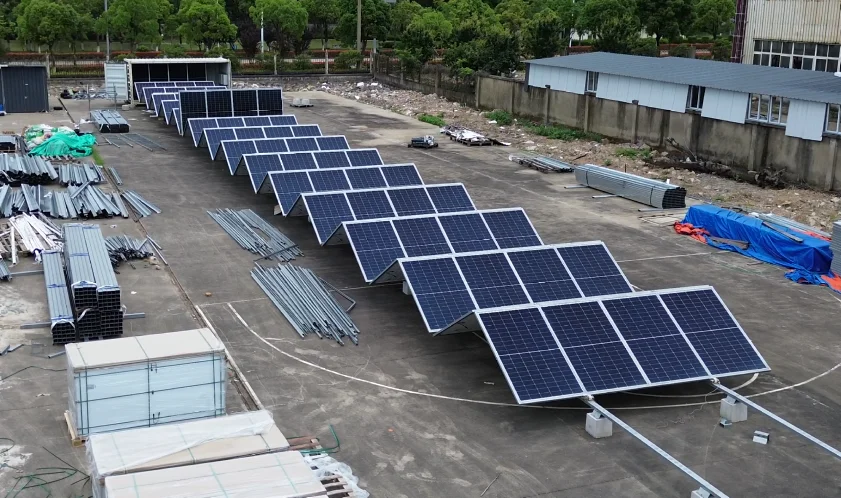
In a decentralized energy landscape, mobile and modular technologies may continue to gain traction. Solar containers can be considered to be consistent with other trends such as microgrids, hybrid renewable systems, and resilience-based planning.
It is important to recognize mobile solar containers not as individual products, but rather as blocks. This is due to their ability to facilitate fast experimentation, temporary use, and incremental scaling, all of which will be crucial in a dynamic energy landscape.
Research and government-backed case studies have pointed to solar containers being able to provide reliable performance while minimizing deployment barriers.
Practical Takeaways for Decision-Makers
For organizations looking at mobile solar containers, the key is finding the right alignment between system capabilities and real-world needs.
For organizations looking for speed to deployment, flexibility in use, and the need for off-grid resiliency, containerized solar solutions should be seriously evaluated. Understanding academic performance studies and government case examples can help ground the understanding of what is really possible.
The future of energy may not always be defined by one large installation but by many smaller systems that are flexible and able to meet needs where and when they are needed most—mobile solar containers are an important part of that future.
Contact US