
Distributed Solar Solutions for Africa’s Power Challenges
In Africa, one of the most persistent impediments to economic growth is access to electricity. In several parts of Africa, expansion of centralized electricity grids is a slow, costly, and sometimes impossible process. This has led to a number of governments, developers, and communities exploring alternatives to conventional electricity solutions.
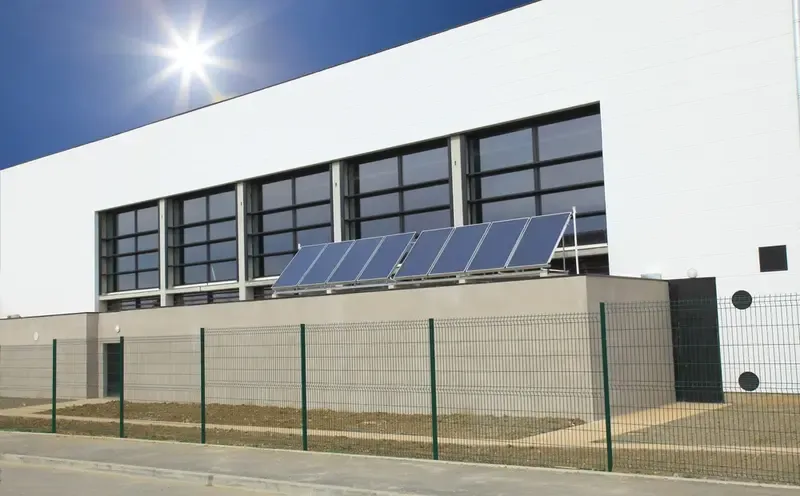
Distributed solar systems have increasingly become a viable option in Africa. Rather than relying on conventional solutions that require vast investments in centralized electricity plants and transmission lines, solar systems and solar containers have made it possible to deploy electricity closer to points of use. This is particularly important in rural Africa.
As Africa’s energy needs increase and electrification becomes more important, distributed solar systems have become more than just an option; it is a plan for Africa’s future.
Why Centralized Power Struggles to Meet Africa’s Energy Needs
The traditional power infrastructure was intended for a region with a high concentration of inhabitants and an established network of electricity transmission. However, Africa is a different reality altogether. For a region with a sparse distribution of inhabitants, transportation infrastructure is often inadequate, and the cost of grid extension is high.
The cost of extending the grid infrastructure across a vast territory is not only high but also takes a long period of time. This means that a region could be waiting for a very long period of time before it is connected to the power grid. Distributed solar power solutions, on the other hand, ensure that a region does not need to wait a long period of time before it is connected to a power source.
The solution also ensures a reduction in power loss. With a distributed solar power solution, there is no power loss because the electricity is generated at the point of consumption.
How Distributed Solar Solutions Enable Faster Electrification
Distributed solar systems are flexible systems. They can vary from small off-grid systems that serve individual buildings to modular mini-grid systems that serve entire communities.
This flexibility is particularly important in Africa, where there are wide variations in energy demand. A village may start with a small solar system to provide basic lighting and communication needs. However, as the village develops economically, more solar panels can be added to increase capacity.
The United Nations Development Programme’s publication Africa Minigrids Program shows that solar mini-grids are among the most effective ways to expand electricity access across underserved regions, particularly where traditional grid extension is economically unfeasible. This finding reinforces the role of distributed solar systems as a scalable and sustainable electrification pathway.
The advantage is that the deployment of the system will take only weeks or months. This is important because, in many areas, access to energy is critical for the improvement of healthcare, connectivity, and the development of small businesses.
The Role of Modular Solar Systems in Scalable Energy Growth
Modular solar systems play a critical role in the growth of the energy market. In many instances, the infrastructure developed is too big for the market. However, with the deployment of the system, the infrastructure will be smaller. Therefore, the advantage is that the infrastructure will be scalable. In addition, the deployment will be in sync with the actual market development. In many instances, the market develops along with the growth of the economy.
Flexible Capacity Expansion
The systems are modular, which means that extra panels, batteries, and inverters can be easily added to a system without having to redesign the whole system. This ensures that systems are cost-effective while at the same time providing room for growth.
For instance, a mini-grid system for a local community could be implemented for residential lighting and phone charging. As local businesses emerge, extra capacity could be provided for refrigeration, agricultural processing, or manufacturing.
Reduced Infrastructure Risk
Large-scale infrastructural projects are costly, but a modular solar system helps spread costs over time.
The study titled Mini-Grids for the Sustainable Electrification of Rural Areas in Sub-Saharan Africa, published by MDPI Energies, finds that solar mini-grids provide a cost-effective and sustainable solution for rural electrification, particularly when modular deployment allows systems to scale alongside community demand.
This shows that there was a need for modular solar design, which explains why it has become a popular approach for many African electrification projects.
Mobile Solar Containers: Power Where It’s Needed Most
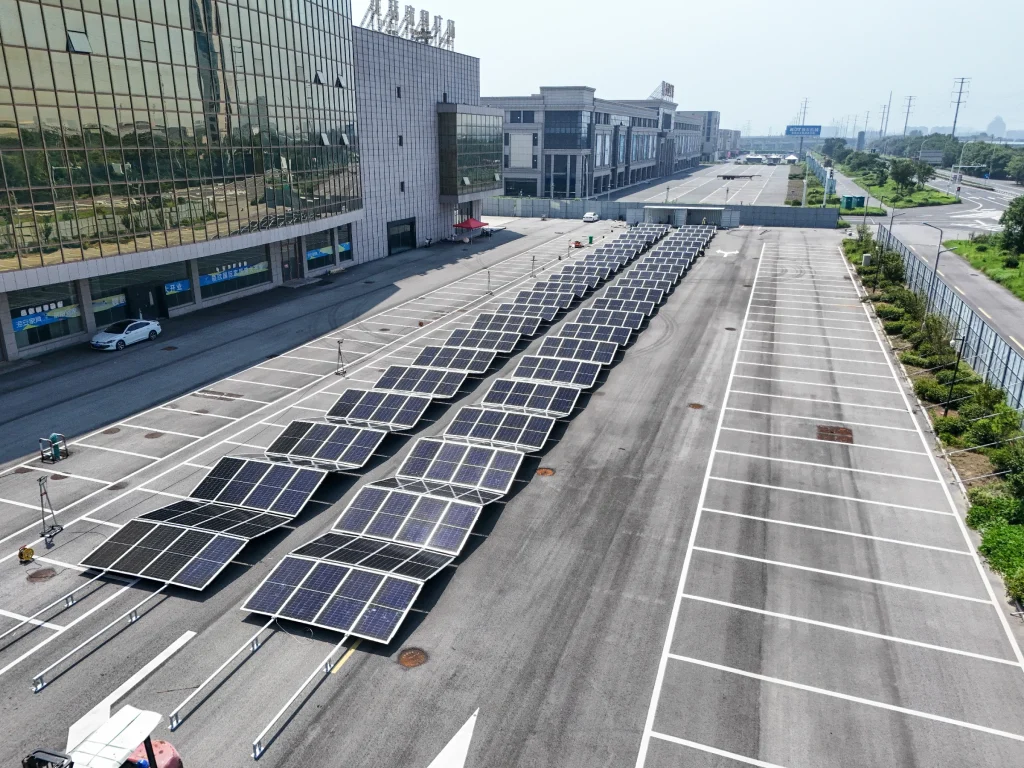
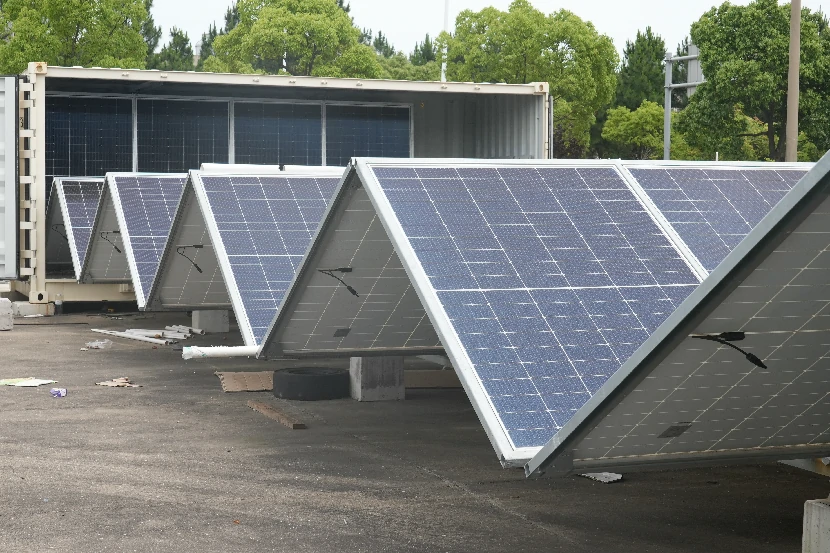
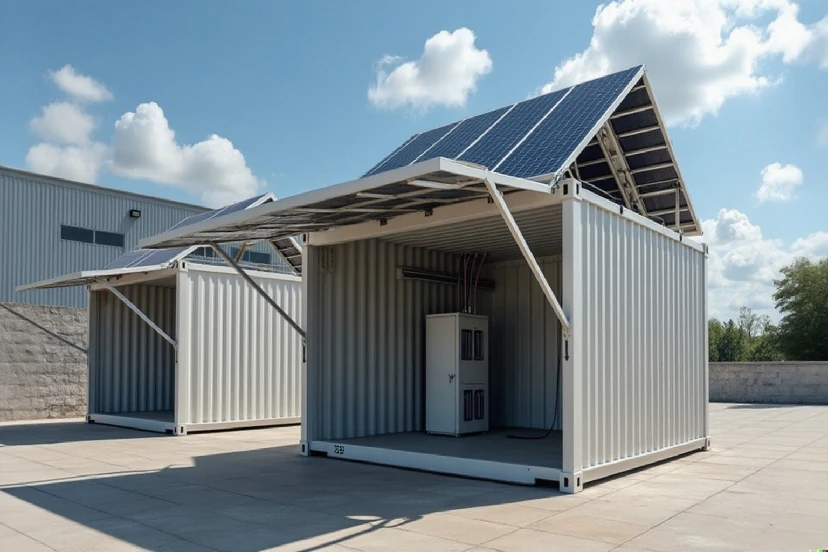
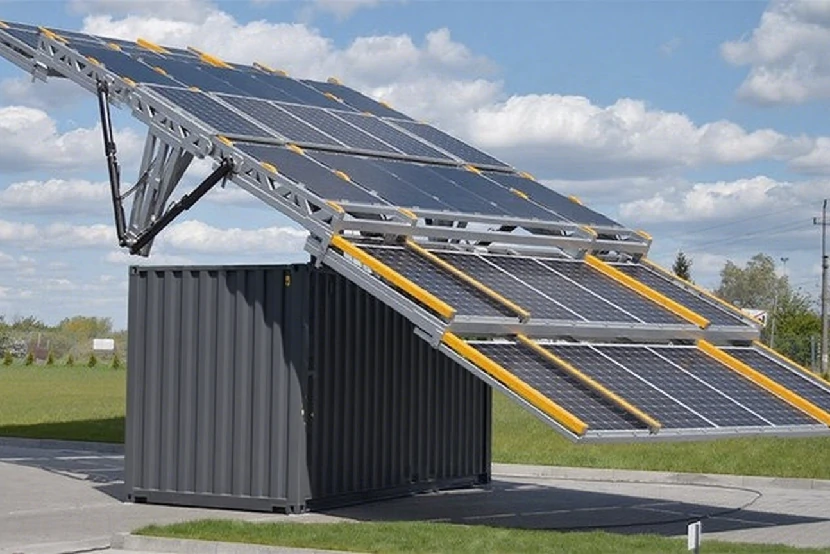
The concept of mobile solar containers shows another shift in solar power distribution. This concept integrates solar panels, batteries, and solar power management systems within a container.
This design allows for quicker implementation in areas where permanent structures cannot yet be established.
Rapid Deployment for Remote Regions
The fact that mobile solar containers can be transported using a truck is a significant advantage. Once they are at the desired location, they require minimal installation. Therefore, they can be used in remote areas, for humanitarian missions, or for temporary industrial projects.
The advantage is significant in areas where infrastructure is a problem. Instead of waiting for the infrastructure to be put in place, power can be generated on the spot.
Temporary and Permanent Applications
The use of mobile solar containers is not limited to temporary applications. In fact, they can be used for permanent purposes. For instance, the containers can be used for temporary purposes, such as construction projects. However, they can later be used for permanent purposes, for example, as a source of power for communities.
Economic and Social Impact of Distributed Solar
However, distributed solar power does not only supply power. It is a means for economic development and social advancement.
The power supply allows small businesses to operate for a longer period. It enhances educational institutions with digital technology. Moreover, the power supply supports healthcare facilities with refrigeration equipment.
The power supply for agricultural businesses allows for irrigation, processing, and cold storage. Such facilities minimize waste, hence boosting agricultural productivity. In the end, the agricultural businesses contribute to the economy.
Distributed solar power creates economic development. The power supply requires technicians for installation, maintenance, and management. Therefore, distributed solar power promotes the development of the workforce.
Challenges and Considerations for Deployment
However, this is not without its challenges. In spite of the advantages, the planning of distributed solar power is a critical issue that must be addressed. The cost of battery storage is a critical issue in the deployment of solar power. However, the cost is going down. In addition, the need for training is critical in order to ensure the sustainability of the system.
However, the challenges facing the deployment of solar power are becoming more manageable with the advancement of technology. Many countries are in the process of developing policies that will ensure the deployment of decentralized power.
The Future of Distributed Solar in Africa
It is anticipated that distributed solar solutions will be a central aspect of Africa’s energy mix. This follows an increase in demand and technological innovation in modular solar solutions and mobile solar containers.
There has been a rise in hybrid solutions in solar energy. This has been achieved by adding storage and backup generation. This helps in providing a reliable solution without compromising sustainability.
Digital technologies are also being used to enhance performance. This includes predictive maintenance, which helps in ensuring operational efficiency.
These technologies are changing the face of distributed solar energy from a niche solution to a mainstream infrastructure.
Moving Toward Scalable Energy Access
Distributed solar solutions can help address Africa’s electricity challenges in a practical way. With modular solar systems, it is possible to scale up gradually, while mobile solar containers can help deploy electricity rapidly to remote or underserved areas.
Therefore, distributed solar solutions can help minimize infrastructure challenges and accelerate electrification in Africa. With improved technology and investment in solar solutions, Africa’s future is likely to be shaped by distributed solar solutions.
Any organization, developer, or policymaker looking to plan electrification strategies for Africa should consider modular and mobile solar solutions as integral components in their long-term planning strategies for Africa’s future.
Contact US