
How Solar Container Systems Power Remote Construction Sites
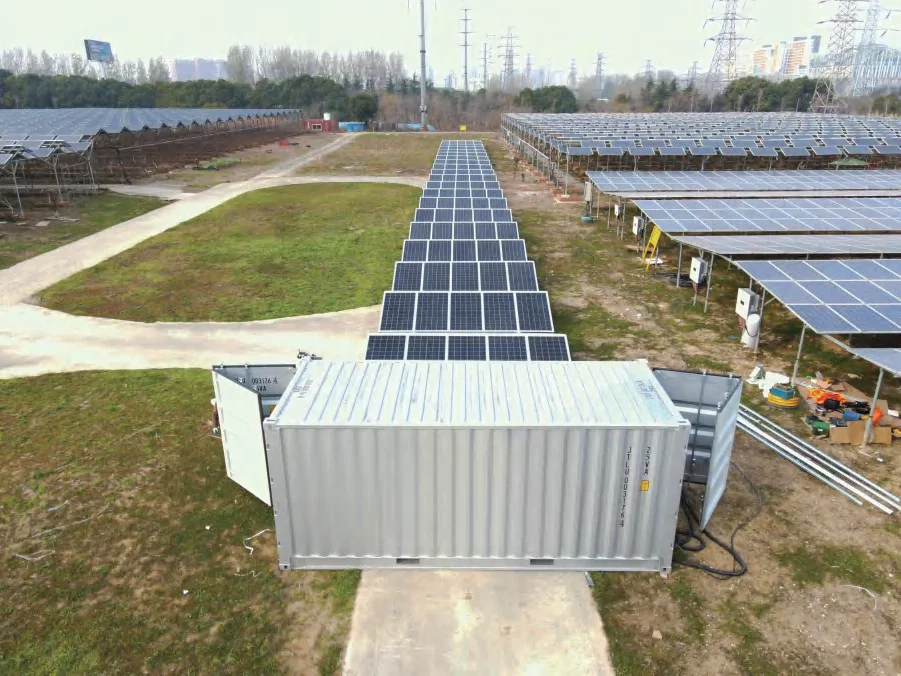
Remote construction sites usually start in an area where access to the power grid is either unavailable or undependable. Diesel generators are the traditional answer, but fuel prices are rising, and environmental regulations are becoming increasingly difficult to ignore. There is a clear need for a clean alternative. A solar container is a way to provide a dependable source of power without the hassle of fuel supply.
Within the first days of the construction site setup, a solar container can supply power for tools, lighting, communications, and temporary facilities. Unlike traditional solar power supplies, a solar container is designed for transport, rapid deployment, and scalability.
What makes traditional power solutions inadequate for use in remote projects?
While diesel generators are commonly used, their disadvantages are more apparent when they are used in remote projects. For example, the transportation of diesel may be hindered by bad weather, bad roads, or regulatory hurdles. Storage of diesel may be accompanied by safety risks, as well as environmental concerns.
The hidden cost of diesel-based power generation
While the cost of diesel is obvious, other costs, such as maintenance, spares, and downtime, are often overlooked. For example, if the diesel generators are down for only a few hours, the project may be stalled in activities like concrete curing, surveying, or communication.
A solar shipping container minimizes these risks since it replaces fuel logistics with a predictable pattern of energy production, even though batteries and back-up systems are still necessary.
What is a solar container, and how does it work?
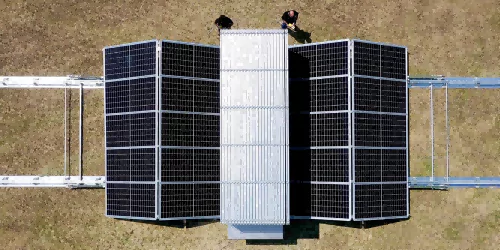
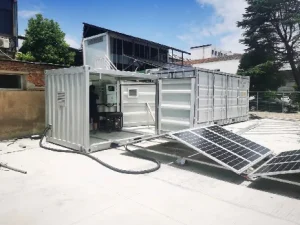
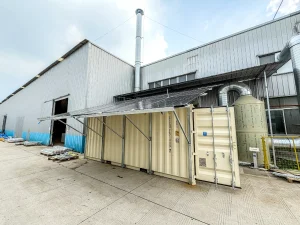
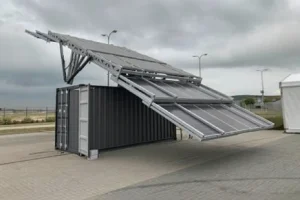
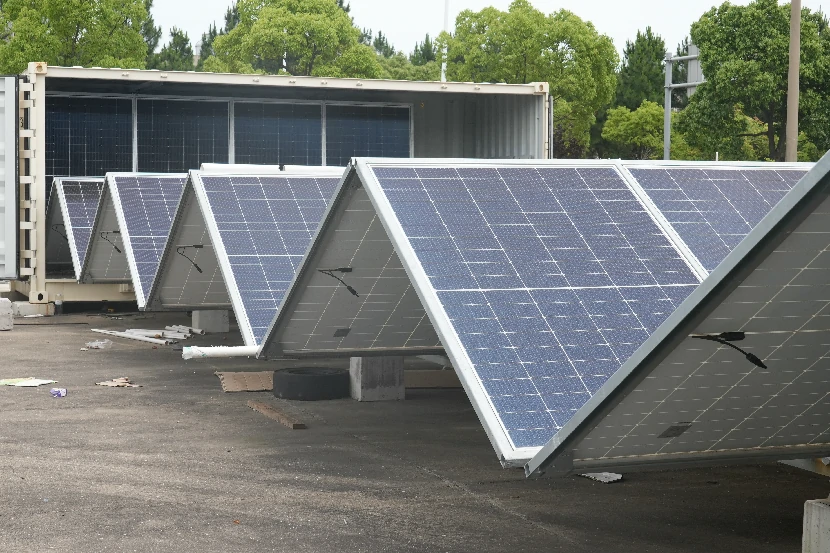
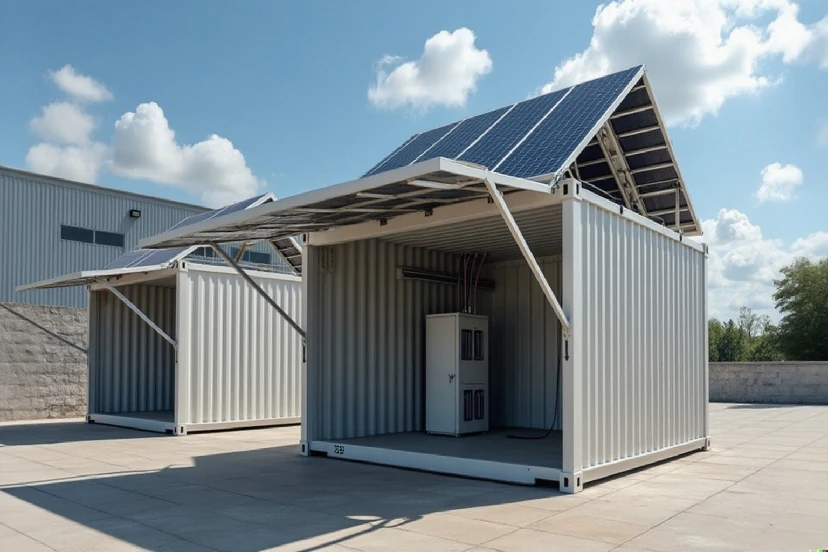
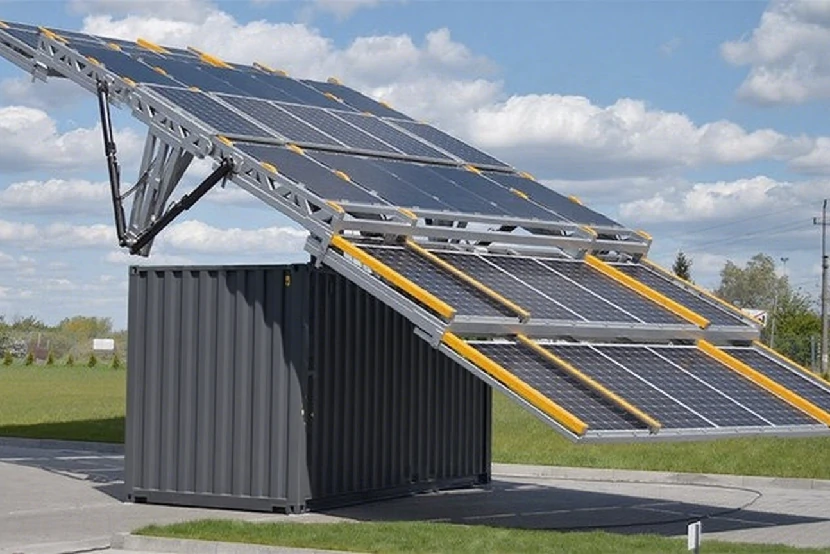
A solar container is a regular shipping container that has been outfitted with solar panels, inverters, batteries, and energy management systems. The solar panels may be mounted on top of the container or come out like a fold-out when it is in place. The container itself acts as a housing for sensitive components to prevent damage from weather or transport.
Core components of a shipping container solar kit
Most systems share a common architecture:
| Component | Function | Benefit on Site |
| Solar panels | Generate electricity | Eliminates fuel reliance |
| Battery storage | Stores excess energy | Enables nighttime operation |
| Inverter | Converts DC to AC power | Supports standard tools |
| Energy management system | Balances loads | Prevents overloads and outages |
| Container housing | Protects equipment | Simplifies transport and setup |
This design allows the crew to deploy the power infrastructure in hours, not weeks.
Key advantages for remote construction sites
The solar container system has several advantages that make it compatible with the conditions of remote construction sites.
Rapid deployment and mobility
The solar container is designed to be transportable through the existing logistics infrastructure, such as by ship, road, or rail.
Scalability for changing power demands
Construction stages are dynamic. Initial stages may need less power, but subsequent stages may need power for heavy equipment, offices, and living quarters. More containers may be added in parallel to increase capacity without needing a new power supply design.
Reduced environmental impact and compliance risks
Many construction sites are required to operate within a set environmental framework. Solar-based power supply is useful in the achievement of environmental targets and the reduction of noise pollution.
The study titled Performance Analysis of a Solar-Powered Multi-Purpose Supply Container, published by MDPI Sustainability, shows that containerized solar systems can maintain reliable energy output in off-grid environments while supporting diverse operational loads. This reinforces their suitability for temporary infrastructure such as construction sites.
Practical use cases on construction sites
Solar containers can power a variety of site operations.
Site Offices and Communication Infrastructure
Steady power supplies can support computers, satellite internet, and communication equipment such as radios and security alarms. This is essential for uninterrupted project coordination and monitoring.
Tools and Light Equipment
Hybrid power options can be used for heavy equipment, but solar power can directly support electric tools such as drills, saws, and welding equipment.
Worker welfare facilities
Improved lighting, refrigeration, water purification, and climate control enhance living conditions, which positively impacts worker retention.
Designing an effective solar container deployment
Not all projects have exactly the same pattern of energy consumption. Proper planning ensures that the solar container meets the needs without excess capacity.
Assess energy consumption patterns
To begin with, calculate daily energy needs for all site operations.
Plan for hybrid resilience
Even the best solar system has a backup plan. Adding a small generator set or more battery power can help in case of extended cloud cover or unexpected power surges.
Optimize placement and orientation
Positioning the containers to receive the most solar power, while protecting the solar panels from dust, debris, and equipment traffic, is important. Fold-out solar panels should not be shaded by crane positions or temporary structures.
The American Solar Energy Society’s publication Solar Systems Deployed in Shipping Containers demonstrates that containerized solar solutions can be rapidly deployed for construction, disaster response, and remote operations, highlighting their flexibility and resilience in challenging environments.
Common concerns and misconceptions
However, some project managers remain skeptical.
Solar can’t handle heavy loads
It is true that solar cannot handle heavy equipment such as cranes and excavation equipment. However, it can play a major part in offsetting the energy consumption of support equipment.
Setup is complex
The new shipping container kits for solar systems are plug and play. This means that no specialized team of installers is required.
Weather makes solar unreliable
The use of batteries and hybrids solves this problem. Even partial use of solar can lead to substantial savings.
Cost considerations and long-term value
While the upfront costs of a solar container may be higher than those of a single diesel generator, overall costs may be more favorable due to fuel savings, maintenance, and compliance.
For projects that take several months or operate in fuel-scarce environments, the return on investment will be the fastest. Reusing the containers will allow multiple projects to be serviced, thus spreading the upfront costs.
The future of off-grid construction power
As electrification continues to spread and energy efficiency is improved, it is possible that solar containers will be at the heart of remote construction. It is undeniable that developments in battery technology, smart energy management, and design will continue to make them more feasible.
From the perspective of contractors, it is not so much that they will be replacing generators but that they will be constructing hybrid models of energy provision. Solar containers are at the heart of this shift.
Logistical challenges will always be part of remote construction, but energy provision is no longer one of them. By understanding energy requirements, delivering scalable solar container systems, and managing backup options, it is possible to ensure reliable energy provision from day one, reducing costs and environmental impact.
Contact US