
How to Optimize Thermal Management in Solar Container Systems
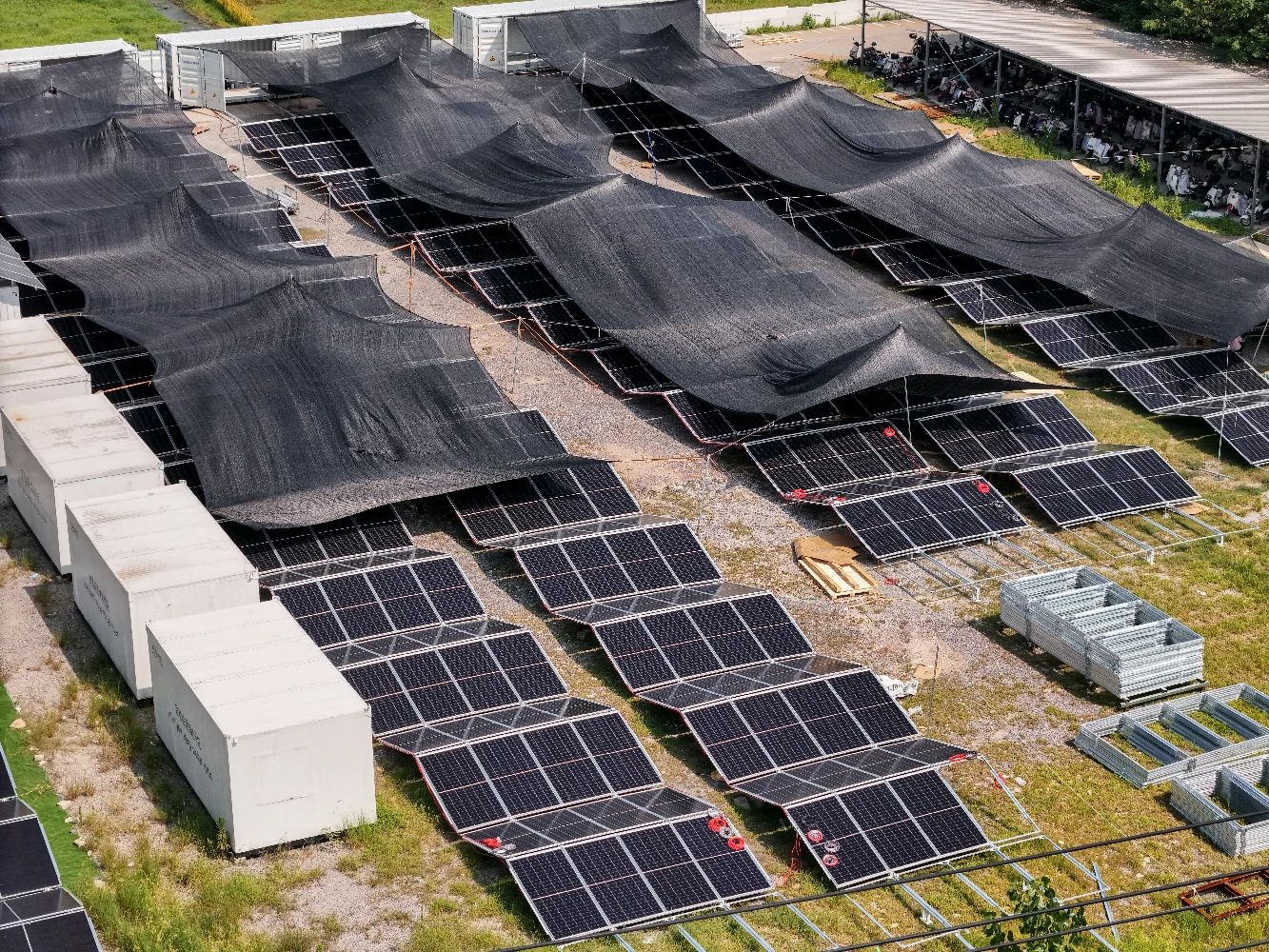
One of the most ignored but critical aspects of any solar container’s performance is thermal management. A poorly managed solar container not only increases in temperature but also becomes inefficient, leading to a reduction in product life.
In a solar container, heat is not generated by a single point. It is a gradual increase in temperature due to solar exposure, electrical resistance, battery storage, and airflow. The problem is not with heat generation but with managing heat generation, transfer, and dissipation.
Why thermal management is important in a solar container
A solar container is a closed system that is compact, self-contained, and energy-generating. The closed system is advantageous because it is easier to transport but disadvantageous because it is a heat trap.
The study titled Performance Analysis of a Solar-Powered Multi-Purpose Supply Container, published by MDPI, shows that confined solar systems experience significant internal temperature rises due to combined solar gain and equipment heat output, directly impacting system efficiency and operational stability.
In practical terms:
- PV efficiency decreases with increased temperature.
- Battery systems degrade faster.
- Inverters are operated beyond ideal conditions.
If thermal considerations are ignored at the design level, the end result is costly retrofits.
Identifying the major sources of heat within the system.
It is necessary to identify the sources of heat before anything else.
Solar radiation on the container shell
The outer surface of the container is subjected to solar radiation due to its exposure to the sun, especially in areas with high solar irradiance. Steel containers are particularly prone to this due to the conductivity of steel.
Internal equipment heat generation
Inverters, batteries, and control systems produce heat continuously.
When this is in dense configuration, heat tends to build up quickly.
Limited natural ventilation
Unlike in solar farms, a container does not allow free airflow. Without proper design, hot air tends to stagnate.
These three elements produce a compounding effect rather than individual effects.
Passive thermal control strategies that actually work
Passive control should always be the foundation. They reduce energy consumption and improve baseline stability.
High-performance insulation
Insulation slows down heat transfer. Not all insulation is the same.
- Reflective insulation minimizes radiant heat gain
- Foam insulation minimizes conductive transfer
- Multi-layer systems often work best
The objective is not merely to prevent heat, but rather to delay it in order to reduce peaks in the temperature curve.
Reflective Coatings and Surface Treatments
A basic but effective strategy. Reflective coatings, particularly those with high albedo, can have a profound effect on surface temperature, especially in direct sunlight.
In reality, a white or coated container can be as much as 10°C cooler on the surface than an untreated steel container.
Strategic Layout Inside Container
Component placement is more important than people think.
- Heat-generating components are placed far apart
- Sensitive components are placed in cooler areas
- Air flow is never restricted
Consider the container as not merely a box, but as a controlled thermal flow environment.
Active cooling methods for higher load systems
When passive methods are not sufficient, active cooling methods must be implemented.
Forced Air Ventilation
The most common and least expensive solution.
- Intake and Exhaust Fans Provide Directional Airflow
- Ducting Design Guarantees the Removal of Heat, Not Recirculation
- Filters Assist in Keeping the System Clean
But if not done correctly, the effectiveness of the solution may be negated, as air must be moved purposefully, not haphazardly.
Air Conditioning Systems
For high-density or critical applications.
- Offers precise temperature control.
- Ensures stable operation of batteries and electronics.
But it comes with its own set of disadvantages, including increased power and maintenance costs.
Hybrid cooling approaches
The combination of both passive and active techniques is sometimes the most effective.
Examples:
- Insulation + Forced Ventilation
- Reflective Coating + Targeted Cooling
The combination minimizes reliance on energy-intensive cooling.
Advanced Technologies for Solar Containers
Apart from conventional techniques, new techniques are also becoming popular.
Phase Change Materials
The phase change material has the ability to absorb heat as it changes phase.
The Elsevier publication Novel Thermal Conductivity Enhancing Containers for Performance Enhancement of Solar Photovoltaics System Integrated with Phase Change Material shows that integrating phase change materials into container structures can significantly improve thermal stability by storing excess heat during peak periods and releasing it gradually.
This method is especially useful when the temperature varies by a lot during the day and at night.
Heat Pipe Systems
A heat pipe is a device that transfers heat from hot spots to cold spots efficiently without the need for much power.
They are especially useful in:
- Localized cooling of PV panels
- Cooling of high load components
Intelligent thermal control systems
Sensors and automation can dynamically adjust cooling strategies.
- Temperature sensors are used to monitor the hot spots
- The temperature sensors adjust the fan speed accordingly
- Data is logged to optimize the performance
This is especially useful as it makes the cooling system dynamic, not just static.
Designing airflow instead of just adding fans
A common misconception is that having more fans will improve cooling. This is seldom the case.
A good airflow design will take into consideration:
Air flow direction
Air flow should always be from a cool area to a hot area.
Avoiding dead zones
Areas such as corners, where space is tight, can become dead zones. These need to be avoided during the design phase.
Pressure balance
A good balance of intake and exhaust will prevent inefficient air flow.
Practical comparison of thermal strategies
| Strategy | Complexity | Cost Level | Effectiveness | Best Use Case |
| Insulation | Low | Low | Medium | Baseline systems |
| Reflective coating | Low | Low | Medium | High solar exposure areas |
| Forced ventilation | Medium | Medium | High | General-purpose containers |
| Air conditioning | High | High | Very High | Critical systems |
| Phase change materials | Medium | Medium | High | Peak heat buffering |
| Heat pipes | Medium | Medium | High | Localized cooling |
The comparison illustrates this point: there is no silver bullet when it comes to managing heat. The best solution is always a combination of techniques.
Final considerations for practical application
The key to optimizing your solar container’s thermal management is not to add more tech—it’s to make better design choices.
The best way to start is with passive techniques. Build a logical airflow path. Add active cooling techniques as required. For more complex designs, think about integrating PCM or heat transfer techniques.
If you’re designing or improving a solar-based containerized system, then the next logical step is to review your existing heat sources and airflow patterns. Sometimes, simple tweaks can yield significant improvements.
Thermal management is not a secondary consideration. It’s a primary consideration that, in some cases, is the difference between a system that performs efficiently and one that’s hampered by its own heat.
Contact US