
Indonesia’s Solar Boom: Containerized Solar Systems for Rapid Deployment
The energy sector in Indonesia is rapidly changing, and the country has been working hard to increase its use of renewable energy and power its islands. The solar system has been one of the most viable solutions, and the traditional solar farms need long periods of time and infrastructure to be built.
This is where the containerized solar technology comes in, which has the potential to accelerate the solar energy industry in Indonesia, particularly in places with poor infrastructure. Containers, also referred to as solar containers or solar shipping containers, are being used to build solar systems, and they are expected to play a crucial role in the development of the solar industry in Indonesia.
Why Indonesia Needs Rapid Solar System Deployment
The country has the distinction of being the largest archipelago in the world, with over 17,000 islands spread over vast oceanic distances. Developing conventional infrastructure in such vast distances poses problems of cost and time.
On the smaller islands, diesel-based solutions are often used. Although effective, these solutions pose their own set of problems.
Geographic Challenges and Energy Demand
The geography of the islands makes the development of conventional infrastructure difficult. For many islands, the more efficient solution would be to use renewable energy.
The Asian Development Bank’s publication Indonesia Energy Sector Assessment, Strategy, and Road Map shows that expanding renewable energy systems is essential for improving electricity access while reducing dependence on fossil fuel generation.
Solar technology, especially modular systems, suits Indonesia’s geographical landscape.
What Is a Solar Container System?
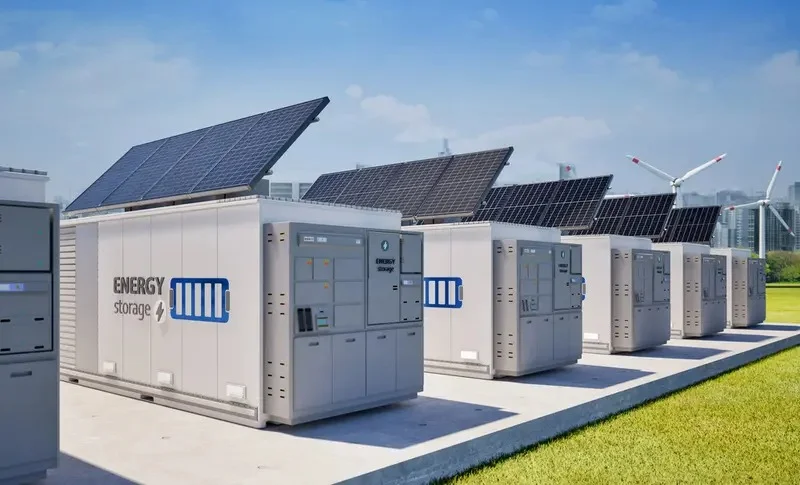
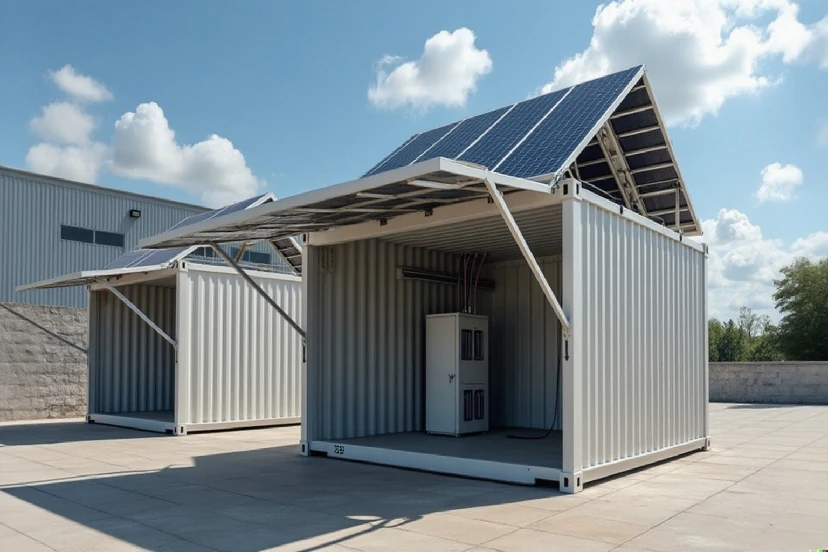
A solar container is, in effect, an entire solar power station designed to fit inside a shipping container. Instead of assembling the solar system piece by piece, the components are pre-assembled and delivered in a solar container.
Inside the solar container, you can expect to find the following components:
- Solar panels or foldable solar panels
- Inverters and control systems
- Battery systems
- Monitoring systems
- Pre-assembled electrical systems
Once the solar container reaches the desired location, the solar panels are deployed, and the system is connected.
How Solar Shipping Container Systems Work
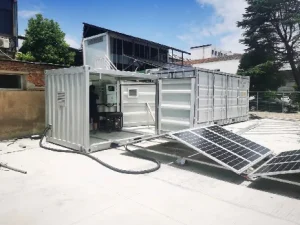
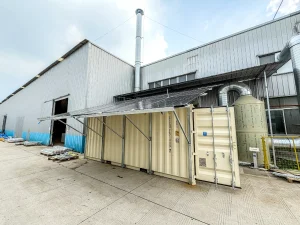
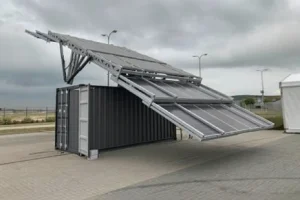
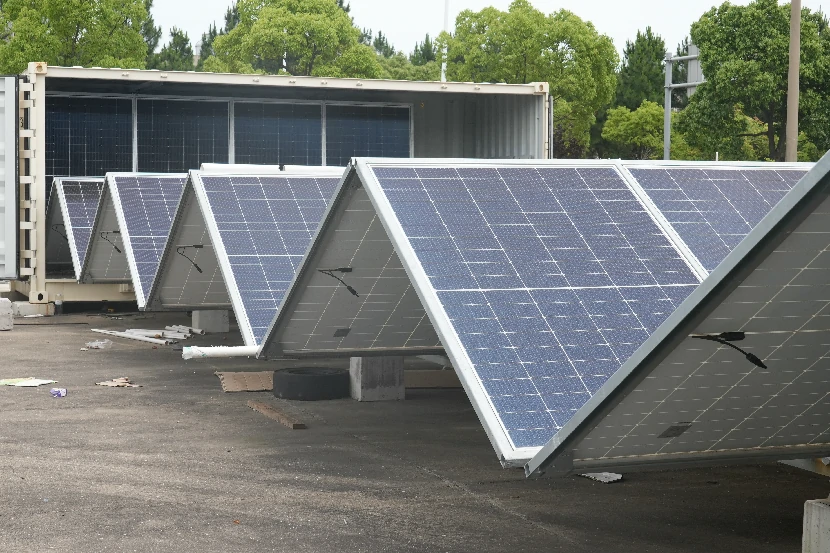
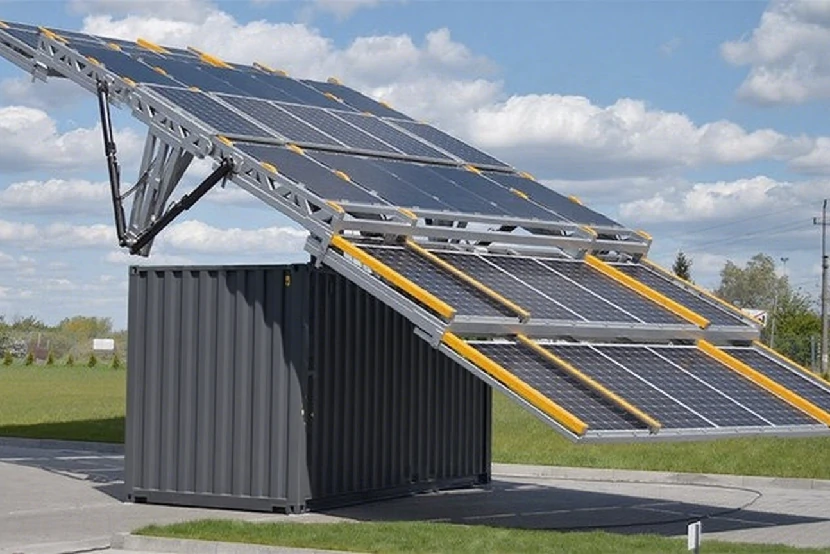
Solar-powered shipping container systems have been developed to be easily deployable. For instance, there are various models with fold-out solar panel racks on the exterior of the container.
To install a solar-powered shipping container system, one would typically:
1.Transport the container to the deployment location
2.Position it on a foundation
3.Unfold or attach the solar panel arrays
4.Connect the batteries and other electrical outputs
In some cases, this may be accomplished within a few days.
This is particularly important to islands or remote locations with limited construction resources.
Advantages of Containerized Solar Systems
Containerized solar technology provides various benefits over conventional solar technologies.
Faster Installation
Conventional solar farms demand considerable preparation of the land and electrical work. Containerized solar technology is partially pre-assembled, which helps in lowering engineering and construction costs.
This is particularly valuable for areas that are not well connected and may be difficult to access.
Portability and Flexibility
The solar technology is contained in a shipping container and hence can be transported through existing infrastructure networks. Containers can be transported via road, sea, and rail without any alterations.
This means solar power can be extended to areas where infrastructure may not be in place.
Ideal for Remote Microgrids
For example, in remote areas, there is often a microgrid, which is a small-scale energy grid that only serves a limited area. Containerized solar systems can easily be used as the main generation unit in such areas.
The battery storage in the solar container can help in stabilizing the power supply and generate power even after sunset.
Disaster and Emergency Power
Indonesia is often prone to various natural calamities like earthquakes, volcanic eruptions, and tropical storms. In such cases, it is of vital importance to restore power supply as quickly as possible.
The solar containers can be used as emergency or auxiliary power for hospitals, communication centers, and emergency teams.
Comparison of Traditional Solar Systems and Solar Containers
Containerized solar systems were not designed to replace traditional solar systems but to complement them.
| Feature | Traditional Solar System | Solar Container System |
| Installation time | Weeks to months | Days to weeks |
| Portability | Fixed installation | Transportable |
| Site preparation | High | Low to moderate |
| Low to moderat | Large solar farms | Remote or temporary power |
| Expansion | Requires new construction | Additional containers |
For large-scale grid-based projects, traditional solar farms are still the norm. But when it comes to distributed energy solutions, containerized solutions offer unmatched speed to market.
Where Solar Containers Are Already Being Used
In Southeast Asia, there is growing interest in containerized solar systems for a number of applications.
These include:
- Electrification of remote villages
- Mining and industrial operations
- Military and research installations
- Disaster relief operations
- Temporary construction power
Indonesia’s geography makes all of these applications pertinent.
The Role of Solar Systems in Indonesia’s Energy Transition
Renewable energy targets are lofty for Indonesia, and the country is eager to move forward in the fight against carbon emissions while increasing electricity access. Solar energy is going to be a major contributor to this process.
Solar farms are going to be essential for Indonesia in the years to come, but distributed solar solutions, such as containerized solar solutions, can help overcome some of the issues facing remote areas.
Centralized solar solutions, combined with solar shipping container solutions, can help Indonesia move forward in its quest for increased energy access.
Looking Ahead: The Future of Containerized Solar
Technology is still improving. New containerized solar systems are being developed, including better solar panels, battery systems, and energy management systems.
This is improving the reliability of solar systems, allowing them to support entire communities rather than just temporary needs.
For countries with difficult terrain, such as Indonesia, solar systems could play an important role in their renewable energy mix.
Final Thoughts
Indonesia’s rapid expansion of solar energy is not only driven by its commitment to combat climate change but is also underpinned by its infrastructure needs. Implementing solar technology in such a geographically expansive archipelago of islands demands solutions that offer flexibility and portability in implementation.
Containerized solar technologies offer precisely that. They offer solutions for solar technologies to be implemented in areas where conventional infrastructure is difficult to establish.
For governments, investors, and planners of energy futures seeking solar implementation strategies, solar containers offer a key advantage: speed. Assessing solar container and solar shipping container technologies’ place in overall energy futures is likely to expedite solar technology implementation in Indonesia and other island nations.
Contact US