
Mobile Solar Container Power Generation Efficiency: How Much Power Do They Really Deliver?
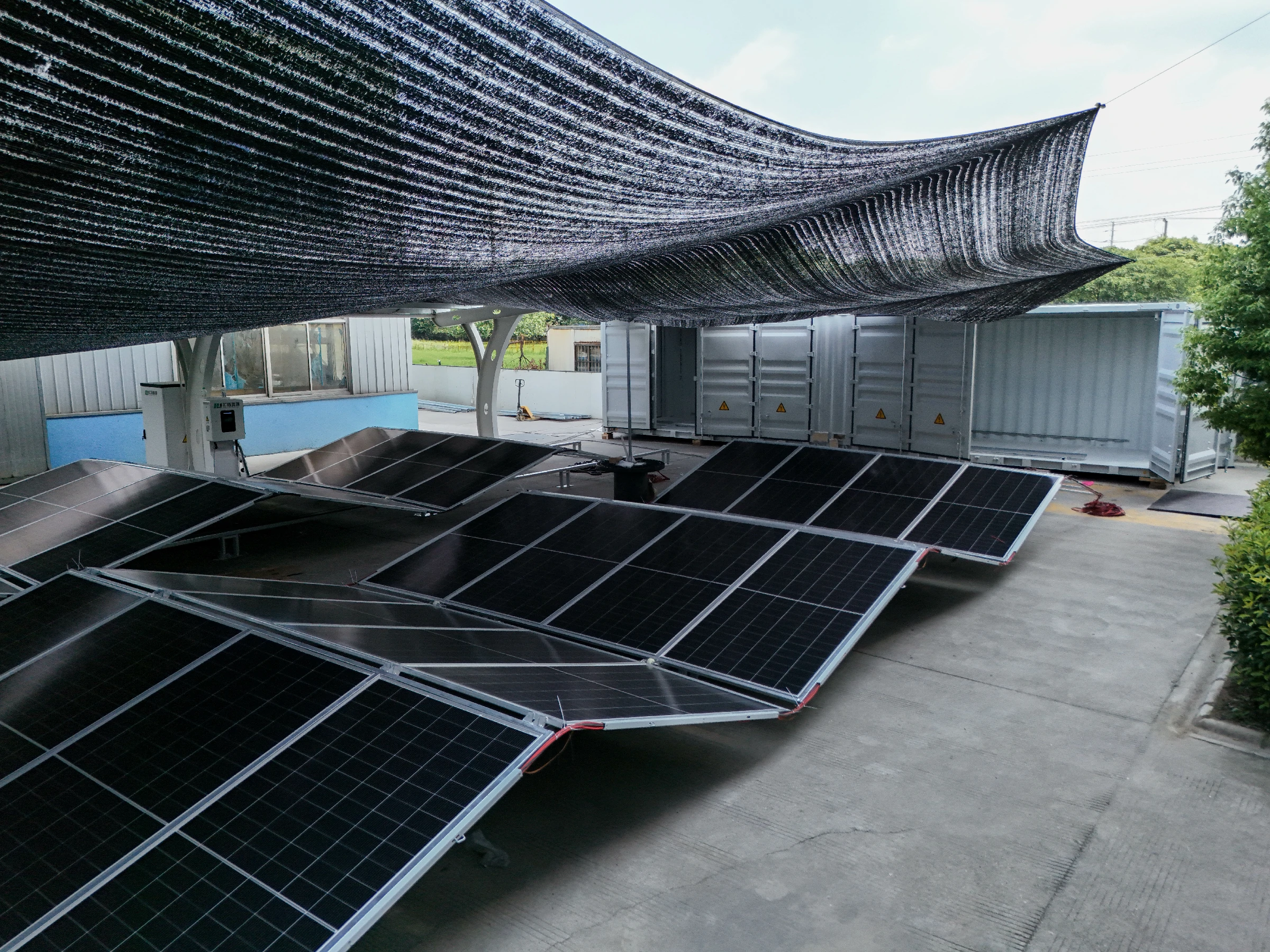
A solar container offers the vision of portable and autonomous electricity in a standardized box. It appears to be a no-brainer in terms of technology: solar panels, power electronics, and sometimes storage in a portable package. But the efficiency of solar containers for mobile applications in power generation far more frequently depends on a complicated interaction of physical and operational factors rather than advertised technology.
This paper goes beyond nominal performances to address how the issue of efficiency should be assessed for a solar container, how actual performances always differ from expectations, and what lessons learnt from actual deployments.
Efficiency Definition in a Mobile Solar Container
When one considers the concept of efficiency, the first thing that pops out into discussion is the conversion rates per panel that are involved. In the context of the mobile solar container, though, the conversion rates are nothing to go by on their own. In this context, the concept of efficiency should be considered as the percentage of solar energy converted into functional electricity that is actually delivered to the loads that need the power.
A solar system for a shipping container consists of several stages at which losses are incurred. The solar radiation is firstimited by orientation and surface area. Then, the electrical energy encounters losses via inverters, charge controllers, and in some schemes, storage facilities. Finally, losses are caused by environmental conditions of heat, dust, and shade.
As a result, two solar containers with the same installed capacity can perform very differently in the field.
Structural Limits Imposed by Container Format
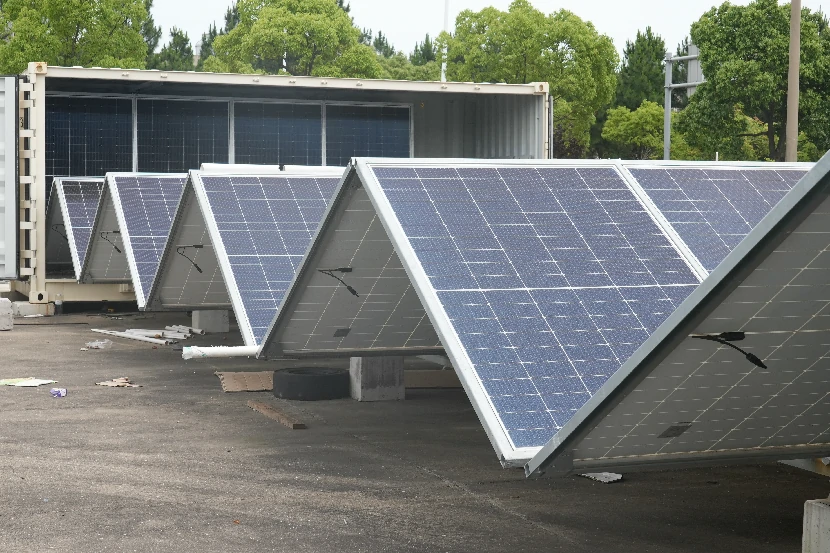
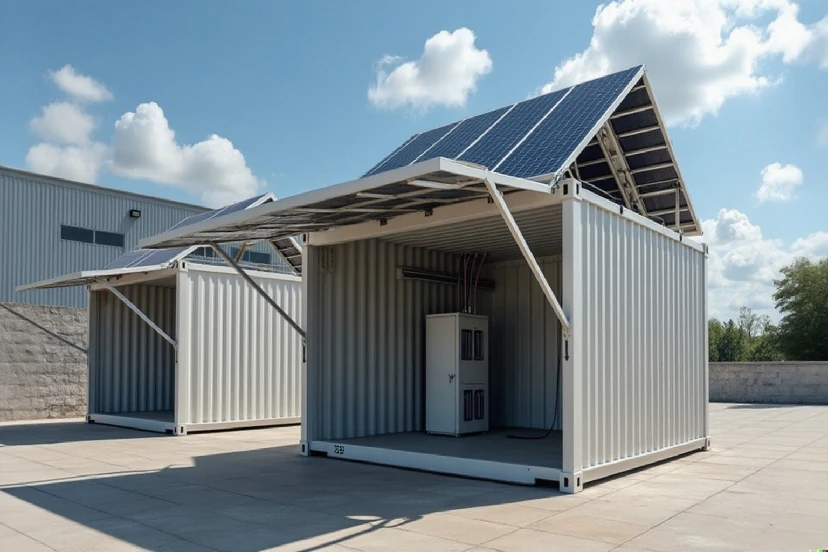
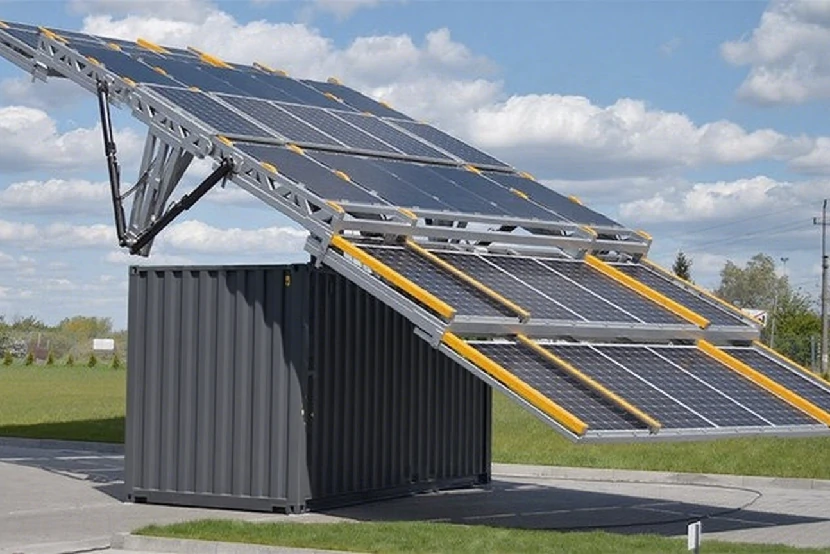
Shipping containers will also provide durability and transport efficiency, while imposing a fixed geometry on their contents. Roof area restricts the number of panels that can be permanently mounted. Side-mounted or fold-out arrays increase total capacity but introduce shading risks and reliance on correct deployment.
Containers also absorb heat. Internal temperatures can rise quickly, especially in sunny climates. Elevated temperatures reduce inverter efficiency and can trigger thermal derating. Because mobile systems often prioritize simplicity and reliability, active cooling is limited, which further constrains sustained output during peak sun hours.
These factors mean structural efficiency is not only about panel quality but how well the container as an ensemble manages heat and space.
Mobility vs. Optimal Solar Alignment
Mobility is the hallmark of a mobile solar container, albeit at a price. The position where the containers can often be deposited does not necessarily relate to optimal sun angles. Adjusting the setting to optimize altitude and azimuth can hardly ever be the primary consideration in setting up a system.
While fixed-angle mounts are easy to setup but offer little for seasonal adjustment, adjustable mounts offer greater efficiency but with increased complexity and the potential for failure. In reality, solar panels are often installed for extended periods of time in less than optimal positions.
This explains why the efficiency of mobile solar containers is inherently lower compared to site-optimized fixed solar power systems.
What Field Operations Reveal About Real Production
Real-world data paints a clearer picture of what mobile technology actually does.
The study titled Case Study: Mobile Photovoltaic System at Bechler Meadows Ranger Station, Yellowstone National Park, published by University of North Texas Digital Library, reveals that in distant sites, mobile solar photovoltaic power systems tend to be far from their maximum potential power production capability. This is affected by the change in solar irradiance levels in season, territorial constraints, as well as service priorities. It emphasizes the relevance of-weighted energy versus peak wattages. This is particularly the case for solar containers, which are commonly advertised on the basis of nameplate performance requirements, which are typically impossible to attain in real life.
system-level performance is more important than panel efficiency
In a mobile solar container, the power electronics have an integral function in the usable output. Inverters in solar panels work at partial load due to the varying demands. Partial loading increases the standby losses in the conversion.
Battery integration, when involved, also causes other inefficiencies. Charge and discharge cycles affect the overall energy, and temperature conditions also affect batteries. Such conditions imply that even high-efficiency modules will not be able to offset inefficiencies in the other components.
A designer concerned with balanced system architecture might be more efficient than a designer attempting to maximize panel capacity.
Environmental Exposure and Operational Degradation
In contrast to rooftop systems, solar containers are transported repeatedly. Vibration, mechanical stress, and dust and water accumulation cause degradation. The connectors work loose, the panels collect dust, and the cable paths deteriorate over time.
These phenomena are cumulative but gradual in nature. If these systems are not maintained properly, the loss in efficiency will add up, especially in tough environments. In long-term implementations, it will be a part of the efficiency calculation, though it hardly ever comes up in discussions about specs.
Public Service Perspective on Mobile PV Performance
The operational assessments of public system deployments emphasize the need for system robustness over ideal efficiency.
The U.S. Department of Energy’s publication Yellowstone National Park Mobile PV System indicates that the mobile PV systems that serve as the basis for the operation of the self-contained facilities are evaluated in terms of the reliability of the provision of electricity and the operating time. The report highlights that the issues of stability, connectivity, and resilience have far more importance in the successful production of energy than the efficiencies of the modules.
This vision resonates well with practical reality in mobile solar containers in that reliable kilowatt-hours are more valuable than highest performance in optimal conditions.
Interpreting Efficiency for Buyers and Planners
In fact, what concerns decision-makers most is not “How efficient are the panels?” but rather “How much useful energy this system is able to provide under my working conditions?”
Factors that need to be considered include the actual amount of energy production for a normal mounting position, stability of system performance with the changes of seasons, and the effect of fast setup on the system’s orientation and shading issues. An existing system with lower actual efficiency can actually perform better if it provides reliable power with easy setup.
Assessing the effectiveness of mobile solar containers using this perspective enables more realistic expectations.
Achieving Greater Practical Efficiency without Compromising Mobility
Although some restrictions cannot be avoided, some designs always lead to improved performance under practical conditions. Passive ventilation can lower heat loss without introducing any disturbing loads. Simple deployment methods can avoid setup mistakes. Using properly matched inverters and storage components can further ensure that conversion losses are low.
Perhaps the most critical area, though, involves the potential of field-driven designs to attain performance levels much closer to the promised levels.
Conclusion
In fact, the energy generation efficiency of the mobile solar container system is not one number, but the result affected by system-level considerations such as system structure, mobility, operating conditions, and priorities. In reality, the assessment for the solar container based on the portable power system concept would be more realistic than that based on the fixed PV system concept.
If you find yourself examining or implementing mobile solar containers, it makes much more sense to concentrate on actual power output in such situations. This actually amounts to a much greater value than looking at peak power that will never actually be achieved.
Contact US