
Shipping Container Solar Panels: The Future “Energy Blocks” of Mobile Power
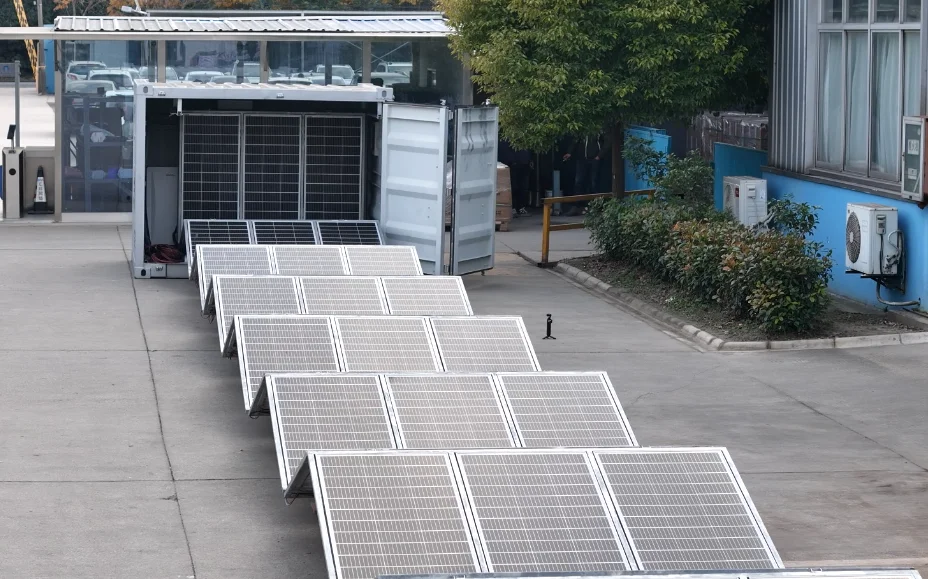
Imagine this: a remote disaster zone where the power grid has completely collapsed, and rescue operations are hindered by the lack of electricity. Suddenly, a standard shipping container arrives on-site. The solar panels on the roof unfold rapidly, and within just a few hours, the command center lights turn on, medical equipment gains power, and communication devices regain signal.
This is not a sci-fi movie—it is the future being shaped by shipping container solar panels, redefining what mobile energy can be.
Why can something as ordinary as a container be called an “energy block of the future”? And how exactly does it change the way we use power?
1. Plug-and-Play: A Power Plant You Can Use Right Out of the Box
Traditional solar power plants require site selection, land leveling, mounting structures, cabling, and a long list of engineering steps. It is time-consuming and labor-intensive.
The core innovation of shipping container solar panels lies in full integration and plug-and-play design.
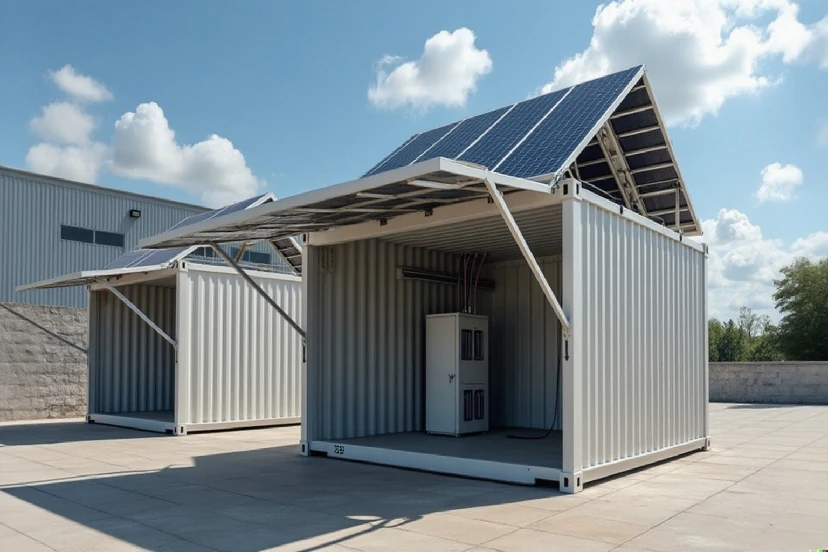
Inside the factory, engineers pre-install everything needed for power generation—solar modules, battery storage, inverters, and smart control systems—into a standard container, forming a ready-made container solar power system. It works like a giant smart appliance—except this one generates its own electricity.
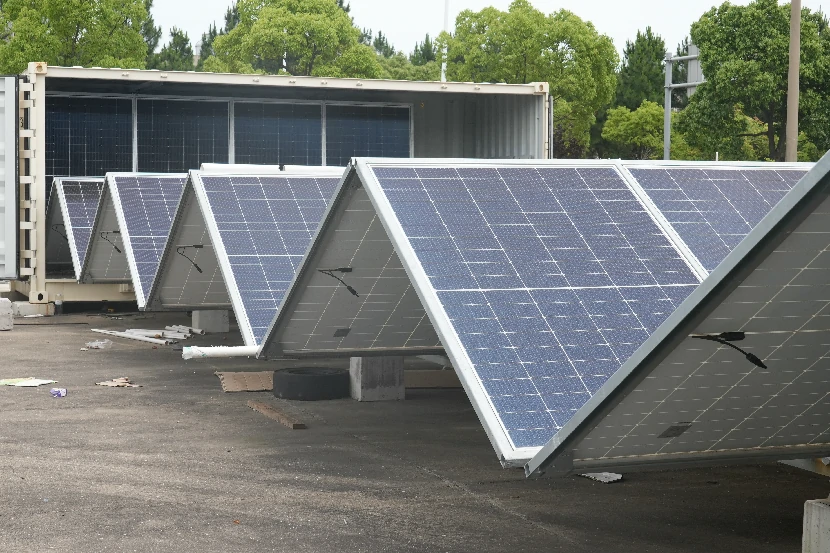
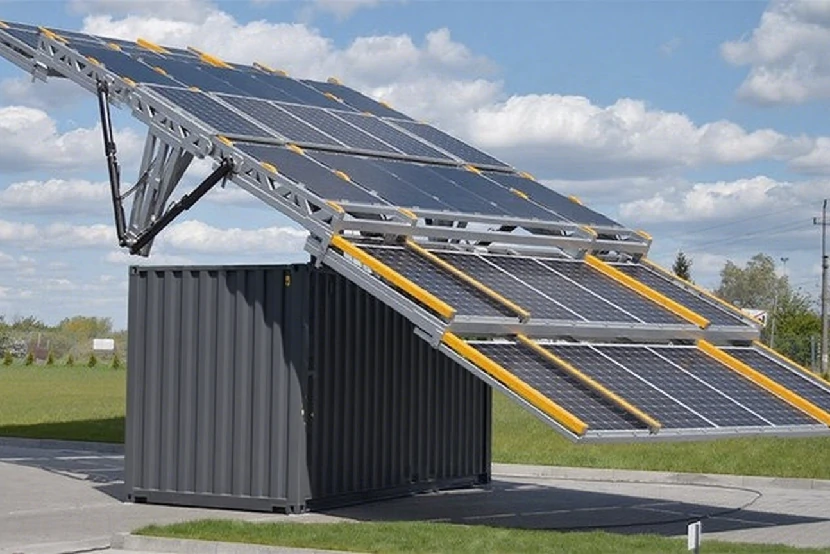
Once delivered, workers only need to level the container, unfold the solar panels for shipping containers on the roof, and connect it to the loads or grid. It can begin operating almost immediately.
What used to require weeks or months of engineering has now been compressed into hours. For emergency rescue operations, temporary construction sites, or mining bases that frequently relocate, this speed is a lifeline.
2. Unlimited Mobility: Energy That Can Be Packed and Moved
We live in a world where people and industries move constantly—but energy supply is usually stationary. Shipping container solar panels break this limitation.
Because the system uses standard container dimensions, it can be transported easily by truck, ship, or rail, seamlessly fitting into global logistics networks. This transforms it into a true solar-powered shipping container that can be deployed to any corner of the world.
A unit stationed in Country A today might appear in a remote village in Country B just weeks later. Energy becomes something that can be packed, shipped, and delivered like cargo.
This mobility solves the long-standing challenge of “high demand but no grid access”:
Remote area electrification: Provides stable power to mountains, islands, and ranches far from the grid.
Mobile EV charging: Acts as a temporary charging hub—like a set of portable solar container panels supporting electric vehicle clusters.
Events & festivals: Supplies clean power to concerts, sports events, and temporary venues, then leaves with zero environmental footprint.
3. Clean and Economical: Sunlight Is the Only Fuel
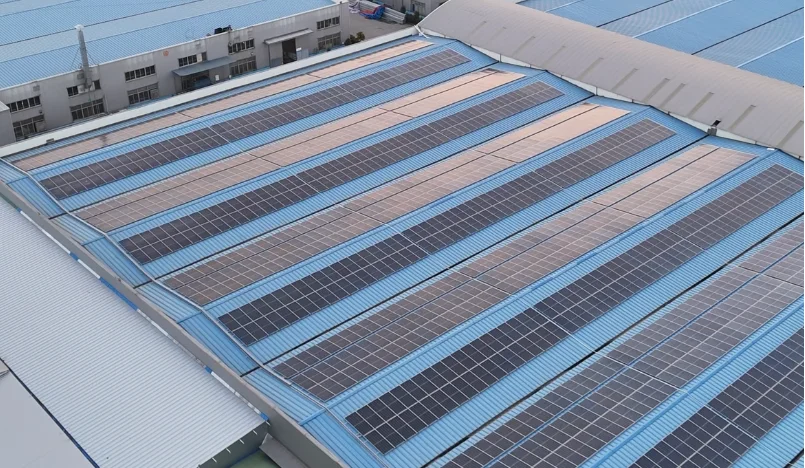
Compared with diesel generators, shipping container solar systems have near-zero operating costs, zero emissions, and extremely low noise.
Diesel gensets require constant fuel purchases, generate noise, and release pollutants. Solar energy, on the other hand, runs on free sunlight. Once the system begins operating, ongoing costs are minimal.
Using a containerized solar energy solution not only reduces fuel expenses but also contributes to significant environmental benefits. For ports, nature reserves, and eco-sensitive sites, this clean power source is a perfect fit.
4. The Future Is Here: An Ever-Evolving “Energy Block”
As technologies advance, these mobile energy containers are continuously improving:
Stronger energy storage: Traditional lithium batteries are being replaced or enhanced with sodium-ion and solid-state batteries, delivering higher safety, lower costs, and longer lifespan.
Smarter system brain: Built-in AI can predict weather, optimize charging/discharging strategies, maximize solar utilization, and enable remote monitoring for fully unattended operation.
In the future, these units may interconnect autonomously, forming mobile microgrids that adapt to global energy needs.
Conclusion
Shipping container solar panels—combining standardization, modularity, and clean energy—are becoming flexible “energy blocks” deployed across the world. They represent the evolution of the global energy structure: from centralized and fixed, to distributed, mobile, and dynamic.
Wherever you are, these shipping container solar panels allow you to access clean, reliable solar power. This is the future of mobile energy—resilient, flexible, and powered by standardized modular energy units.
Contact US