
Solar Container for Mining Operations: A Practical Off-Grid Power Strategy
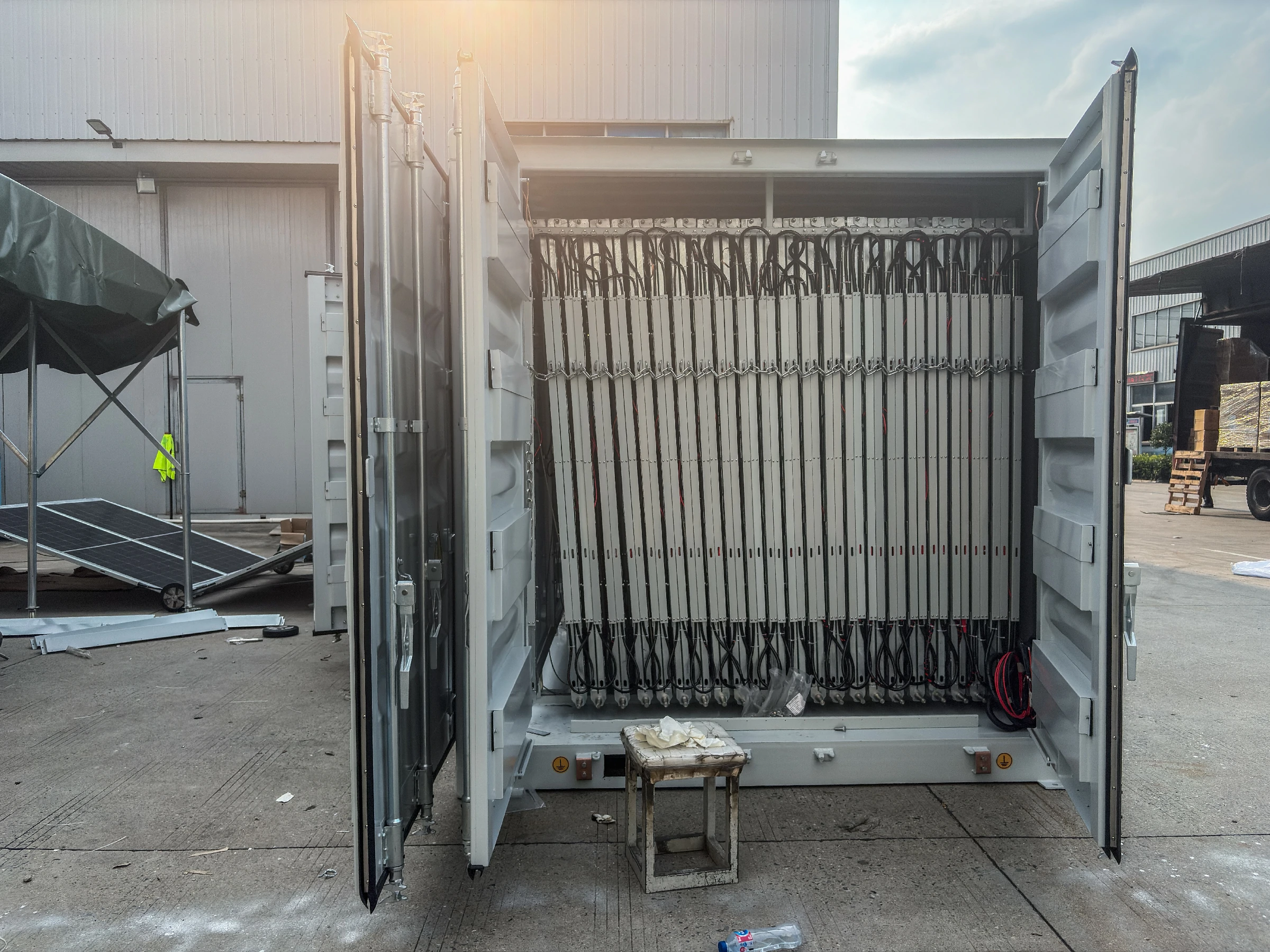
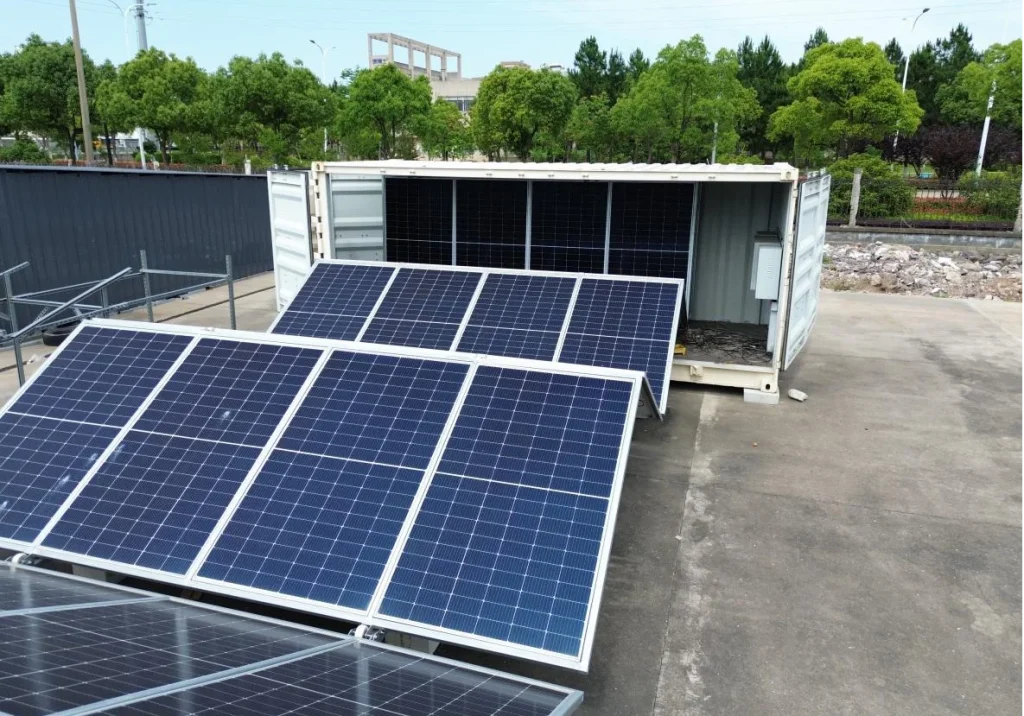
Solar container is basically a shipping container equipped with solar panels, inverters, and battery storage. But it is in off-grid mining operations, where diesel logistics rule and access to the grid is scarce or non-existent, that such a modular system really shines.
Mining sites are frequently temporary, mobile, and situated in remote regions. That raises the cost for extending the traditional grid and increases the risk of diesel dependency. A shipping container fitted with solar panels, operating as a stand-alone energy system, provides an alternative solution that’s both portable and scalable, and increasingly cost-effective.
Why Mining Operations Need Modular Solar Power
Mining energy demand is uneven. Exploration camps, drilling rigs, monitoring stations, security systems, and communications infrastructure don’t have identical load profile. Some need continual base-load power. Some are intermittent.
Centralized generation may be inefficient under such conditions. Also, diesel fuel deliveries to remote areas introduce the same cost volatility (even greater) and operational risk. Weather disturbances, supply chain delays or regulatory hurdles can swiftly boost costs.
The World Bank’s publication Off-Grid Solar Market Trends Report 2022: State of the Sector shows that off-grid solar solutions are expanding rapidly in regions where grid extension is technically difficult or economically unjustified. While the report focuses broadly on off-grid markets, the same structural conditions apply to mining sites: distance, limited infrastructure, and the need for autonomous energy systems.
A solar container fits well in this context. It functions autonomously, minimizes need for fuel transportation, and may be moved as stages of the project progress.
What Is a Solar Container in Layman’s Terms?
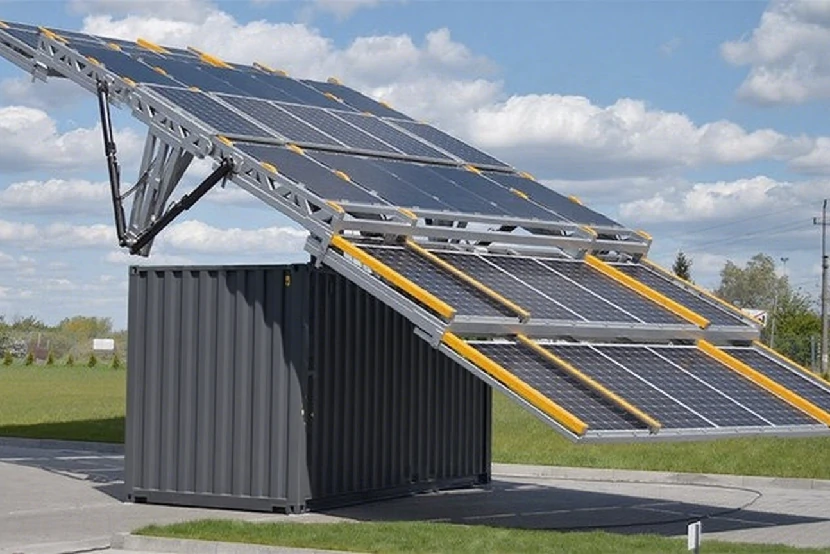
Essentially, a solar container is a prefabricated energy solution inside a standard ISO shipping container. The system usually comprises:
Integrated Solar Array
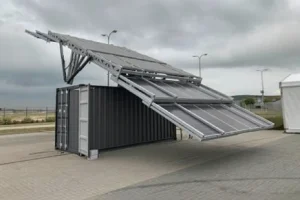
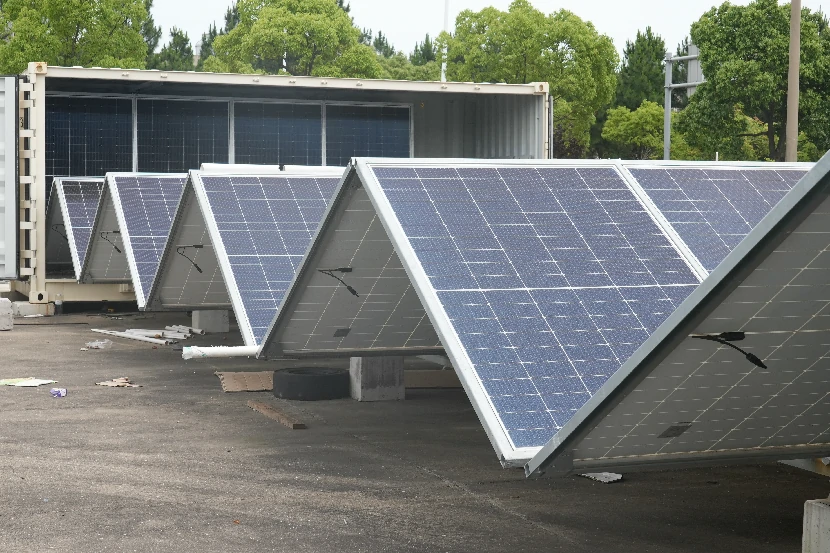
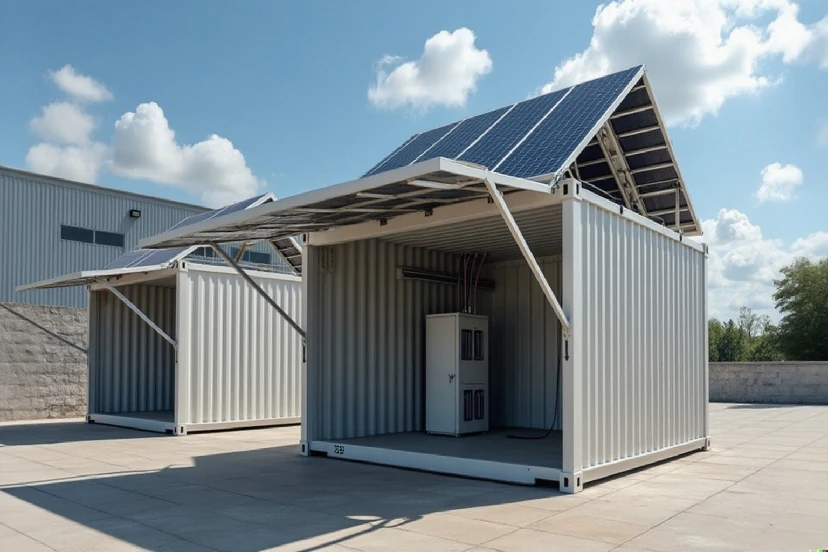
Panels can be installed on fold-out racks, sliding trains, or adjacent to ground structures. Oftentimes, the container is used as both the housing for the equipment and the structural element of the deployment mechanism.
Systems for inverters and controllers
Power Electronics: DC current that is generated from solar panels is converted into AC current which is—through power electronics—further processed into the type of AC electricity that electricity consumers can use. Sophisticated equipment utilize hybrid controllers which can interface with diesel gen-sets on an as-required basis.
Battery Storage
Ionic or other storage systems smooth out the flow, allow nighttime use and help to shave peaks.
The study titled Performance Analysis of a Solar-Powered Multi-Purpose Supply Container, published by MDPI, demonstrates that containerized solar systems can achieve reliable energy output under variable environmental conditions while maintaining manageable thermal performance and operational stability. Although the research examines a multi-purpose supply configuration, the technical findings validate the feasibility of integrating photovoltaic generation and storage within standard container structures.
For mining, this means stable power delivery no complicated on-site building necessary.
Deployment scenarios in mining applications
A solar container doesn’t replace all other sources of energy on a giant industrial mine, but it does serve them at specific loads and in specific operational zones.
Exploration and Drilling Camps
Early-stage exploration camps are typically mobile, moving with geological information. A shipping container solar kit can be delivered by truck, quickly installed, and remove without left permanent infrastructure.
Remote Monitoring Stations
Environmental monitoring, tailings management sensors, and communication relays tend to draw low, but steady power. D iesel the systems, too inefficient to take diesel to run the systems. Compact solar containers reduce maintenance visits and fuel dependence.
Hybrid Support for Larger Operations
Solar containers can also be used in established mines to reduce diesel use during the day. Any degree of displacement can have a meaningful effect on operating expenditure and carbon intensity.
Economic Considerations: Beyond Panel Cost
Sometimes the policy makers are looking at the cost of just the photovoltaic modules. In mining applications, the economic analysis must consider:
- Cost of fuel transport per liter
- Maintenance and downtime of the generator
- Logistic risk
- Environmental compliance risk
- Cost of deconstruction of the site
Modular solar container solutions simultaneously tackle a number of these factors. Procurement and deployment timelines are shorter because it is off-the-shelf. Because it is movable, capex can be applied across project stages.
Diesel generators in hybrid systems can run at optimum load instead of wasting efficiency by running at Part Load that Flywheel provides load stability. That gradually leads to extended generator life and less waste of fuel.
Environmental and Regulatory Drivers
Mining firms are under greater scrutiny from investors and regulators to reduce emissions intensity. Although complete electrification might be a long way off, many decarbonisation efforts can be more aspirational.
Solar panels on a shipping container can are being used as a bridge asset. It reduces Scope emissions where diesel is displaced and contributes to ESG reporting metrics relating to the integration of renewables.
Crucially, containerized solutions eliminate large-scale civil works. This minimizes land disturbance, and facilitates site reclamation upon closure of operations.
Case Example
A medium-scale mining operation, situated 300 kilometers from the nearest grid connection. Drilling rigs together with lighting, satellite communications and refrigeration for core samples are operated at the site. The normal load is 40–60 kW, with peaks in the active drilling phases.
Typically they would run two diesel generators in rotation. Delivering fuel involves a trip over dirt roads once a week, and delays caused by the weather are frequent during the rainy seasons.
With the installation of a solar container with fold-out panels and integrated battery storage, the site is able to compensates to a great extent for daytime demand. Diesel generators stay for back up and for the highest loads peaks. Fuel consumption decreases markedly after several months. Generator up time hours go down. Extending maintenance intervals.
When the exploratory phase is over, you take the container to the next prospect area. There is no need for removal of a permanent foundation. Capital investment stays productive.
Design Factors Mining Operators Should Evaluate
There And Yet Not All Are Containerized Solar Systems Equal. Criteria for selection should include:
- Robust construction for extreme weather
- Protection from dust and vibration
- Thermal control within the container
- Battery chemistry compatibility with temperature extremes
- Expandable to accommodate future load growth
Load profiling is a must have. Oversizing adds to the expense. Undersizings your diesel dependence. Data-based design results in a system that reflects operational reality versus marketing assumptions.
Is the Solar Container Right for Every Mine?
High-capacity processing plants (megawatt demand) may need to implement wider renewable integration plans (solar farms, microgrids). That said, containerized solar is a reasonable compromise between flexibility and sustainability for distributed loads, temporary infrastructure, and early stage applications.
This is effective because of the modularity of the approach. Mining is a moving target. Equipment moves. Sites evolve. At least energy systems should be changing that quickly.
Conclusion: A Remote Mining Strategic Energy Asset
A solar container enables mining to run its operations with modular, scalable, off-grid power infrastructure that can be relocated as needed. It avoids fuel logistics risk, decreases emissions intensity, and enables hybrid energy solutions without the need for permanent infrastructure. Experience from off-grid market development and technical containerized system studies reveals that these systems are in fact both technically and economically feasible for many remote applications.
For mining companies considering energy transition routes, the immediate next step is clear: perform a comprehensive load analysis, run hybrid fuel displacement scenarios, and evaluate lifecycle costs against business as usual with diesel. In many ways, adding a shipping container solar kit is not too radical a departure. It’s a measured step forward from an operational perspective that’s consistent with both cost control and sustainability goals.
Contact US