
How Many Solar Panels Fit in a 40 ft Container?
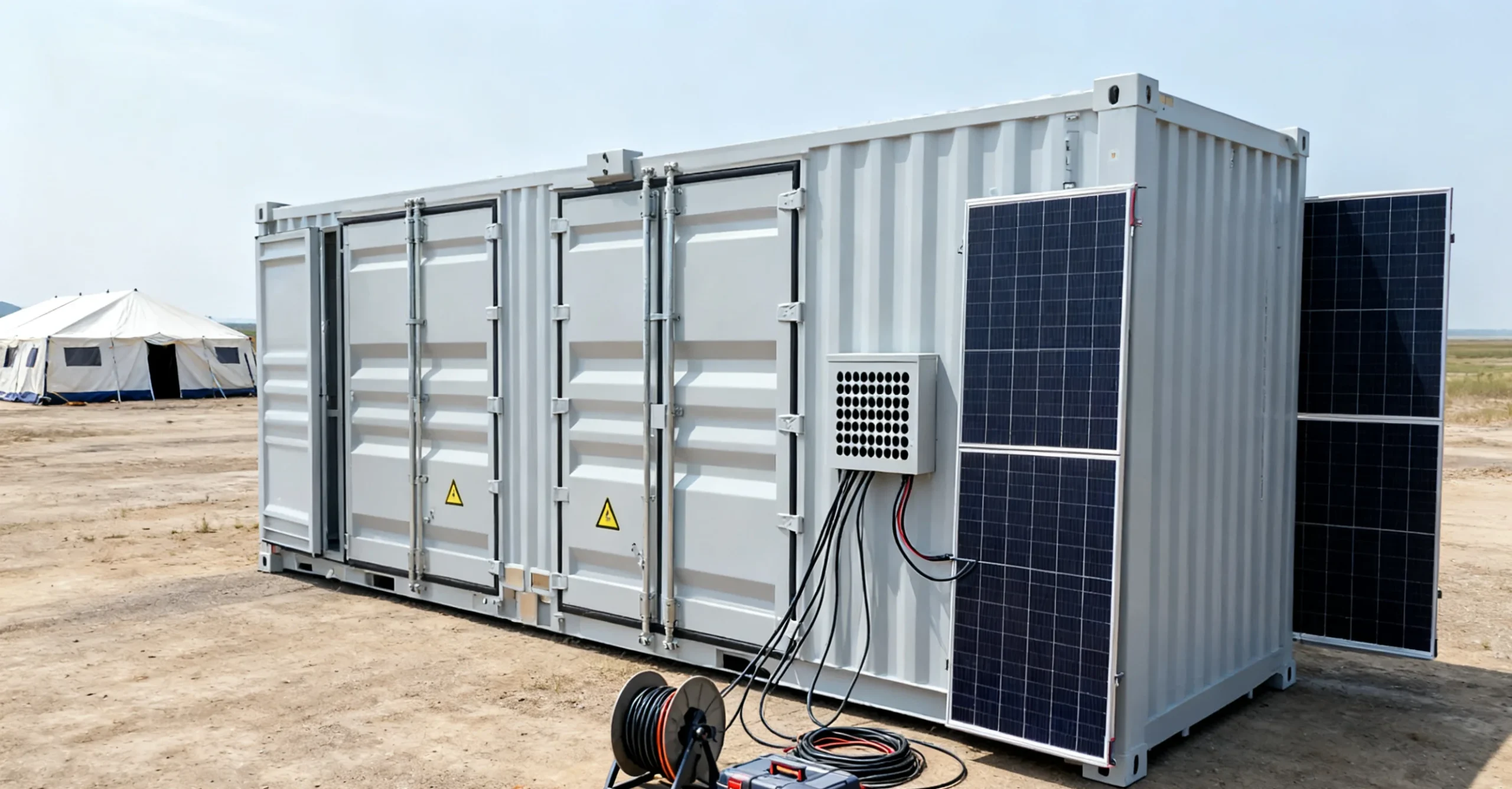
When planning a mobile solar project using a solar panel container, also called a shipping container with solar panels, a mobile solar container, or an energy container, one clear question comes up quickly: How many solar panels can I realistically fit in a 40-foot container?
This matters because panel count impacts the system’s capacity, cost, logistics, and physical design. Whether you’re shipping panels or mounting them on a container for off-grid use, understanding the space and constraints helps you design smarter.
What We Mean by These Terms
Here’s a definition box to make sure we’re all on the same page:
| Term | Meaning |
| Solar panel container | A typical 40-foot (or equivalent) shipping container that houses or mounts solar panels and ancillary equipment – sometimes for transport, sometimes for installation |
| Shipping container with solar panels | A container with panels installed on the roof or side, or carried for installation elsewhere |
| Mobile solar container | A transportable, containerized solar power system, often comprised of panels, batteries, inverter and wiring—designed to be rapidly deployed |
| Energy container | A generic term that could encompass storage, power electronics, and solar generation in a containerized format |
Typical Panel Counts for a 40-Foot Container
Here’s what research and industry sources suggest:
- In our latest loading guide, a 40ft High Cube typically accommodates 700–750 solar panels for bulk shipping. While some older sources estimate around 500-600 panels, modern high-density packing allows for much higher capacity.
- For actual mounting on container roof or as an integrated mobile system, panel numbers are much lower—because design constraints matter.
So, you’ll see two different “how many” scenarios quite often: one for shipping panels boxed up, another for actual deployed solar container systems. It’s crucial to make it clear which you mean.
What Factors Influence How Many Panels You Can Fit
When you move from theory to real system design, mounting panels on a 40-foot container, consider:
Panel size and wattage
- Larger high-wattage panels (600W-700W) are physically larger, so fewer fit.
- Smaller panels allow more units but may take more racking.
Container usable area & structural constraints
- A 40-foot container interior or roof area is fixed (~12.0 m × 35 m internal width for standard).
- Roof mounting should include wind load, mounting strength, tilt, and accessibility for maintenance.
- Some articles are showing that when mounting on a container roof, you might only fit 12-24 panels in simple setups.
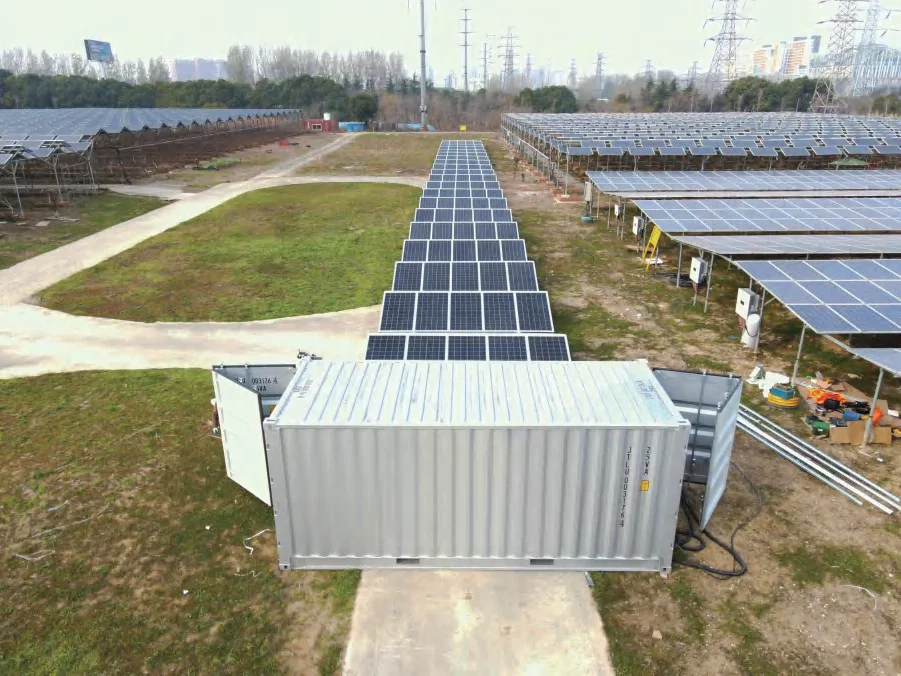
Mounting type, tilt, spacing & maintenance access
- If you mount panels flat, you maximize count but may reduce energy capture.
- Tilted panels increase production but require more space.
- Access paths, service clearance, and cabling reduce available panel area.
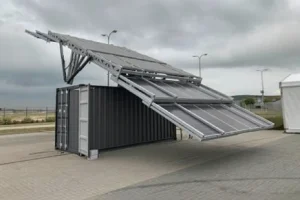
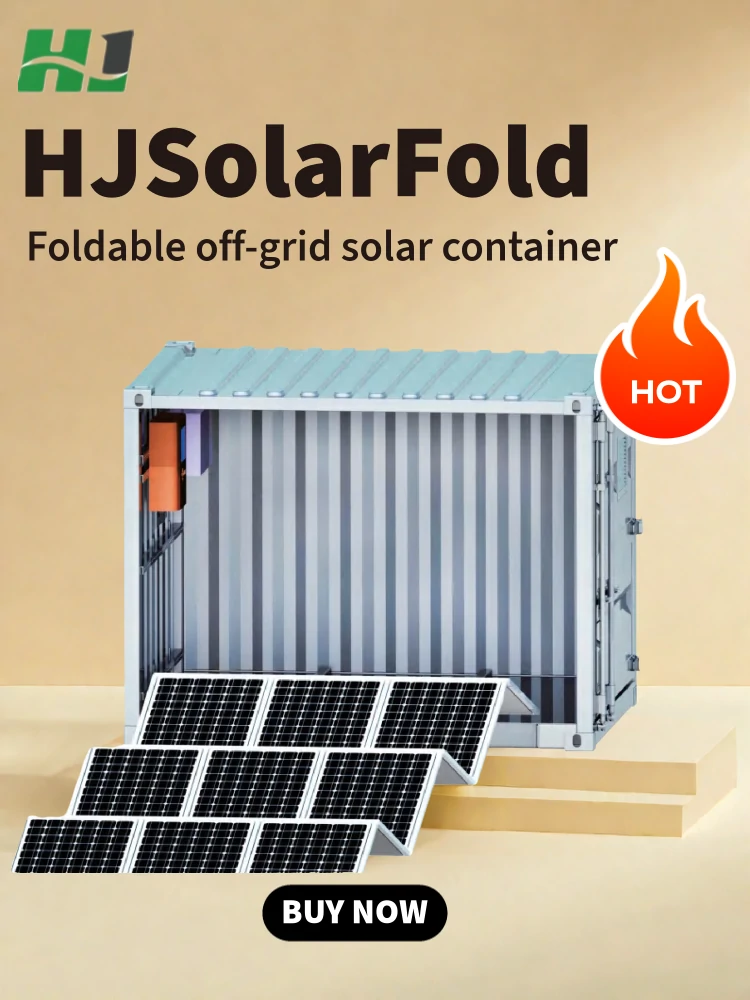
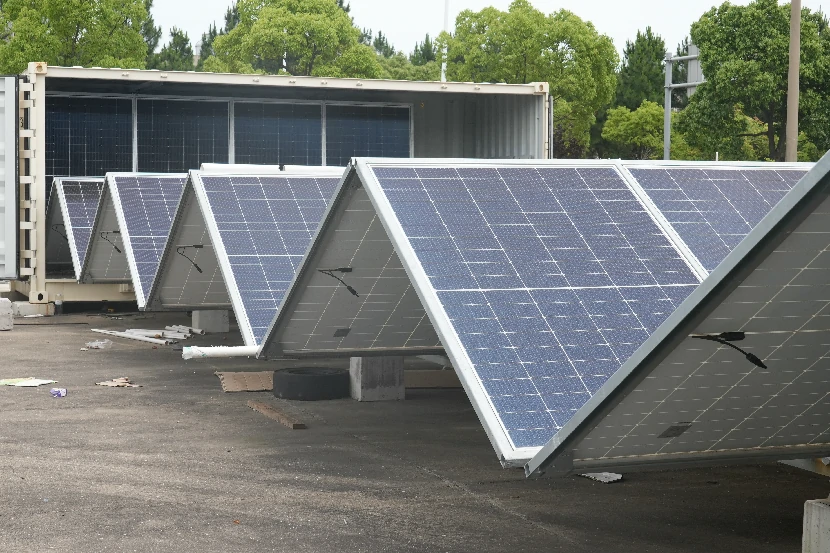
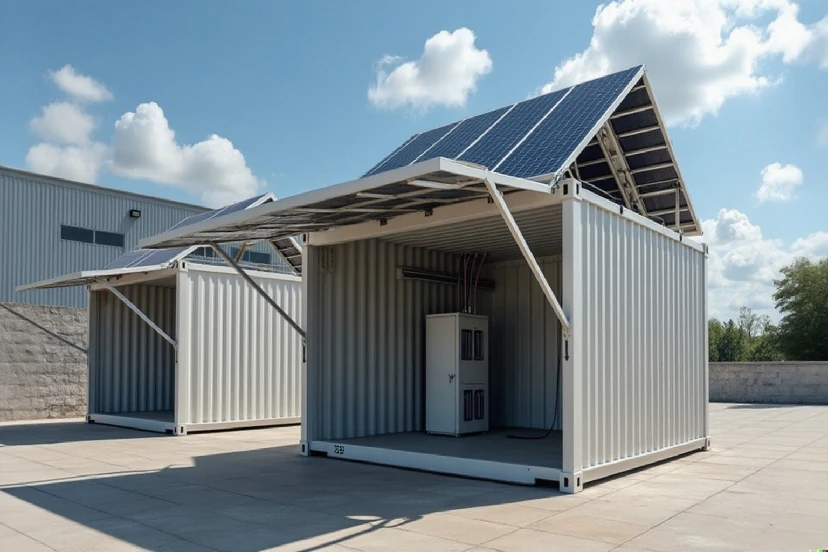
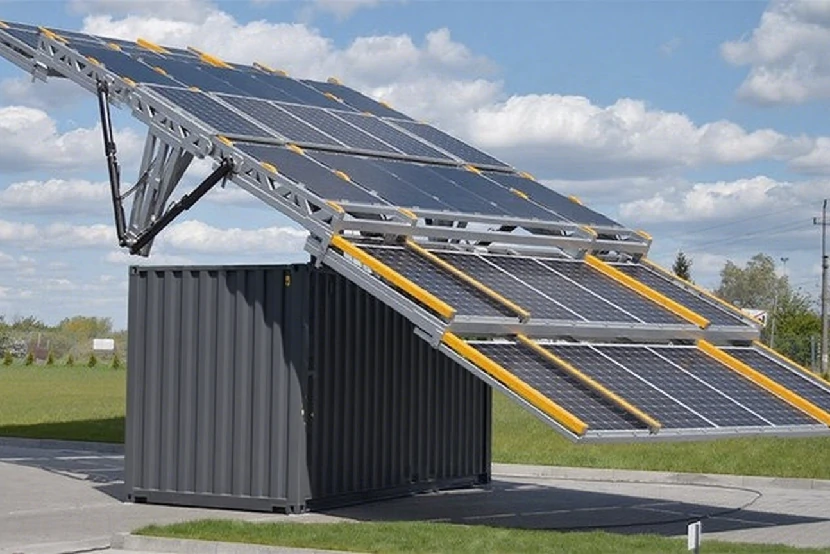
- For mobile solar containers used as deployable power stations, the design more often features side-mount or fold-out panels, not just rooftop, which alters count calculation.
Weight, shipping and logistics (if packing)
If you are shipping panels inside containers – rather than mounting on them – palletizing strategy, stacking, handling, and weight limits matter; that’s why you’ll often see the 500-600 panel figure in general discussions, though optimized loading plans for 40ft High Cube containers can now reach 700-750 panels.
Real-World Cases to Learn From
Case – Bulk shipping example, 2025: A solar panel supplier noted that a 40′ container holding 540 W panels stacked 22 pallets, about 600 modules total. (Note: While 540W modules are thicker, using slimmer high-efficiency panels can increase this count to over 700 within the same footprint.)
Case – Mobile solar container deployment, 2024: A 40-foot container with fold-out panels was deployed for a mobile solar container system. The capacity achieved reached ~50 kW. Panel count was lower than shipping‐pack estimates due to deployment design requirements – service access, tilt, structural mount.
These cases show the difference between shipping and deploying panels in containers.
How to Estimate Panel Count for Your Project
Here are steps to do it:
- Define your container size and mounting area– for a standard 40-ft container, the internal or roof area is your limit.
- Choose panel size and spacing– e.g., 2.1 m × 1 m panels at 540 W each
- Calculate rows and columns– for example, width fits 2 panels across (1.1 m each + margin) and length may fit ~10 panels (2.1 m each + spacing). That yields ~20 panels on the roof.
- Allow service & tilt space– deduct 10-30% for maintenance access and tilt.
- Check structural & wind load– ensure container roof or side mount is rated for panel weight and wind uplift.
- Adjust for deployment type– If mobile solar container, with fold-out or side panels, you may double or triple the count compared to rooftop only.
- Consider packing/transportation scenario– if you are shipping panels inside a container, rather than mounting, count will be much higher (500+ panels), but these are not mounted for immediate deployment.
Common User Questions
Can a container full of solar panels power a house?
Yes, it can-if it’s properly sized. A mobile solar container with panels, inverter, battery, and wiring can supply an off-grid house or hybrid system. The panel count and capacity must match the load.
How many panels do I need for 40kW from a container?
Using 670W high‐efficiency panels, you need ~60 panels (670W × 60 ≈ 40kW) plus space for inverter and batteries. But achieving 60 panels on a rooftop container may require fold-out or side mounting.
Does the orientation of the container matter for panel count or output?
Absolutely. Roof orientation, tilt and shade will have more effects on output than raw panel count. A container mounted east‐west may fit fewer panels optimally than south‐facing with tilt.
My insight from working with containerized systems
From my experience with modular solar containers, I can say that too many clients focus on “how many panels” instead of “what yield will we get, and how serviceable will it be.” For instance, I once saw a design with 30 panels on a 40-ft container oriented poorly. The output was half of what a better-oriented 20-panel layout achieved. So: less can be more if the design is optimized.
Also, mobile solar containers intended for rapid deployment often sacrifice panel count for add-ons like battery modules, quick-connect wiring, and fold-out arrays. In such cases, the number becomes less important than the overall system capacity and flexibility.
Explore More Container Sizes
While this guide provides a deep dive specifically into 40-foot containers, many of the principles also apply to smaller units. If you are looking for a broader comparison that includes 20-foot container capacities, please refer to our Ultimate Guide to Solar Panel Container Shipping.
Key Takeaways
- A container that is 40 feet long can hold up to 750 panels for bulk shipment, but for container-mounted solar panel systems, realistic counts may be in tens of panels unless fold-out or side arrays are used.
- Panel count is determined by panel size, mounting method, tilt/spacing, service access, and structural strength.
- Think in terms of energy output and system integration-panels plus inverter plus batteries plus wiring-rather than count of panels.
- Check your local environment – wind, orientation, shading – and select a design that fits your real needs.
If you need further help with comparing different mobile solar container layouts, or if you need to understand how many panels will fit based on certain panel sizes and deployment types, I would be happy to walk you through some detailed templates and examples.
Contact US