
How Many Solar Panels Fit in a Shipping Container? A Practical Guide to Solar Deployment & Shipping
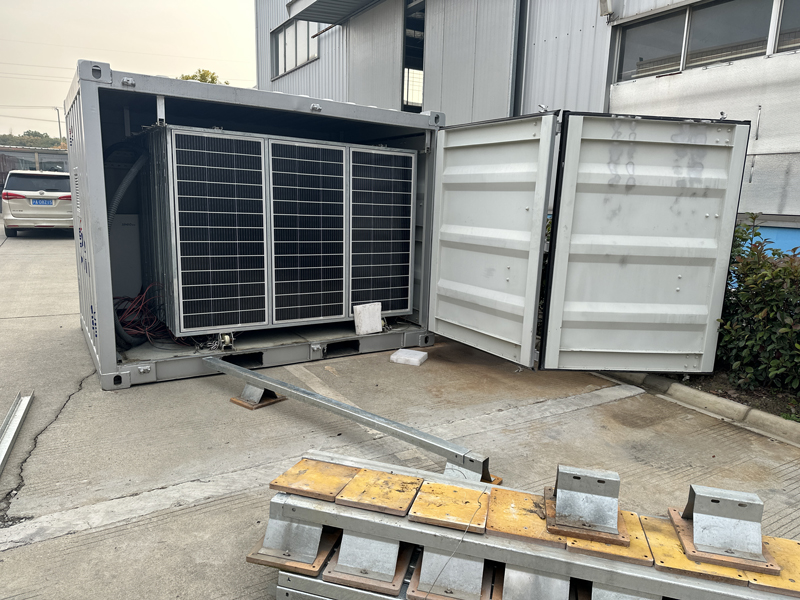
If you’re considering shipping solar panels in bulk or deploying a containerized solar energy system, you’ve probably asked: how many solar panels in a shipping container? You’re in good company. It’s an unexpectedly popular query—especially for renewable energy project managers, off-grid solution providers, solar resellers, and logistics coordinators.
And here’s the twist: the answer is not just in dimensions. It also differs depending on the panel type, packing method, container size, and application (e.g., for shipping vs. for direct on-site deployment as a solar power plant).
Container Sizes & Panel Dimensions Explained (20ft vs 40ft)
Before we answer how many solar panels can fit into a shipping container, we need to break down the variables:
Typical Shipping Container Dimensions
- 20-foot container (TEU)
Internal Dimensions: ~5.9m (L) x 2.35m (W) x 2.39m (H)
Volume: ~33.2 cubic meters
- 40-foot container (FEU)
Internal Dimensions: ~12.03m (L) x 2.35m (W) x 2.39m (H)
Volume: ~67.7 cubic meters
Typical Solar Panel Dimensions
- Standard 72-cell panel: ~2.0m x 1.0m x 0.04m
- Average weight: 22–28 kg per panel
- Per pallet: ~25–30 panels (vertically stacked or flat)
Now, you might wonder: Why can’t we just calculate by cubic volume? Panels are fragile. So although the volume is for a few hundred panels, safe stacking limits, protective padding, and air spaces cut into usable space.
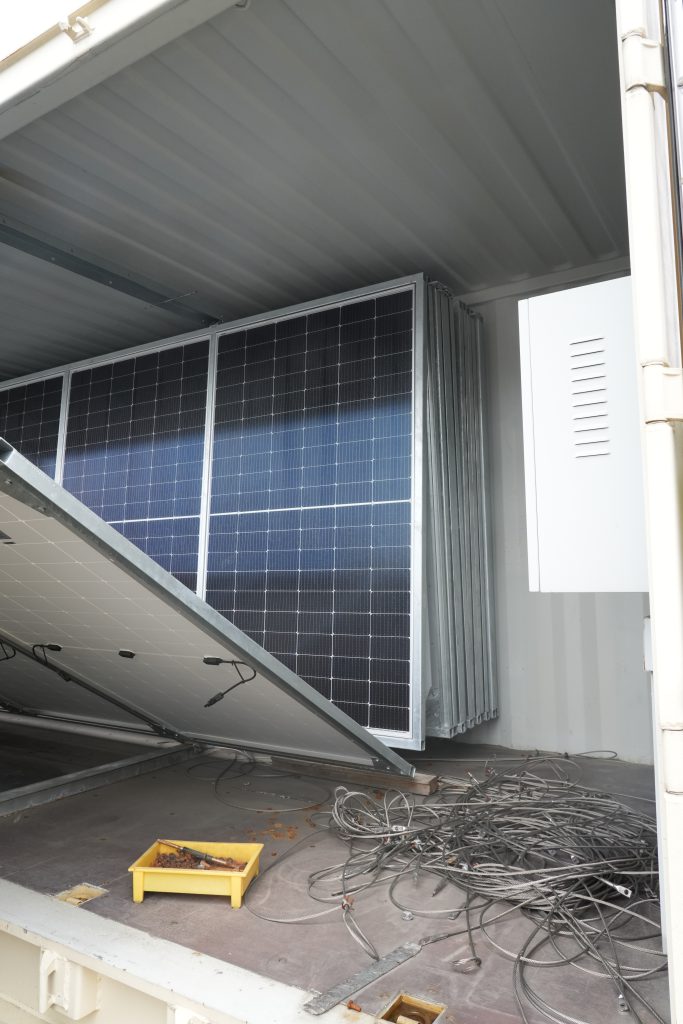
How Many Solar Panels Fit in a Shipping Container?
Estimated Capacities (Flat-Pack for Transport)
- 20ft container:
~300–350 standard-sized panels (10–12 pallets)
Total wattage: ~120 kW–140 kW (at ~400W/panel)
- 40ft container:
~650–750 panels (20–25 pallets)
Total wattage: ~260 kW–300 kW
Read More: A Deep Dive into 40ft Solar Container Loading Plans & Layouts
These projections are for transport packing. For example, companies that ship solar kits from China to Kenya or Pakistan will use these estimates in calculating import quantities.
But suppose you’re not just transporting panels—suppose you’re building a solar container system?
Actual-Use Solar Deployment in Shipping Containers
Nujiang, Yunnan Province – HJFoldSolar Deployment
In 2024, a civil construction company working deep in China’s Yunnan province installed two HJFoldSolar solar containers on a tunnel construction site. Within each container were:
- 18 kW of fold-out solar panels
- 80 kWh of lithium-ion battery pack storage
- A hybrid-compatible SmartWatt™ EMS
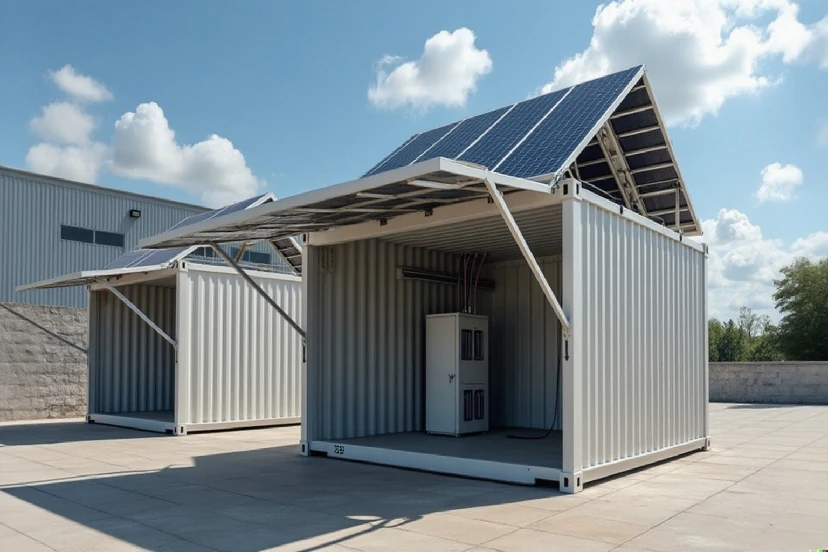
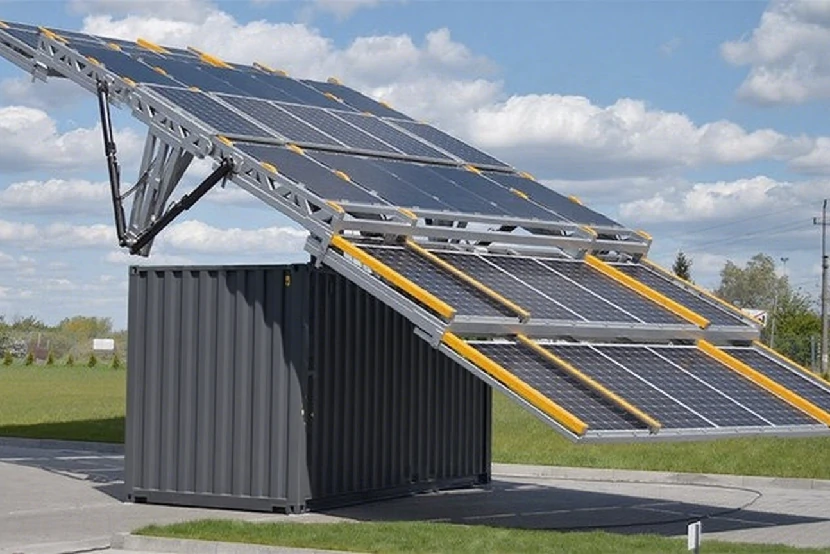
These units were not just warehousing panels, they were putting them out. Fold-out racks were mounted to the roof and sides of the container, optimizing space for function rather than mass storage. The system could power mixers, lights, and comms gear—saving 70% of diesel fuel and ¥100,000 a month in costs.
So here is the essential question to consider: Is it more logical to ship solar panels packed in containers, or include them as part of the containers themselves in the form of an instant-installed system?
It’s all about purpose. If you are shipping lots of them in bulk to multiple sites, shipping them packed is most convenient. But if you’re looking for speed, convenience, and far-flung installation, integrated container solar stations (like HJFoldSolar) win the award.
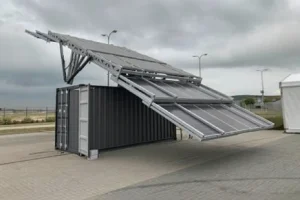
Compact Solar System Design
In solar power systems mounted on containers, panels are typically not shipped to arrive packed, but mounted:
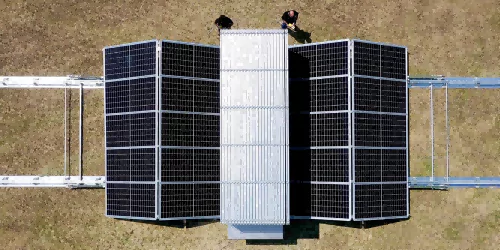
- Fold-out or slide-out arrays enable mounting up to 18–50 kW of solar on a 20- or 40-foot container
- Battery banks, inverters, and EMS units are stored inside, with cable run, ventilation, and sometimes even cooling units
Here’s a quick summary:
| Container Size | Solar Panel Capacity | Battery Storage | Application Type |
| 20ft | ~18–30 kW | 80–120 kWh | Rural building, disaster relief |
| 40ft | ~36–50 kW | 160–200+ kWh | Mini-grids, base camps, city projects |
In practice, this translates to much fewer panels “make it” to be installed in the container, but the system is brought to life, stand-alone, and mobile within an hour.
What’s Driving Container-Based Solar Growth?
How many solar panels are in a shipping container is part of a larger shift: toward decentralized, mobile, and modular clean energy. Trends that are driving adoption include:
- Global demand for off-grid electrification
- Increasing urban restrictions on diesel
- Increasing use of pre-fab energy bundles
- Merging with EV charging in remote areas
And if you’re in logistics or procurement, knowing precisely how many panels fit per container straight affects freight quotes, customs duties, and insurance planning.
Key Takeaways
In our solar container solutions, a 40ft High Cube typically accommodates 700–750 solar panels for standard international shipping. However, if you’re outfitting the same container with embedded solar panels, inverters, and batteries for off-grid applications, you’ll have fewer panels—but get a working power station on arrival.
If you are looking to customize a solar container system for your specific project, feel free to contact us for a free tailored solution and layout design.
Contact US