
How to Maximize Energy Output from a Mobile Solar Container
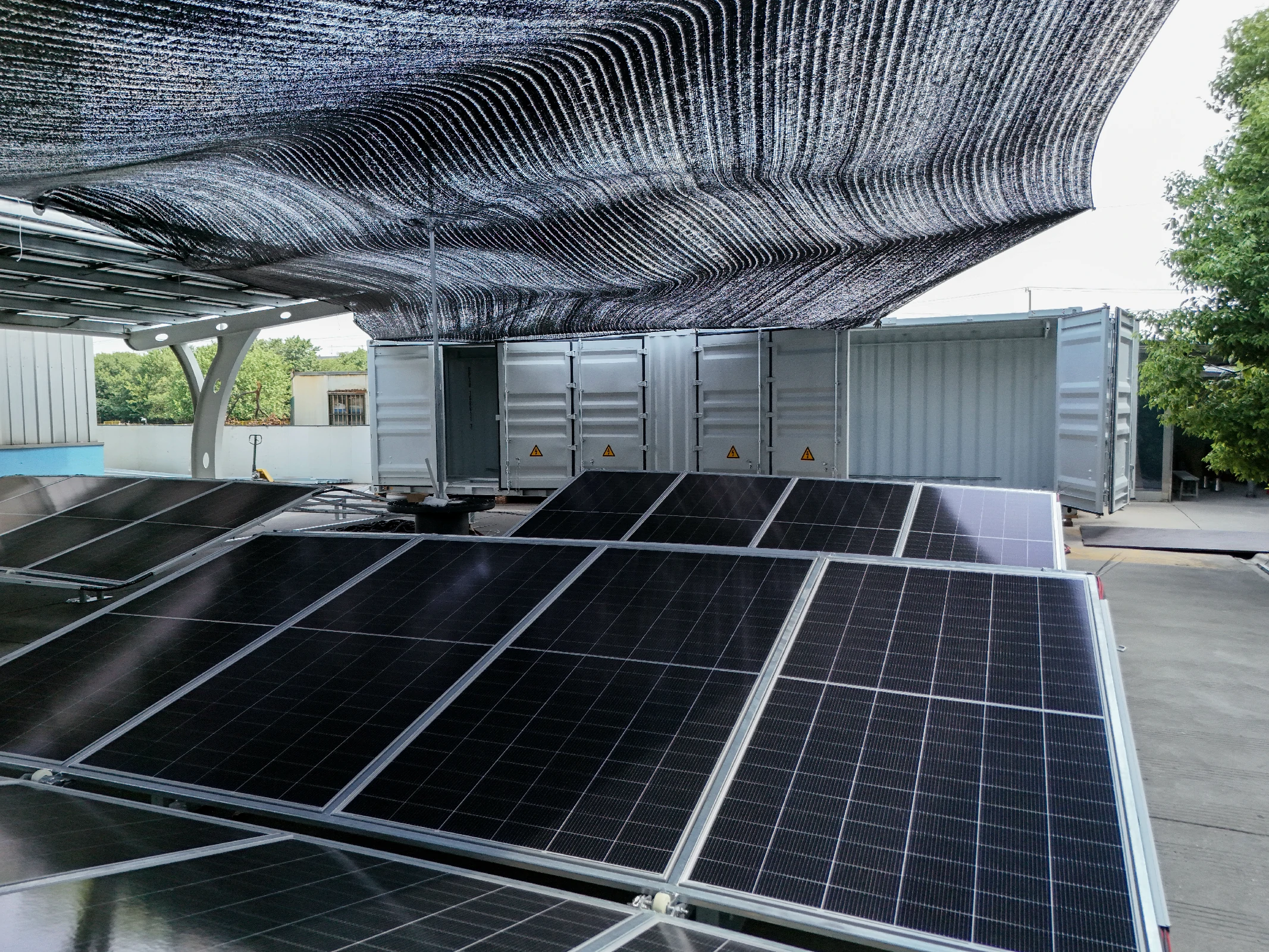
A mobile solar container offers the possibility of clean and mobile power where the grid does not readily extend, disaster relief situations, construction projects that are far from the grid, temporary events such as music concerts or sports tournaments, or research stations that lie distant from civilization.
However, being mobile does not necessarily make a solution effective. True efficiency may hinge on a few considerations when it comes to how a solution is implemented.
What Hp Does a Mobile Solar Container Have?
Before we look into the process of optimization, it’s important to analyze what usually holds the output back.
Physical Constraints of the Container Format
A shipping container solar system is compact by design. The surface area of photovoltaic cells will always be constrained, and installation tilt can sometimes be limited by transport considerations. The interior, in turn, has to be divided into space for power inversion, batteries, and cooling. This presents no barrier to high performance, but it certainly sets the bar high for optimal system design.
Mobile systems are never operating under optimum conditions. Light obstruction by terrain, fluctuating orientation, dust, snow, and temperature variation all influence actual yields. In contrast to permanent systems, mobile solar containers have to work in several different locations that have distinctly different insolation conditions.
Operational Tradeoffs
Sometimes, losses can be a result of how the system is being used and not necessarily how it was designed. Incorrect scheduling, storage, and maintenance tend to lower production silently.
Design Features That Enhance Energy Production
Optimize Panel Distribution, Not Just Panel Numbers
More panels are not always the best option. The important factor here would be how efficiently the panels are able to catch the sunlight after installation.
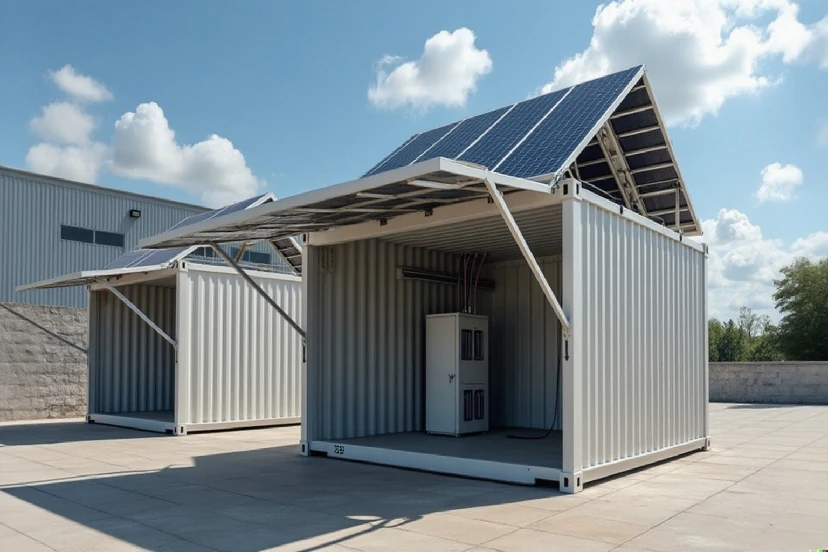
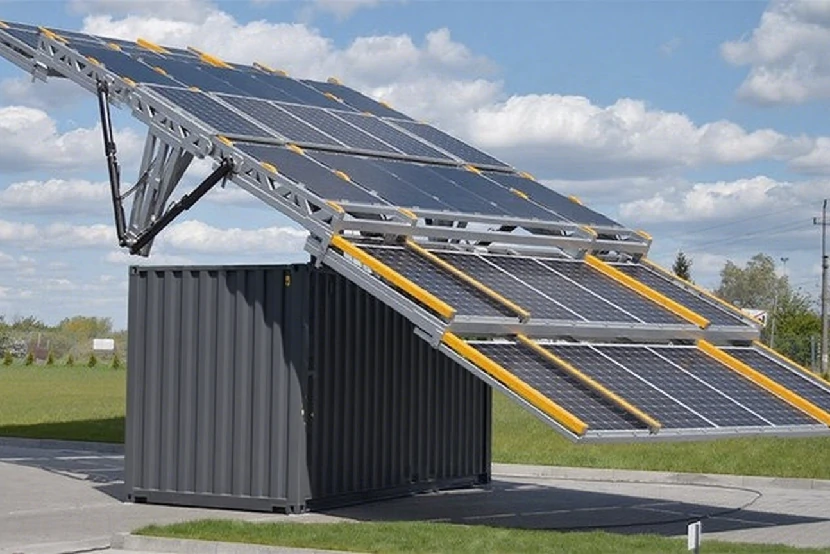
In the National Park Service publication Bechler Ranger Station Solar Array shows that the solar array designs that worked best for portable systems were those that allowed easy adjustment of panel positions to minimize shading and accommodate seasonal sun angles, rather than fixed positions that optimize transportation and array size. Again, a fundamental message: Improvisational flexibility will often trump incremental improvements in array size.
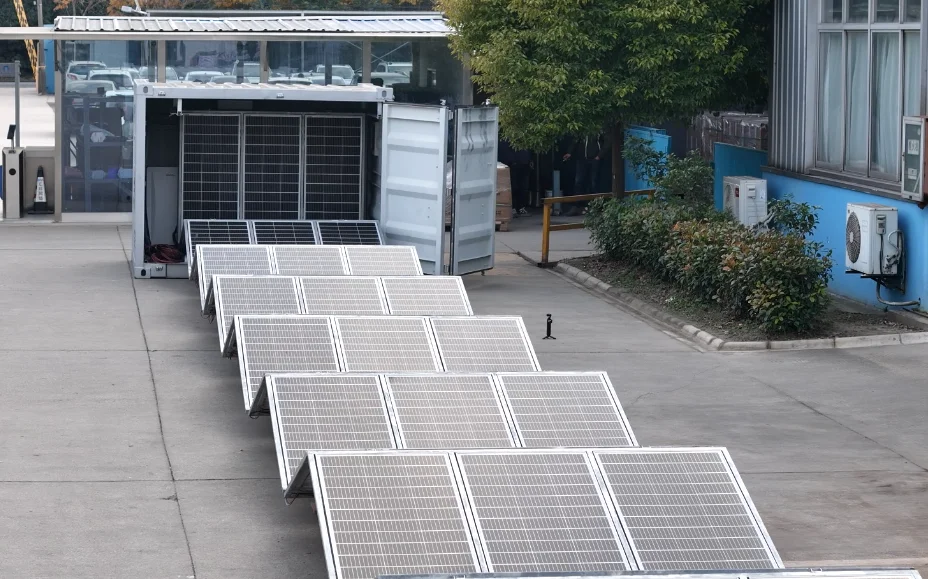
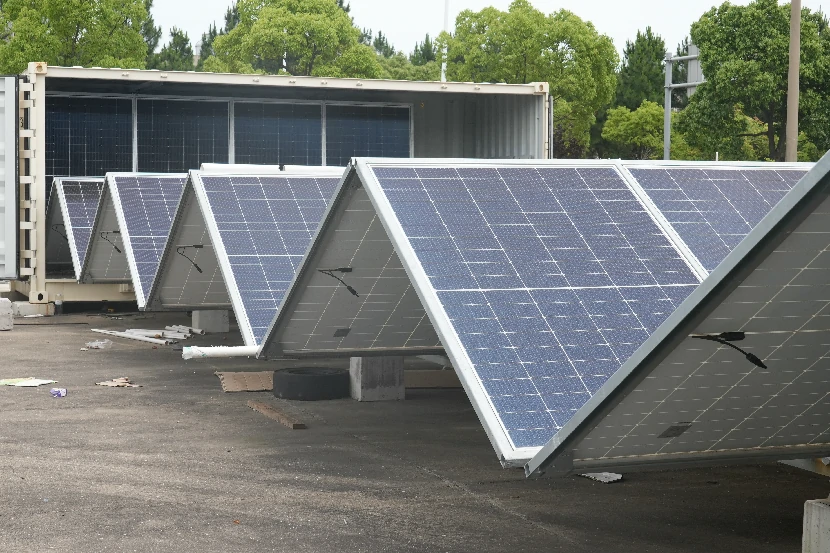
Practical takeaway: It is essential to give preference to the fold-out or slide-out panel design that enables the technician to make adjustments to the angle
Balance Battery Capacity with Solar Input
Over-size batteries may actually decrease available energy capacity if they promote more substantial discharge cycles with insufficient recharge opportunities. undersize batteries, conversely, mandate capacity reduction during times of peak production.
An appropriately matched battery bank enables the system to ride through the peak hours and provide electricity in the evening.
Use Passive Cooling Wherever Possible
High temperatures result in reduced efficiency of inverters and shortened lifetimes of batteries. In a mobile solar container, active cooling consumes power not delivered to loads. Well-planned ventilation systems, reflective materials, or air ducts within the interior of the container can thus boost total energy production just by cutting down losses.
Site Setup: Small Changes, Big Payoffs
Orientation and Tilting Still Matter—Even for “Temporary” Solutions
A report titled Mobile Photovoltaic System at Bechler Meadows Ranger Station, released by the U.S. Department of Energy/National Renewable Energy Laboratory illustrates the importance of short-term orientation corrections, leading to an overall increase in the daily energy production of the mobile photovoltaic system.
In other words, optimizing the tilt upon arrival takes 20 minutes, and this investment can give back hours of increased power upon call to action.
AVOID/MINIMIZE PARTIAL SHADING OF Modules at
Partial shading is even more harmful in the case of containerized systems, as the panel strings are typically compact and tightly interconnected. A shaded panel can impair the performance of the whole panel string.
Best practice involves:
- Pre-deployment site walking
- Accounting for Moving Shadows(trees, nearby vehicles)
- Checking shade conditions again after setup
Ground vs. Elevated Deployment
Whenever possible, the deployment of the panels above ground dust and snow accumulation is beneficial. Even a simple stand or adjustable legs can help sustain production.
Operational Strategies to Maximize Usable Energy
Schedule Loads Based on Solar Output
The optimization of energy production is just as important as optimizing consumption.
High draw processes like pumping, charging equipment, or heating, ventilation, and air conditioning should be tied to peak sun hours. This minimizes energy conversion losses and maximizes the energy utilization value by reducing battery cycle depth.
Monitor
Basic monitoring, like energy in, energy out, and the state of charge, can show up underperformance. There may be problems in mobile designs, where things are not seen until the output has been affected.
Even simple data recording allows the operator to make better informed decisions as to panel repositioning and/or load changes.
Preventive Maintenance Pays Off Fast
Dust, pollen, and debris accumulate faster on mobile sites than on fixed sites. “A light maintenance cleanup can boost production by several percentage points—often the lowest cost optimization option.”
A Comparison of High-Impact Optimization
| Optimization Area | Implementation Effort | Impact on Output | Notes |
| Adjustable panel tilt | Low | High | One-time setup per site |
| Shade assessment | Low | High | Recheck during deployment |
| Load scheduling | Medium | Medium to High | No hardware changes |
| Passive cooling | Medium | Medium | Improves long-term reliability |
| Panel cleaning | Low | Medium | Frequency depends on environment |
Repeat Deployment Design for Efficiency
A mobile solar container is seldom utilized only once. More flexible systems that can be more easily redeployed usually gain an advantage over systems that are technically superior but difficult to deploy.
Key design principles are:
- Clearly marked optimal tilt angles
- No-tool panel mounting
- Ready-to-use monitoring dashboards
- Cable management deterring shortcut behavior
These details add less resistance to the setup process, hence improving the chances that best practices are being applied on the ground.
When More Power Isn’t the Right Goal
There is a final, and often overlooked, point: at times, maximizing energy output is not necessarily an exercise of maximizing the number of kilowatt-hours, but rather maximizing the right kilowatt-hours.
A reliable and predictable system that works just as well under imperfect as under ideal conditions is far more useful in an emergency or research setting than one that produces peak capacity. The best shipping container solar cell system is that which produces reliable power each day under imperfect conditions.
A mobile solar container can be a mighty instrument—but only if the full potential of the instrument can be unleashed. Insights into the real-world experience of government initiatives for power production reveal that advances in power production are not the result of exotic technologies.
If you are implementing or building a mobile solar container, it really helps to go back to basics. These include flexible panel orientation, shade avoidance, loading in time, and monitoring. These four ideas are easily implementable, reproducible, and verifiable. With these in place, your system will not only be mobile, it will be productive.
Contact US