
Can Solar Containers Be Used in Any Climate?
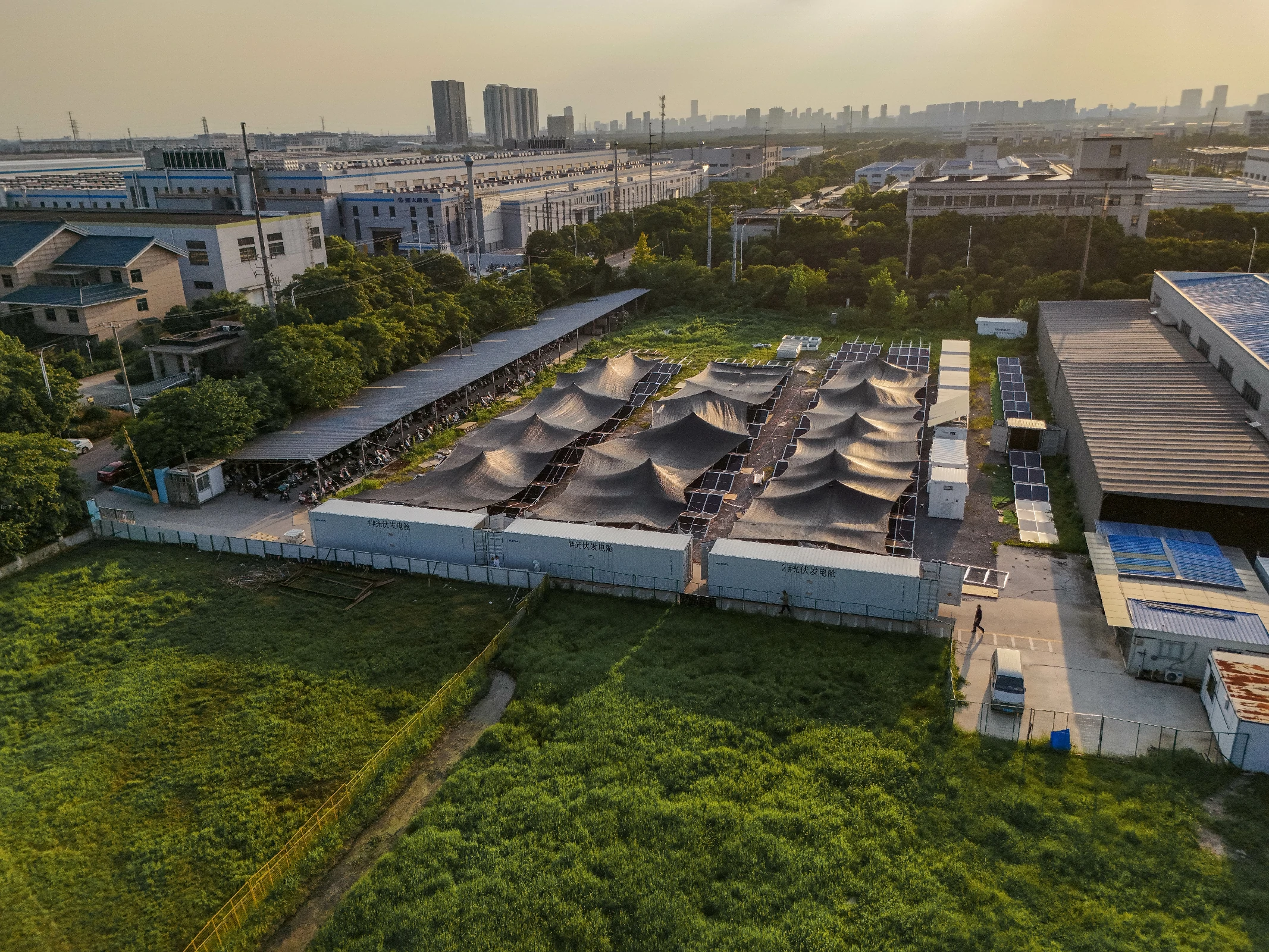
The concept of a solar container goes like this: take a shipping container, throw in some solar panels, inverters, batteries, and controls, and power anything that needs it. That’s about as simple as it gets, but it often precedes an even bigger question that people ask when they hear this technology. Just how far will this technology stretch? Will it actually perform under all environmental conditions?
The simple truth is that solar containers are not specific to any particular type of climate but are never climate-independent. Their performance characteristics, longevity, and economics are highly dependent on how well a climate isFactored into the design. It is more relevant to learn about these constraints than making any generalization.
What is a solar container system?
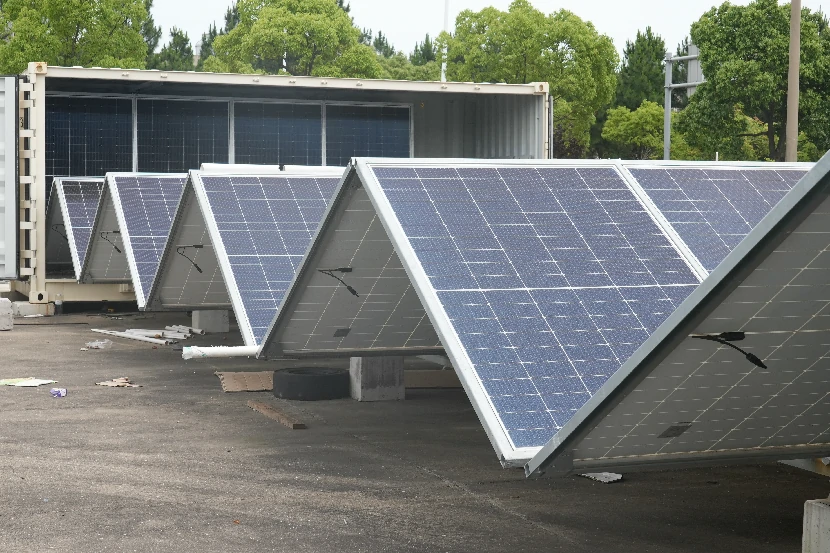
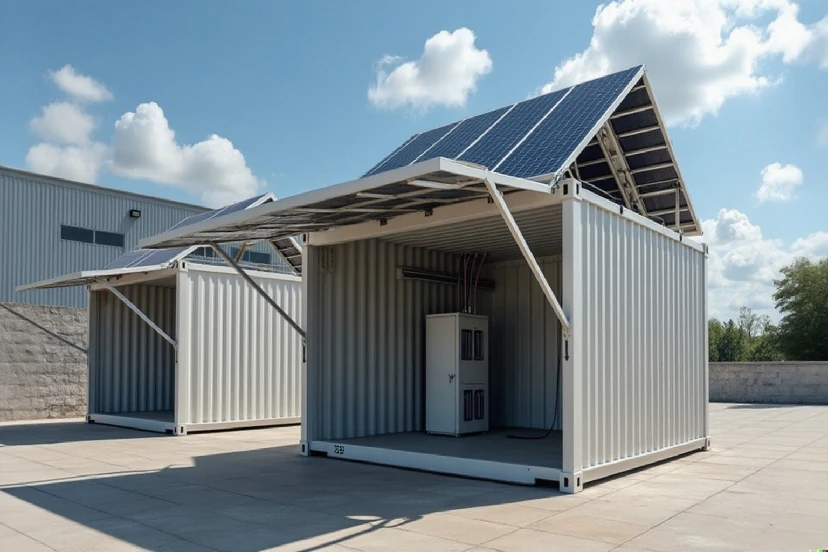
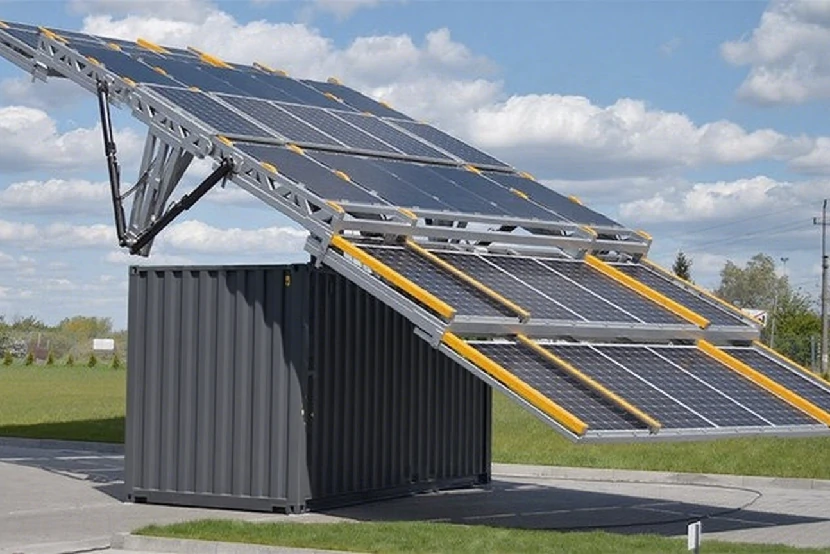
Solar container: A solar container, also referred to as a solar shipping container or containerized solar power system, is a modular energy device designed using the standard ISO container. The energy device carries power conversion units, energy storage units, protection units, and monitoring units. The solar panels can be roof-mounted, folding solar panels, and ground-mounted solar panels.
Climate factors that matter more than geography
“Anywhere” is a geographically based question when people ask whether solar containers can be used. In actual fact, climate factors are the factors that contribute to their effectiveness.
Temperature extremes
Temperatures also impact solar cells and batteries. Higher temperatures lower the efficiency of solar cells, but lower temperatures restrict the performance capabilities of batteries. Power electronics, too, produce heat, which is more difficult to deal with in hotter environments with undersized cooling systems.
The International Energy Agency Photovoltaic Power Systems Programme’s publication Climatic Rating of Photovoltaic Modules explains that module performance and degradation rates vary significantly across climatic zones, even when the same technology is used. This finding is directly relevant to solar containers, because the container format does not change how modules respond to ambient temperature.
Humidity, rain, and corrosion
A high level of humidity and wet weather contribute to the likelihood of corrosion, water entry, or failure of the insulation system. “Containerized shipping is more exposed on tropical routes,” says Richard Antonello, “because condensation can be caused by poor thermal design.”
Sealed enclosures, corrosion-resistant building materials, and adequate airflow become very important. A solar container functioning in the humid tropics can call for an entirely different set of construction materials from what might be used in an inland dry climate.
Dust, sand, and airborne particles
This is due to dust that inhibits solar energy by reducing the output of sunlight and increasing the temperature of the surface. In a semi-arid area such as a desert region, sand particles can damage the surface of solar panels and cause dust to accumulate in the ventilation systems.
The study titled The environmental factors affecting solar photovoltaic output, published by Elsevier, shows that soiling and airborne particulates can cause measurable and sometimes severe energy losses if not actively managed. For mobile solar shipping containers used in deserts or mining sites, cleaning frequency and filtration design can matter as much as panel capacity.
Wind, snow, and mechanical loads
Strong wind is a stress factor for panel support systems, particularly for folding systems or elevated installations. Then, of course, snow is a weight and a potential blockage for power production during the winter seasons if tilt angles and accessibility for removal have been considered.
Containers themselves are very robust in structure; however, it is usually the external solar roofs that pose the weakest link to structural integrity. In an ice or snow-bearing region, snow bearing capacity and ice buildup cannot be considered secondary parameters.
Can solar containers work in hot climates?
Yes, but it also comes with some added conditions: in hot climates, the solar irradiance is usually abundant, somewhat balancing the losses due to high temperatures. The drawbacks lie basically in the heat dissipation and component longevity.
Thermal management becomes central. Passive ventilation may be enough for moderate heat, but active cooling or heat-resistant components are often required in consistent high temperatures. Most especially, batteries face accelerated degradation from prolonged heat exposure, something that will affect long-term operating costs more than any initial performances of the vehicles.
A well-designed solar container in hot climates keeps the focus on airflow, shading, and watching equipment placement inside of the container. Without it, high output in year one can mask rapid decline in later years.
Can they operate reliably in cold or polar regions?
In arctic conditions, there exist other restrictions. Solar panels, in particular, may work well in cold air, but the shorter duration of daylight and snow cover limit the overall power generated.
Battery systems are the critical path elements. Charging and discharging cycles in cold temperatures will reduce the capacity and increase the life cycle associated with the batteries. Insulated storage vessels, controlled internal temperatures, and cold-temperature batteries are critical.
Sandia National Laboratories’ project Photovoltaic Collaborative to Advance Multi-climate Performance and Energy Research (PV CAMPER) demonstrates that photovoltaic systems can operate across a wide range of climates, but their performance profiles differ sharply depending on local environmental conditions. This reinforces the idea that cold-climate solar containers are feasible, but only with climate-specific engineering choices.
Are solar containers truly “any-climate” solutions?
The expression “any climate” can be confusing. Solar containers should be considered as adaptable to any climate rather than independent of any climate. The format used by the container allows for mobility rather than protection against environmental influences.
In hot desert environments, tropical, temperate, and cold climates, solar containers can find effective application if modifications are made to satisfy local requirements. However, problems exist when similar designs are taken abroad with little or no changes. It is highly unlikely for all climates to experience ideal performance with a universal solar container.
Practical decision points before deployment
Prior to selecting a solar container for use in a given climate, policymakers should be concerned with the following few questions:
Is the system suited for the local temperature, extremes included?
Are the batteries or electronics tolerant of moisture, dust, or cold temperatures?
How are activities such as cleaning or snow removal going to be performed?
Does seasonal variation of sunlight consistent with patterns of energy demand?
Early answers to these questions will often prove even more important than the power of the panels used or the size of the container.
Conclusion: climate matters, but it is manageable
So, is it possible to design solar containers for all climates? Yes—but only when climate considerations are built into the design process from the very beginning, rather than treated as an afterthought.
Global research from international energy programs, national laboratories, and academic studies consistently shows that solar performance is shaped as much by environmental conditions as by the technology itself. Solar containers can perform reliably across a wide range of climates, but only when their structure, components, and system logic are intentionally adapted to those conditions.
For organizations considering solar container deployment, the more useful question is no longer whether solar technology can work in a given climate. The real question is how a solar container should be designed, configured, and optimized so that it works well in that specific region. That shift—from generic capability to climate-responsive design—is exactly where a purpose-built solution begins to matter.
Contact US